
There is a specific kind of magic that happens when the air turns crisp and the first leaves start to turn gold. It’s the season of roasted squash, thick soups, and gatherings that feel less like “events” and more like warm hugs. Last month, I hosted a small dinner party for six friends, and while I spent hours agonizing over the main course, the real star of the night turned out to be sitting in a bowl on the counter: my Oktoberfest German Potato Salad.
Now, before you roll your eyes and think “potato salad,” let me stop you right there. This isn’t the mayonnaise-heavy, sweet, pale yellow stuff that sits at the back of the fridge until it’s been there since July. This is warm, tangy, deeply savory, and utterly irresistible. It’s the kind of side dish that disappears before the main course is even served. I’ve made this for everything from casual Tuesday meals to full-blown holiday spreads, and it never fails to get people asking for the recipe. It’s hearty enough to stand on its own but perfect as a companion to rich meats or roasted veggies.
I’ve tested this recipe dozens of times, tweaking the vinegar-to-oil ratio and debating whether to use bacon grease or just butter, until I landed on the perfect balance. It’s tangy enough to cut through richness, savory enough to satisfy any comfort-food craving, and easy enough to make ahead so you’re not stuck in the kitchen while your guests are chatting. If you’re looking for a party side that brings big flavor without big stress, this is it. Seriously, once you try this warm German potato salad, you’ll never go back to the cold, mayo-based version.
Why You’ll Love This Oktoberfest German Potato Salad
There are about ten reasons I keep making this potato salad, but here are the big ones. It’s not just a side dish; it’s a mood. It’s cozy, it’s nostalgic, and it’s incredibly satisfying.
Warm and Tangy — This isn’t your grandma’s cold potato salad. The dressing is warm when it’s poured over the potatoes, allowing them to absorb every drop of that vinegar, broth, and spice blend. The result is a salad that’s deeply flavorful throughout, not just on the surface. My friends always comment on how the flavors have “married” together.
Bacon-Infused Richness — We’re talking crispy, crumbled bacon bits folded into the warm potatoes. The salty, smoky crunch of the bacon against the tender potatoes and sharp vinegar dressing is pure heaven. If you can’t do bacon, you can swap it, but trust me, it’s worth the extra five minutes of frying.
Makes Ahead Friendly — One of the best things about this salad is that it actually tastes better the next day. The potatoes continue to absorb the dressing, becoming even more flavorful. I often make it the night before, let it sit in the fridge, and bring it to room temperature before serving. It’s a lifesaver when you’re hosting.
Vegetarian Option — While the traditional version includes bacon, this salad is naturally vegetarian-friendly if you skip the meat. It’s still packed with flavor from the onions, vinegar, and spices. I’ve served this to veggie-focused friends, and they loved it just as much as the meat-eaters.
Perfect for Gatherings — This salad is a crowd-pleaser. It’s hearty, flavorful, and easy to serve. Whether you’re hosting a small dinner party or a large holiday gathering, this potato salad fits right in. It’s also great for potlucks because it travels well and doesn’t need to be kept cold.
Ingredients You’ll Need
Makes Ahead Friendly — One of the best things about this salad is that it actually tastes better the next day. The potatoes continue to absorb the dressing, becoming even more flavorful. I often make it the night before, let it sit in the fridge, and bring it to room temperature before serving. It’s a lifesaver when you’re hosting.
Vegetarian Option — While the traditional version includes bacon, this salad is naturally vegetarian-friendly if you skip the meat. It’s still packed with flavor from the onions, vinegar, and spices. I’ve served this to veggie-focused friends, and they loved it just as much as the meat-eaters.
Perfect for Gatherings — This salad is a crowd-pleaser. It’s hearty, flavorful, and easy to serve. Whether you’re hosting a small dinner party or a large holiday gathering, this potato salad fits right in. It’s also great for potlucks because it travels well and doesn’t need to be kept cold.
Ingredients You’ll Need
Perfect for Gatherings — This salad is a crowd-pleaser. It’s hearty, flavorful, and easy to serve. Whether you’re hosting a small dinner party or a large holiday gathering, this potato salad fits right in. It’s also great for potlucks because it travels well and doesn’t need to be kept cold.
Ingredients You’ll Need
Here’s the best part: you probably have most of these ingredients already. This recipe relies on simple, accessible items, but the quality of each ingredient matters more than you might think.
For the Potatoes
Yukon Gold potatoes (3 pounds / about 1.4 kg) — These are the gold standard for German potato salad. They hold their shape well when cooked but still have a creamy texture that soaks up the dressing beautifully. Waxy potatoes like red or fingerling work too, but Yukon Golds give the best balance of firmness and creaminess.
Water (for boiling) — Enough to cover the potatoes in your pot. You’ll also need salt for the water.
For the Dressing
Bacon (6 slices / about 150g) — Thick-cut bacon works best. It gets crispy and adds a smoky depth to the dressing. If you’re avoiding pork, you can use smoked paprika and olive oil, but you’ll miss out on that authentic flavor.
Yellow onion (1 medium / about 150g, diced) — Sweet onions work too, but yellow onions give a better balance of sharpness and sweetness when cooked. Dice them finely so they distribute evenly throughout the salad.
Apple cider vinegar (½ cup / 120ml) — This is the backbone of the flavor. It’s tangy and slightly sweet, which pairs perfectly with the potatoes. Don’t substitute with white vinegar unless you have to; the flavor profile will be different.
Chicken broth (½ cup / 120ml) — Low-sodium is best so you can control the saltiness. Vegetable broth works for a vegetarian version. The broth adds body and savory depth to the dressing.
Granulated sugar (2 tablespoons / 25g) — This balances the acidity of the vinegar. Adjust to taste, but don’t skip it entirely. It helps round out the sharpness.
Dijon mustard (1 tablespoon / 15g) — Adds a tangy, slightly spicy note. It also helps emulsify the dressing. Use a good-quality Dijon for the best flavor.
Dry mustard powder (1 teaspoon / 2g) — This adds a subtle heat and depth that complements the Dijon. If you don’t have it, you can skip it, but it’s a nice touch.
Ground black pepper (½ teaspoon / 1g) — Freshly ground is best. It adds a gentle heat and aroma.
Salt (to taste) — Start with a pinch and adjust as you taste. Remember, the bacon and broth may add saltiness, so taste before adding more.
Optional Add-ins
Fresh parsley (2 tablespoons, chopped) — Adds a fresh, herbaceous note and a pop of color. It’s not traditional, but I love it.
Chives (2 tablespoons, chopped) — Another fresh herb option. Chives have a mild onion flavor that complements the dish well.
Equipment Needed
You don’t need fancy equipment for this. Here’s what I actually use.
Large pot — I use a 6-quart pot for boiling the potatoes. It needs to be big enough to hold the potatoes comfortably with room for water.
Large skillet — A 12-inch skillet works best for cooking the bacon and onions. I prefer stainless steel or cast iron, but non-stick works too.
Sharp knife — For chopping the onions and parsley. Dull knives make you cry more—learned this the hard way.
Peeler — For peeling the potatoes. A Y-peeler is easiest.
Wooden spoon — For stirring the dressing and mixing the salad. Silicone works too.
Measuring cups and spoons — Pretty standard stuff. Dollar store versions work fine.
Colander — For draining the potatoes. Or just use the lid to drain—I do this when I’m lazy.
Mixing bowl — A large bowl for combining the potatoes and dressing. I use a stainless steel bowl because it’s easy to clean.
How to Make It: Step-by-Step
Alright, let’s make this! I’m walking you through exactly how I do it, including the little tricks I’ve picked up.
Step 1: Prep the Potatoes (10 minutes)
Peel the potatoes and cut them into 1-inch cubes. You want them uniform in size so they cook evenly. If they’re too big, they’ll be raw in the middle; too small, and they’ll turn to mush. Place them in a large pot and cover with cold water by about an inch. Add a generous pinch of salt—enough that the water tastes like the ocean.
Step 2: Boil the Potatoes (15-20 minutes)
Bring the water to a boil over high heat. Once boiling, reduce to a simmer and cook until the potatoes are tender but still firm. Test them with a fork; they should slide off easily but not fall apart. This usually takes 15-20 minutes. Don’t overcook them! Drain the potatoes in a colander and let them steam dry for a few minutes. This helps them absorb the dressing better.
Step 3: Cook the Bacon (5 minutes)
While the potatoes are cooking, cook the bacon in a large skillet over medium heat. Cook until crispy, then transfer to a paper towel-lined plate to drain. Reserve about 2 tablespoons of the bacon grease in the skillet. If you don’t have enough, add a little olive oil or butter.
Step 4: Sauté the Onions (3 minutes)
Add the diced onion to the skillet with the bacon grease. Cook over medium heat until softened and translucent, about 3-4 minutes. Don’t let them brown; you just want them sweet and tender.
Step 5: Make the Dressing (5 minutes)
Reduce the heat to low. Pour in the apple cider vinegar, chicken broth, sugar, Dijon mustard, dry mustard powder, black pepper, and a pinch of salt. Whisk everything together until the sugar is dissolved. Let it simmer for 2-3 minutes until it thickens slightly. This is the moment when the house starts to smell amazing.
Step 6: Combine Everything (5 minutes)
Add the warm potatoes to the skillet with the dressing. Toss gently to coat the potatoes evenly. The warm potatoes will absorb the dressing quickly. Add the crumbled bacon and toss again. Taste and adjust seasoning. If it needs more salt, add it. If it’s too tangy, add a pinch more sugar.
Step 7: Serve
Serve warm or at room temperature. Garnish with fresh parsley or chives if you like. This salad is best enjoyed within a few hours of making, but it keeps well in the fridge for up to 3 days.
Total Time: About 45 minutes (15 minutes active, 30 minutes mostly hands-off)
Expert Tips & Tricks
Here’s everything I’ve learned from making this dozens of times. These tips will save you from my mistakes.
Use Yukon Gold Potatoes
This is the #1 tip. Yukon Gold potatoes have the perfect texture for this salad. They’re waxy enough to hold their shape but creamy enough to absorb the dressing. If you use russets, they’ll fall apart. If you use red potatoes, they might be too firm. Yukon Golds are the sweet spot.
Don’t Overcook the Potatoes
The potatoes should be tender but still firm. If they’re mushy, they’ll break apart when you toss them with the dressing. Test them frequently as they approach the end of the cooking time.
Warm Potatoes, Warm Dressing
This is crucial. The potatoes need to be warm when you add the dressing so they can absorb the flavors. If the potatoes are cold, the dressing will sit on top and not penetrate. If the dressing is cold, it will congeal and not coat the potatoes evenly.
Taste as You Go
Every vinegar and broth brand is different. Taste the dressing before adding it to the potatoes. Adjust the sugar, salt, and pepper to your liking. This is your salad, so make it taste good to you.
Save the Bacon Grease
Don’t throw away that bacon grease! It’s liquid gold. Use it to sauté the onions for extra flavor. If you don’t have enough, add a little butter or olive oil.
Common Mistakes (and how to avoid them)
Mistake: Potatoes are too soft
Fix: Start checking them 2-3 minutes before the recommended cooking time. They should be fork-tender but not falling apart.
Mistake: Dressing is too tangy
Fix: Add more sugar or a splash of broth to balance it out. Taste and adjust.
Mistake: Salad is dry
Fix: Add a little more broth or vinegar. The potatoes need moisture to stay tender.
Variations & Substitutions
Once you’ve nailed the basic version, here’s how you can mix it up. I’ve tried all of these.
Vegan Version
Skip the bacon and use vegetable broth. Add a tablespoon of smoked paprika to the dressing for that smoky flavor. It’s still delicious and satisfying.
Gluten-Free
This recipe is naturally gluten-free. Just make sure your chicken broth and mustard are certified gluten-free.
With Sausage
Instead of bacon, use cooked and crumbled German sausage. It adds a different kind of savory depth. My husband loves this variation.
With Apples
Add 1 diced apple (Granny Smith works well) when you sauté the onions. The sweetness pairs nicely with the tangy dressing. It’s a bit more autumnal.
With Celery
Add 1 diced celery stalk when you sauté the onions. It adds a nice crunch and fresh flavor.
Lighter Version
Skip the bacon and use less oil. It’s still flavorful, just a bit lighter. I make this when I’m trying to be “healthy.”
Serving & Storage
How to Serve:
I usually serve this straight from the skillet at the dinner table—it looks rustic and stays warm. But here are other ways I’ve enjoyed it:
Side Dishes:
- Roasted chicken or pork
- Grilled sausages
- Roasted vegetables
- Bratwurst
Toppings Bar:
When I have guests, I put out: extra crumbled bacon, fresh parsley, chives, and a little extra vinegar. Everyone customizes their bowl.
Wine Pairing:
Not a wine expert, but my wine-snob friend says a crisp Riesling or a light Pinot Noir works great with this.
Storage Instructions:
Refrigerator:
Store in an airtight container for up to 4 days. The salad will thicken in the fridge—totally normal.
Reheating:
Best method: Add to a skillet with a splash of broth or water over low heat. Stir until heated through.
Microwave method: Heat in 30-second intervals, stirring between. Add a splash of broth if it’s too thick.
Freezing:
Honestly, this doesn’t freeze well because of the potatoes. The texture changes when thawed. Make it fresh or store in the fridge for up to 4 days.
Pro tip: If leftovers are drying out, stir in a tablespoon of broth and a splash of vinegar when reheating. Brings back that tangy flavor.
Nutrition Information
I’m not a nutritionist, but here’s the breakdown if you’re tracking.
Per Serving (based on 8 servings):
| Nutrient | Amount |
|---|---|
| Calories | 280 |
| Protein | 6g |
| Carbs | 35g |
| Fiber | 3g |
| Sugar | 6g |
| Fat | 12g |
| Saturated Fat | 4g |
| Cholesterol | 15mg |
| Sodium | 450mg |
What’s Good:
- Decent fiber from potatoes
- Comforting and satisfying
- Can add vegetables to boost nutrition
What to Know:
- Higher in calories from bacon and oil
- Contains pork (unless vegan version)
- Moderate sodium (use low-sodium broth to reduce)
My Take:
Look, this is comfort food with bacon and vinegar. It’s not a diet recipe. But it’s way better than takeout, costs less, and I know exactly what’s in it. When I want to make it lighter, I skip the bacon and use less oil. But usually? I just eat a reasonable portion and enjoy it.
Final Thoughts
So that’s my go-to Oktoberfest German Potato Salad! I’ve probably talked your ear off at this point, but when you make a recipe this often, you have a lot to say about it.
This has saved weeknight dinners more times than I can count. It’s my answer to “what’s for dinner” when I’m tired, don’t want takeout, and still want something that tastes really good. My kids are happy, my husband’s happy, and I’m happy because I’m not stressed about cooking.
Make it yours! Try different add-ins, swap in your favorite vegetables, adjust the spices. The best recipes are the ones you adapt to your family’s tastes.
If you make this, drop a comment and let me know what you think! I love hearing how recipes turn out in your kitchen. And if something doesn’t work, tell me that too—I’m here to help troubleshoot.
Happy cooking! And I hope your kitchen smells half as good as mine does right now.
Frequently Asked Questions
Q: Can I use red potatoes instead of Yukon Golds?
A: You can, but the texture will be different. Red potatoes are waxy and hold their shape well, but they don’t absorb the dressing as nicely. Yukon Golds are my favorite because they’re creamy but firm. If you use red potatoes, just make sure not to overcook them.
Q: Can I make this ahead?
A: Absolutely! This salad actually tastes better the next day. Make it, let it cool, and store it in the fridge. Bring it to room temperature before serving. It’s perfect for meal prep.
Q: Why did my potatoes fall apart?
A: They were probably overcooked. Start checking them 2-3 minutes before the recommended time. They should be fork-tender but still firm. Also, Yukon Golds are more forgiving than russets.
Q: Can I use white vinegar instead of apple cider vinegar?
A: You can, but the flavor will be different. Apple cider vinegar has a slight sweetness and fruity note that pairs well with the potatoes. White vinegar is sharper and more acidic. If you use white vinegar, reduce the amount slightly.
Q: How do I reheat leftovers?
A: Add to a skillet with a splash of broth or water over low heat. Stir until heated through. Microwave works too, but add a splash of liquid first to prevent drying out.
Q: Can I freeze this salad?
A: I don’t recommend it. The potatoes change texture when frozen and thawed. They become grainy and soft. Make it fresh or store in the fridge for up to 4 days.
Q: Can I use smoked paprika instead of bacon?
A: Yes! For a vegan version, skip the bacon and use vegetable broth. Add a tablespoon of smoked paprika to the dressing for that smoky flavor. It’s still delicious.
Q: What kind of mustard should I use?
A: Dijon mustard is traditional. It adds a tangy, slightly spicy note. If you don’t have Dijon, you can use yellow mustard, but the flavor will be different. Dry mustard powder is also a nice touch for extra depth.

Pin This Recipe!
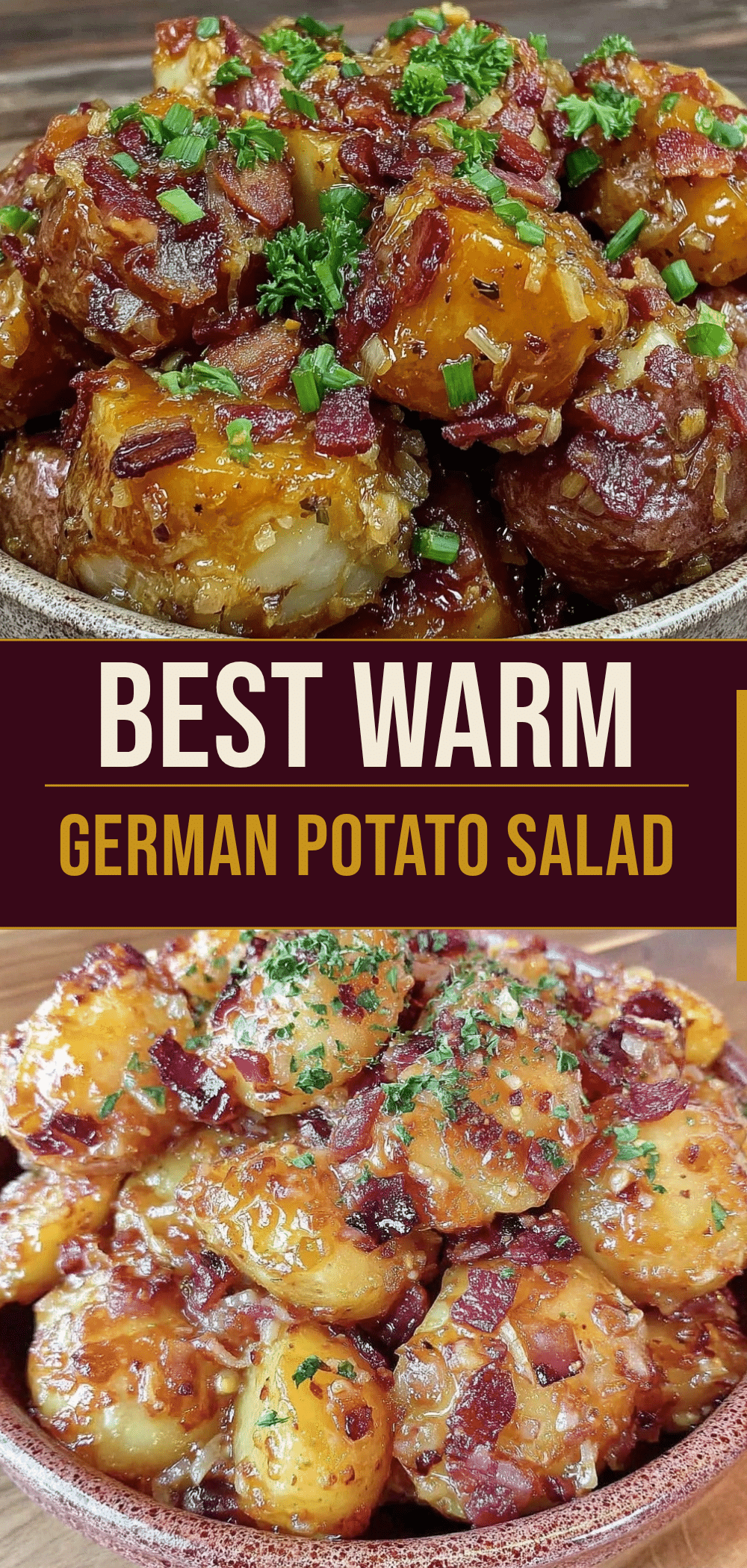

Oktoberfest German Potato Salad
- Total Time: 45 minutes
- Yield: 8 servings 1x
Description
A warm, tangy, and savory German potato salad made with Yukon Gold potatoes, crispy bacon, and a vinegar-based dressing. This hearty side dish is perfect for gatherings and tastes even better the next day.
Ingredients
- 3 pounds Yukon Gold potatoes, peeled and cut into 1-inch cubes
- 6 slices thick-cut bacon
- 1 medium yellow onion, diced
- ½ cup apple cider vinegar
- ½ cup low-sodium chicken broth
- 2 tablespoons granulated sugar
- 1 tablespoon Dijon mustard
- 1 teaspoon dry mustard powder
- ½ teaspoon ground black pepper
- Salt to taste
- 2 tablespoons fresh parsley, chopped (optional)
- 2 tablespoons fresh chives, chopped (optional)
Instructions
- Peel and cube the potatoes into 1-inch pieces. Place in a large pot, cover with cold water by an inch, and add a generous pinch of salt.
- Bring water to a boil, then reduce to a simmer. Cook potatoes for 15-20 minutes until tender but firm. Drain in a colander and let steam dry for a few minutes.
- While potatoes cook, fry bacon in a large skillet over medium heat until crispy. Transfer to a paper towel-lined plate and reserve 2 tablespoons of bacon grease in the skillet.
- Add diced onions to the skillet with the bacon grease. Sauté over medium heat for 3-4 minutes until softened and translucent.
- Reduce heat to low. Add apple cider vinegar, chicken broth, sugar, Dijon mustard, dry mustard powder, black pepper, and a pinch of salt to the skillet. Whisk to combine and simmer for 2-3 minutes until slightly thickened.
- Add the warm potatoes to the skillet with the dressing. Toss gently to coat evenly.
- Crumble the cooked bacon and fold it into the salad. Taste and adjust seasoning with more salt or sugar if needed.
- Serve warm or at room temperature, garnished with fresh parsley or chives if desired.
Notes
Use Yukon Gold potatoes for the best texture as they hold their shape but absorb dressing well. Do not overcook the potatoes or they will fall apart. The salad tastes better the next day as flavors meld. It does not freeze well due to potato texture changes. Store in an airtight container in the fridge for up to 4 days. Reheat in a skillet with a splash of broth or water.
- Prep Time: 15 minutes
- Cook Time: 30 minutes
- Category: Side Dish
- Cuisine: German
Nutrition
- Serving Size: 1 serving
- Calories: 280
- Sugar: 6
- Sodium: 450
- Fat: 12
- Saturated Fat: 4
- Carbohydrates: 35
- Fiber: 3
- Protein: 6
Keywords: German potato salad, Oktoberfest, warm potato salad, bacon potato salad, party sides, comfort food, vegetarian option