I have a confession to make. For years, I was the person who bought the boxed gluten-free cake mix. You know the one—the one that promises “moist and delicious” but delivers something that tastes like a damp sponge that’s been left in the fridge for three days. I didn’t want to admit it, but I was secretly ashamed of my baking failures. I wanted to be that person who pulls out a stunning, golden cake at brunch, slices it perfectly, and watches everyone’s eyes light up. But instead, I was serving dry, crumbly disasters that made my guests politely smile and go back for seconds of coffee.
Then, last spring, I had a breakthrough. I was trying to recreate a cake I’d had at a small bakery in Portland—one that tasted like sunshine and summer. I swapped out the usual gluten-free flour blends for something I’d been experimenting with: almond flour. And instead of just lemon zest, I used fresh lemon juice and a generous amount of lemon extract. The result? A cake so moist, so fragrant, and so perfectly textured that my husband actually stopped mid-bite to ask if I’d ordered it from a shop. (I hadn’t. I’d made it in my slightly too-small kitchen at 7 a.m. on a Saturday.)
That was the moment I stopped buying mixes and started mastering this gluten-free lemon almond cake. It’s become the cornerstone of our weekend brunches. It’s elegant enough for a Sunday morning gathering with friends, but simple enough that I can make it on a whim when I just need a little sweetness to start the day. The best part? It’s naturally gluten-free, so everyone can eat it without worry. No one needs to know it’s safe unless they ask, which is exactly how it should be.
I’ve tested this recipe dozens of times—sometimes with different brands of almond flour, sometimes with different types of sugar, and even once with orange instead of lemon (which was good, but not as bright). This version is the winner. It’s tender, it’s tangy, it’s sweet but not cloying, and it holds together beautifully. If you’ve been avoiding gluten-free baking because you think it’s complicated or tasteless, this cake will change your mind. Trust me. I’ve been there.
Why You’ll Love This Gluten-Free Lemon Almond Cake
There are a million reasons to keep this recipe in your rotation, but here are the ones that matter most. This isn’t just another gluten-free bake; it’s a game-changer for your weekend routine.
- Actually Moist — Seriously. Most gluten-free cakes are dry. This one is rich and tender because of the almond flour and the buttermilk. I’ve served it to people who swear they “don’t like gluten-free food,” and they always ask for the recipe. The texture is dense enough to feel substantial but light enough to eat three slices.
- Brunch-Ready — This cake bakes in about 45 minutes, which means you can have it ready while everyone else is still waking up. It’s the perfect centerpiece for a lazy Sunday morning. Pair it with cinnamon French toast sticks for a full spread that feels fancy but takes zero stress.
- Simple Ingredients — You probably have most of these in your pantry. Almond flour, eggs, sugar, butter, lemon, and buttermilk. No weird gums or hard-to-find flours. If you can melt butter and mix batter, you can make this.
- Naturally Gluten-Free — No need for a special gluten-free flour blend. Almond flour is the star here, so it’s naturally free of wheat, barley, and rye. Perfect for anyone with celiac disease or gluten sensitivity.
- Make-Ahead Friendly — This cake actually tastes better the next day. The flavors meld overnight, and the crumb sets up perfectly. I often bake it on Saturday night for Sunday brunch, so I’m not stuck in the kitchen when guests arrive.
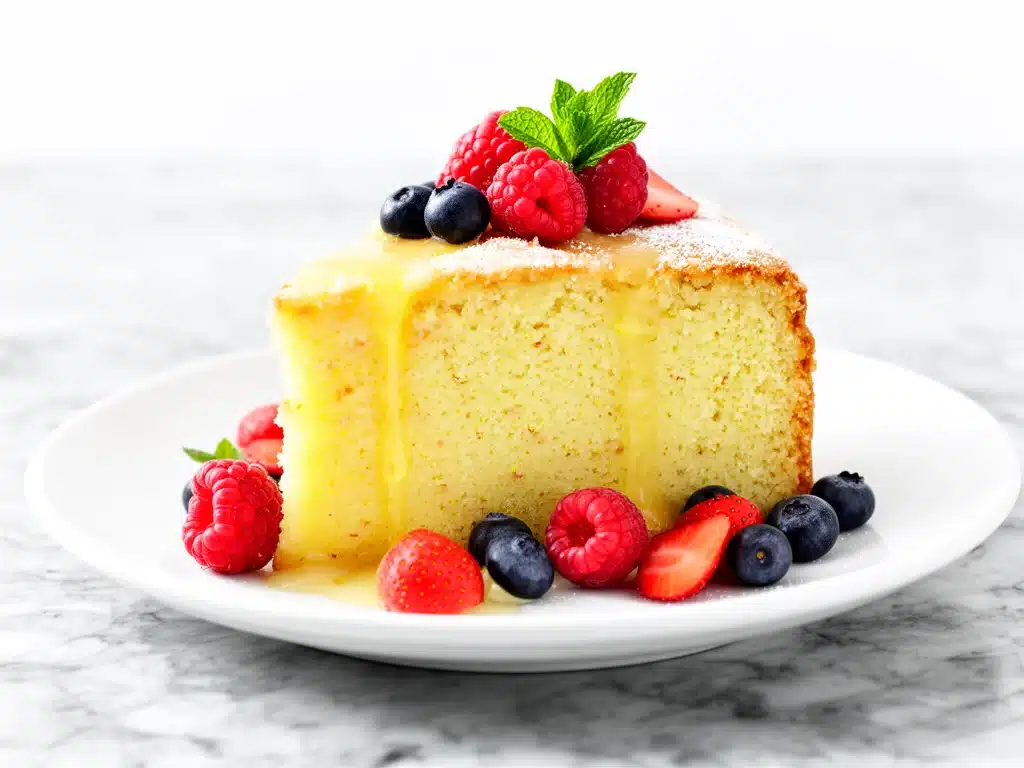
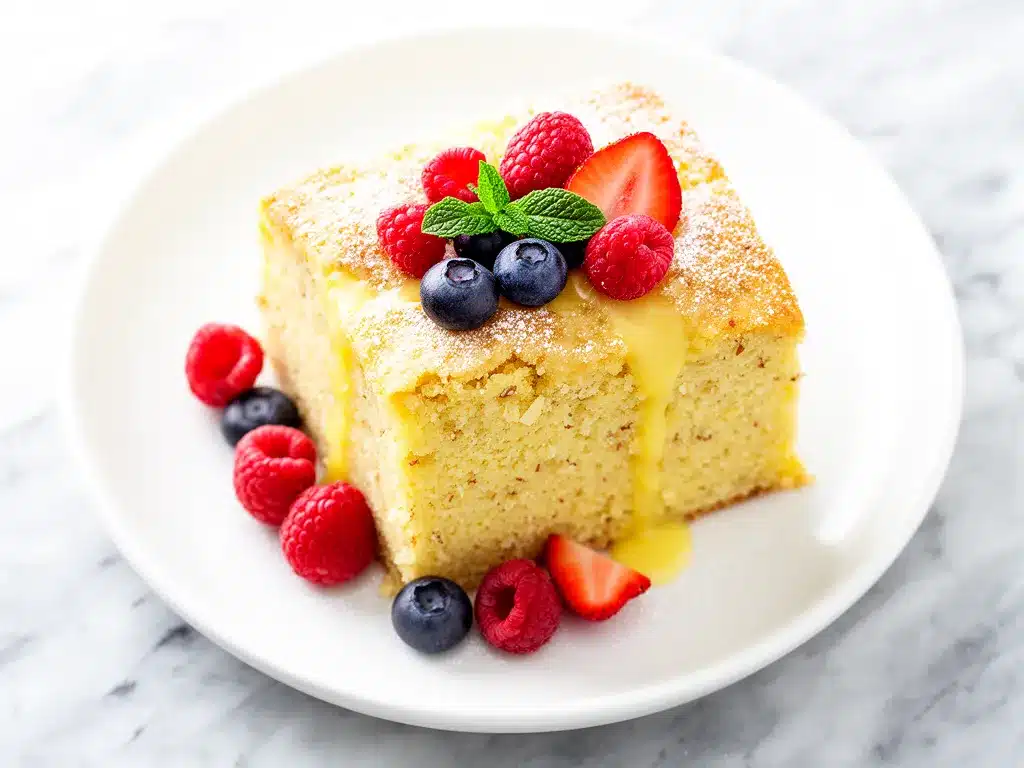
- Beautiful Presentation — It’s golden brown on top, dusted with powdered sugar, and topped with fresh berries. It looks like something from a high-end café. My friends always assume I bought it from a bakery. (Shh.)
This cake has saved my weekends. It’s my go-to when I want to impress without stressing. It’s reliable, delicious, and safe for everyone. And honestly? It just makes mornings feel special.
Ingredients You’ll Need
Here’s the thing about gluten-free baking: the quality of your ingredients matters more than ever. Since you’re not using gluten to hold everything together, you need ingredients that bring their own structure and flavor. Here’s exactly what I use and why.
For the Cake
Almond flour (2 cups / 200g) — This is the base of the cake. I use finely ground, blanched almond flour. Don’t use almond meal (which is coarser and has skins); it changes the texture. Look for brands like Honeyville or Blue Diamond. If you can’t find almond flour, this recipe won’t work with other flours without significant adjustments.
Baking powder (2 teaspoons) — Since almond flour is dense, you need a good leavening agent. Make sure it’s fresh! Old baking powder won’t give you the rise you need. I keep a fresh canister at all times.
Salt (½ teaspoon) — Essential for balancing the sweetness and enhancing the lemon flavor. Don’t skip it.
Unsalted butter (½ cup / 113g, softened) — Room temperature butter creams better with sugar, which creates air pockets for lift. If your butter is cold, microwave it for 10 seconds. It should be soft but not melted.
Granulated sugar (1 cup / 200g) — Regular white sugar works best here. It helps create a tender crumb. Some people substitute with coconut sugar, but it changes the color and flavor slightly. I stick with white for that classic golden look.
Eggs (3 large) — Room temperature eggs emulsify better into the batter. I take them out of the fridge 30 minutes before baking. If I’m rushing, I put them in a bowl of warm water for 5 minutes.
Vanilla extract (1 teaspoon) — Pure vanilla adds depth. I use Nielsen-Massey because it’s strong and aromatic. Avoid imitation vanilla; it tastes chemical.
Fresh lemon juice (3 tablespoons / 45ml) — This is non-negotiable. Bottled lemon juice has a metallic taste that ruins the brightness. Squeeze two or three lemons yourself. It takes 2 minutes and makes a huge difference.
Lemon zest (2 tablespoons) — From about 2 lemons. Only use the yellow part, not the white pith, which is bitter. I use a microplane for fine zest that distributes evenly.
Buttermilk (½ cup / 120ml) — Buttermilk adds tang and tenderness. If you don’t have buttermilk, make your own: add 1 tablespoon of lemon juice or vinegar to ½ cup of milk and let it sit for 5 minutes. It curdles slightly and works perfectly.
For the Glaze and Topping
Powdered sugar (1 cup / 120g) — For dusting or mixing into the glaze. Sift it if it’s clumpy.
Heavy cream or milk (2-3 tablespoons) — To thin the glaze. Start with 2 tablespoons and add more if needed.
Fresh berries (1 cup mixed) — Strawberries, blueberries, and raspberries look stunning and add a fresh contrast to the rich cake. I use whatever is in season. In winter, I use frozen berries thawed and patted dry.
Substitutions
Nut-free option: You can substitute almond flour with oat flour (certified gluten-free) or sunflower seed flour, but the texture will be different. Oat flour makes it more cake-like; sunflower seed flour makes it denser. I haven’t tested exact ratios for these, so start with 1:1 and adjust liquid as needed.
Dairy-free: Use dairy-free butter and dairy-free buttermilk (soy milk + lemon juice). It works, but the flavor is slightly less rich.
Equipment Needed
You don’t need fancy tools for this cake. Here’s what I actually use in my kitchen.
9-inch round cake pan — I use a metal pan. Glass pans bake slower and can result in a darker crust. If you only have glass, reduce the oven temperature by 25°F.
Parchment paper — Essential for easy removal. I cut a circle to fit the bottom and grease the sides. The cake sticks to nothing if you do this.
Mixer — A hand mixer or stand mixer makes creaming the butter and sugar much easier. But you can do it by hand with a strong whisk. It takes 2 extra minutes of arm work.
Microplane or zester — For the lemon zest. A regular grater works but leaves larger pieces that can be bitter.
Cooling rack — Let the cake cool completely before glazing. If you glaze it warm, the glaze melts and runs off.
Spatula — A silicone spatula is great for folding in the dry ingredients gently. Overmixing makes the cake tough.
Sifter or fine-mesh strainer — For the powdered sugar. Nobody wants lumps in their glaze.
How to Make It: Step-by-Step
Alright, let’s make this cake! I’m walking you through exactly how I do it, including the little tricks I’ve picked up over years of baking.
Step 1: Prep Your Pan and Oven (5 minutes)
Preheat your oven to 350°F (175°C). Grease the bottom and sides of a 9-inch round cake pan with butter or non-stick spray. Line the bottom with a circle of parchment paper. This is the most important step for easy removal. I’ve ruined cakes by forgetting the parchment, and I never do it again.
Step 2: Whisk the Dry Ingredients (2 minutes)
In a medium bowl, whisk together the almond flour, baking powder, and salt. Almond flour can be clumpy, so break up any lumps with your fingers or a fork. Whisking ensures even distribution of the leavening agent, which prevents dense spots in the cake.
Step 3: Cream the Butter and Sugar (3 minutes)
In a large bowl, beat the softened butter and granulated sugar together until light and fluffy. If using a mixer, this takes about 2-3 minutes on medium speed. If mixing by hand, it takes longer, but it’s worth it. The mixture should look pale and airy. This step incorporates air, which helps the cake rise.
Step 4: Add Eggs and Flavorings (2 minutes)
Add the eggs one at a time, beating well after each addition. Mix in the vanilla extract, lemon juice, and lemon zest. The mixture might look slightly curdled at first—don’t worry. It will come together when you add the dry ingredients.
Step 5: Combine Wet and Dry (2 minutes)
Gradually add the dry ingredients to the wet ingredients, alternating with the buttermilk. Start and end with the dry ingredients. Mix on low speed or stir gently with a spatula until just combined. Do not overmix! Overmixing develops the proteins in the almond flour, making the cake dense. It should look thick and creamy.
Step 6: Bake (40-45 minutes)
Pour the batter into the prepared pan and smooth the top with a spatula. Bake in the preheated oven for 40-45 minutes. The cake is done when the top is golden brown, the edges pull away slightly from the pan, and a toothpick inserted into the center comes out clean or with a few moist crumbs (not wet batter). If the top is browning too fast, cover it loosely with foil after 30 minutes.
Step 7: Cool Completely (1 hour)
Let the cake cool in the pan for 10 minutes, then turn it out onto a cooling rack. Let it cool completely before glazing. This is crucial. If the cake is even slightly warm, the glaze will melt and slide off. I usually bake it the night before to save time.
Step 8: Glaze and Decorate (5 minutes)
Whisk together the powdered sugar and heavy cream until smooth. Add more cream if needed for a drizzle-able consistency. Drizzle the glaze over the cooled cake. Top with fresh berries. Slice and serve.
Expert Tips & Tricks
Here’s everything I’ve learned from making this cake dozens of times. These tips will save you from my mistakes.
Use Finely Ground Almond Flour — Coarse almond flour makes the cake gritty. Look for “superfine” or “blanched” almond flour. If you grind your own, pulse almonds in a food processor until fine, but don’t over-pulse or you’ll make almond butter.
Room Temperature Ingredients — Cold eggs and butter don’t mix well. Take them out of the fridge 30 minutes before baking. This ensures a smooth, emulsified batter.
Don’t Skip the Parchment — Almond flour cakes are delicate. Without parchment, they stick. Grease + parchment = no stress.
Check Early — Ovens vary. Start checking at 35 minutes. If the toothpick is clean, it’s done. Overbaking dries out almond flour cakes quickly.
Glaze Consistency — The glaze should be thick enough to coat the back of a spoon but thin enough to drizzle. If it’s too thick, add cream ½ teaspoon at a time.
Store Properly — Cover the cake with plastic wrap or store in an airtight container. It stays fresh for 3-4 days at room temperature or 5 days in the fridge.
Variations & Substitutions
Once you’ve mastered the basic version, here’s how you can mix it up. I’ve tried all of these.
Berry Swirl — Fold ½ cup of fresh or frozen berries into the batter before baking. They’ll create beautiful swirls and bursts of flavor.
Coconut Version — Substitute ½ cup of almond flour with shredded coconut. Add 1 teaspoon of coconut extract with the vanilla. Tastes like a tropical vacation.
Chocolate Chip — Add ½ cup of dairy-free chocolate chips to the batter. Surprisingly good with lemon.
Gluten-Free Oat Flour — For a nut-free version, use 1½ cups gluten-free oat flour and ½ cup cornstarch. Add 1 extra egg. Texture is softer and more cake-like.
Vegan — Substitute eggs with flax eggs (3 tablespoons ground flax + 9 tablespoons water). Use dairy-free butter and buttermilk. It’s denser but still tasty.
Serving & Storage
How to Serve: I serve this cake straight from the cooling rack, dusted with powdered sugar and topped with berries. It’s perfect with coffee or tea. Pair it with simple fruit and cheese snacks for a balanced brunch spread.
Side Dishes: This cake is rich, so I pair it with something light. A green salad, fresh fruit, or even quick savory snacks if you want a mix of sweet and salty.
Storage: Store in an airtight container at room temperature for up to 3 days. In the fridge for up to 5 days. Bring to room temperature before serving for the best texture.
Freezing: Yes, this cake freezes well! Wrap slices tightly in plastic wrap, then in foil. Freeze for up to 3 months. Thaw overnight in the fridge.
Nutrition Information
I’m not a nutritionist, but here’s the breakdown if you’re tracking. This is per slice (1/12 of the cake).
- Calories: 220
- Protein: 6g
- Carbs: 12g
- Fiber: 2g
- Sugar: 9g
- Fat: 18g
- Saturated Fat: 7g
- Cholesterol: 45mg
- Sodium: 110mg
This cake is higher in fat due to the almond flour and butter, but it’s also higher in protein and fiber than traditional cakes. It’s a more nutrient-dense option. Enjoy it as a treat, not a diet food.
Final Thoughts
So that’s my go-to gluten-free lemon almond cake! I’ve probably talked your ear off at this point, but when you make a recipe this often, you have a lot to say about it. This cake has saved my weekends. It’s my answer to “what’s for brunch” when I want to feel fancy but also relaxed. My family loves it, my friends ask for it, and I love making it.
Make it yours! Try different berries, swap the glaze for a cream cheese frosting, or add a layer of lemon curd. The best recipes are the ones you adapt to your tastes. If you make this, drop a comment and let me know what you think! I love hearing how recipes turn out in your kitchen. And if something doesn’t work, tell me that too—I’m here to help.
Happy baking! And I hope your kitchen smells like lemon and sunshine soon.
Frequently Asked Questions
Can I use almond meal instead of almond flour?
You can, but the texture will be different. Almond meal is coarser and has skins, so the cake will be denser and speckled. For a finer, more cake-like texture, use blanched almond flour. If you only have almond meal, pulse it in a food processor to grind it finer.
Why did my cake sink in the middle?
This usually happens if the cake is underbaked or if the oven temperature is too high. Make sure you’re baking until the toothpick comes out clean. Also, check your oven with a thermometer—many ovens run hot or cold.
Can I make this cake ahead of time?
Yes! This cake actually tastes better the next day. Bake it, cool it, and store it covered at room temperature. Add the glaze and berries right before serving for the best presentation.
Is this cake safe for celiac disease?
Yes, as long as you use certified gluten-free almond flour and baking powder. Almond flour is naturally gluten-free, but cross-contamination can happen. Always check labels.
Can I double this recipe?
You can, but bake it in two 9-inch pans or a 9×13 pan. If using a 9×13 pan, increase baking time by 5-10 minutes. Keep an eye on it.
What if I don’t have buttermilk?
Make your own by adding 1 tablespoon of lemon juice or white vinegar to ½ cup of milk. Let it sit for 5 minutes until it curdles. It works perfectly as a substitute.
Can I use lemon extract instead of fresh lemon juice?
You can use a combination. I use 2 tablespoons of fresh juice and 1 teaspoon of extract for maximum flavor. If you only have extract, use 2 teaspoons, but fresh juice is still better for moisture.
Pin This Recipe!

Gluten-Free Lemon Almond Cake: Best Easy Weekend Brunch
- Total Time: 1 hour 15 minutes
- Yield: 12 servings 1x
Description
A moist, tender, and naturally gluten-free lemon almond cake that is perfect for weekend brunches. Made with almond flour and fresh lemon, this easy recipe yields a beautiful, bakery-quality cake without the need for special gluten-free blends.
Ingredients
- 2 cups (200g) finely ground blanched almond flour
- 2 teaspoons baking powder
- 1/2 teaspoon salt
- 1/2 cup (113g) unsalted butter, softened
- 1 cup (200g) granulated sugar
- 3 large eggs, room temperature
- 1 teaspoon vanilla extract
- 3 tablespoons (45ml) fresh lemon juice
- 2 tablespoons lemon zest
- 1/2 cup (120ml) buttermilk
- 1 cup (120g) powdered sugar
- 2–3 tablespoons heavy cream or milk
- 1 cup mixed fresh berries
Instructions
- Preheat oven to 350°F (175°C). Grease a 9-inch round cake pan and line the bottom with parchment paper.
- In a medium bowl, whisk together the almond flour, baking powder, and salt to break up any lumps.
- In a large bowl, beat the softened butter and granulated sugar until light and fluffy (about 2-3 minutes).
- Add eggs one at a time, beating well after each addition. Mix in vanilla extract, lemon juice, and lemon zest.
- Gradually add the dry ingredients to the wet ingredients, alternating with the buttermilk, starting and ending with the dry ingredients. Mix gently until just combined.
- Pour batter into the prepared pan and smooth the top. Bake for 40-45 minutes until a toothpick inserted in the center comes out clean.
- Let the cake cool in the pan for 10 minutes, then turn out onto a cooling rack to cool completely.
- Whisk powdered sugar and heavy cream until smooth. Drizzle over the cooled cake and top with fresh berries.
Notes
Ensure almond flour is finely ground for the best texture. Do not overmix the batter to avoid a dense cake. The cake tastes better the next day as flavors meld. Store in an airtight container at room temperature for 3-4 days or in the fridge for 5 days. Can be frozen for up to 3 months.
- Prep Time: 15 minutes
- Cook Time: 45 minutes
- Category: Dessert
- Cuisine: American
Nutrition
- Serving Size: 1 slice (1/12 of the
- Calories: 220
- Sugar: 9
- Sodium: 110
- Fat: 18
- Saturated Fat: 7
- Carbohydrates: 12
- Fiber: 2
- Protein: 6
Keywords: gluten-free, lemon cake, almond flour, brunch recipe, easy baking, dairy-free option, nut-free option