
I’ll be honest with you. A few winters ago, I fell into a rut. You know the one. It’s that time of year when the weather turns gray, the days get short, and your idea of a “good meal” is something that comes in a box or takes less than ten minutes to heat up. I was surviving on cereal for dinner twice a week. It wasn’t glamorous, but it was easy.
Then, I stumbled into a tiny café in Portland that smelled like toasted spices and warm bread. I ordered the daily soup because it was the only thing on the menu that didn’t require a knife and fork. It was this velvety, orange-colored soup that tasted like autumn wrapped in a hug. I asked the owner for the recipe, and she laughed. She said, “It’s just squash, coconut milk, and curry powder. You really can’t mess it up.”
I went home skeptical. Butternut squash? Coconut milk? Curry powder? It sounded like a smoothie that got lost on its way to becoming dinner. But I bought a squash, a can of coconut milk, and a jar of curry powder. I chopped, I stirred, I tasted. And wow. It was incredible. Creamy, rich, savory, and slightly sweet all at once. Best of all? It took about 30 minutes from start to finish.
That was three years ago. This vegan butternut squash coconut curry soup has been in my rotation ever since. I’ve made it for potlucks, for lazy Sundays, and for when I just need something to warm my hands and my heart. It’s the kind of recipe that makes you feel like a pro cook, even if your only culinary skill is knowing how to turn on the stove.
If you’re new to cooking, or if you’re just tired of the same old routine, trust me on this. This soup is forgiving. It’s simple. And it tastes like you spent hours simmering it on low heat (even though you didn’t). Let’s get into why this is the only soup you’ll need this season.
Why You’ll Love This Vegan Butternut Squash Coconut Curry Soup
There are a lot of reasons I keep coming back to this bowl of orange goodness, but they all boil down to one thing: it just works. Here’s the real deal on why this vegan butternut squash coconut curry soup deserves a spot in your kitchen.
- Zero Fussy Techniques — Seriously, if you can chop a vegetable and open a can, you can make this. There’s no blending while standing over a hot stove to avoid splatters (we’ll get to that). There’s no complicated roux or fancy garnishes. Just dump, simmer, blend, eat.
- Pantry Staples — You probably have 80% of this already. Butternut squash is cheap and widely available. Coconut milk and curry powder are shelf-stable. This is the perfect “I have nothing to eat” dinner that somehow turns into a gourmet meal.
- Actually Creamy (Without Dairy) — I know what you’re thinking. “Coconut milk? Won’t it taste like coconut?” It doesn’t. The curry powder and spices mask the coconut flavor completely, leaving you with a rich, creamy texture that rivals any heavy cream-based soup. It’s velvety smooth.
- Meal Prep Friendly — This soup tastes even better the next day. The flavors meld together overnight. I make a big pot on Sunday, and I have lunch sorted for three days. It reheats beautifully without separating or getting weird.
- Beginner-Proof — I’ve taught my teenage nephew to make this. He burned the onions once (oops), and it still tasted amazing. You really can’t mess this up. If it’s too thick, add water. If it’s too thin, simmer longer. It’s foolproof.
This isn’t just soup. It’s confidence in a bowl. It’s proof that you don’t need fancy skills to make something delicious. Once you try this vegan butternut squash coconut curry soup, you’ll wonder why you ever bought canned tomato soup again.
Ingredients You’ll Need
Here’s the best part: the ingredient list is short. Like, “I can say it out loud while walking to the store” short. I’m particular about three things here, but for the most part, this is very forgiving.
For the Base
Butternut squash (1 large, about 2-3 lbs / peeled and cubed) — Look for one that feels heavy for its size. That means it’s juicy and sweet. If you can’t find pre-cut, ask the produce guy to help you. It’s tough to cut at home if you’re not used to it. Cube it into 1-inch pieces so it cooks evenly.
Onion (1 medium yellow onion / diced) — This is your flavor foundation. Yellow onions are sweet and savory when cooked down. Don’t skip this. White onions work too, but yellow gives better depth.
Garlic (4 cloves / minced) — Fresh garlic is non-negotiable here. Jarred garlic has a metallic aftertaste that clashes with the delicate sweetness of the squash. Take the extra 2 minutes to mince it yourself.
Coconut milk (1 can, 13.5 oz / full-fat) — Use full-fat coconut milk for that rich, creamy texture. Light coconut milk will make this soup watery and less satisfying. Shake the can before opening to mix the cream and water.
For the Flavor

Vegetable broth (3 cups / low-sodium) — I use low-sodium so I can control the saltiness. If you only have regular broth, just reduce the added salt later. Vegetable broth keeps it vegan and adds savory depth.
Curry powder (2 tablespoons) — This is the star. Use a good quality curry powder. I like Patak’s or any brand with a mix of turmeric, cumin, coriander, and ginger. Don’t use curry paste unless you want it much spicier and darker.
Ginger (1 tablespoon / fresh, grated) — Fresh ginger adds a bright, zesty kick that balances the sweetness. Grate it with a microplane or just finely mince it. If you’re out, ½ teaspoon ground ginger works, but fresh is better.
Maple syrup (1 tablespoon) — Just a little bit to caramelize the squash slightly and balance the spices. You can skip it, but it adds a nice roundness to the flavor.
Apple cider vinegar (1 teaspoon) — This is the secret weapon. It cuts through the richness of the coconut milk and wakes up all the flavors. You won’t taste “vinegar,” but the soup will taste brighter.
Salt and black pepper — To taste. Start with 1 teaspoon salt and adjust after blending.
Optional Add-ins — Red lentils (½ cup) — Add these with the broth for extra protein and thickness. They cook down and disappear, making the soup heartier. Spinach (2 cups) — Stir in fresh spinach at the very end if you want to sneak in some greens.
Equipment Needed
You don’t need fancy gadgets for this. Here’s what I actually use.
Large pot or Dutch oven — I use a 6-quart pot. It needs to fit the squash, onions, and broth comfortably. My old stockpot from college works fine—doesn’t need to be fancy.
Sharp knife — For chopping the squash and onion. A dull knife is dangerous and frustrating. Learn to sharpen yours.
Cutting board — Any size works. I use a plastic one for easier cleanup.
Immersion blender — This is the game-changer. Blending soup in a regular blender while it’s hot is risky (explosions!). An immersion blender lets you blend right in the pot. If you don’t have one, a regular blender works, but let the soup cool slightly first and blend in batches.
Wooden spoon — For stirring. Silicone works too. Just don’t use metal if your pot is non-stick.
Measuring cups and spoons — Standard stuff. Dollar store versions work fine for this.
How to Make It: Step-by-Step
Alright, let’s make this! I’m walking you through exactly how I do it, including the little tricks I’ve picked up so you don’t have to guess.
Step 1: Prep Your Ingredients (5 minutes)
Before you turn on the stove, chop your onion, mince your garlic, and cube your squash. I know it seems fussy, but it makes the cooking process way less stressful. Once you start cooking, things move fast. Measure out your curry powder and ginger while you’re at it.
Step 2: Sauté the Aromatics (3-4 minutes)
Heat 2 tablespoons of oil (olive or coconut) in your large pot over medium heat. Add the diced onion and cook for 2-3 minutes until it starts to soften and turn translucent. Add the minced garlic and grated ginger. Cook for 1 minute, stirring constantly. The garlic should smell amazing but not brown—browned garlic tastes bitter.
Step 3: Toast the Spices (1 minute)
Add the curry powder to the pot. Stir it into the onions and garlic for about 30-60 seconds. This “toasting” step releases the essential oils in the spices and makes the flavor much deeper. It’s a small step that makes a big difference.
Step 4: Simmer the Squash (15-20 minutes)
Add the cubed butternut squash, vegetable broth, and maple syrup to the pot. Stir everything together. Bring it to a boil, then reduce the heat to low. Cover the pot and let it simmer for 15-20 minutes. You’ll know it’s done when you can pierce a piece of squash easily with a fork. It should be tender and falling apart.
Step 5: Blend Until Smooth (2 minutes)
Remove the pot from the heat. If you’re using an immersion blender, blend the soup directly in the pot until smooth. If you’re using a regular blender, let the soup cool for 5 minutes, then blend in batches. Be careful not to overfill the blender, or it will explode. Blend until there are no lumps left.
Step 6: Add Coconut Milk and Finish (2 minutes)
Stir in the coconut milk and apple cider vinegar. Taste the soup. Add salt and pepper to taste. If it’s too thick, add a splash of water or broth. If it’s too thin, let it simmer uncovered for a few minutes to reduce. The soup should be creamy and pourable, not like mashed potatoes.
Step 7: Serve
Ladle into bowls and serve immediately. I love this with a drizzle of sesame oil or some fresh cilantro on top. It’s also great with crusty bread or crackers.
Total Time: About 30-35 minutes (10 minutes active, 20 minutes simmering).
Expert Tips & Tricks
Here’s everything I’ve learned from making this dozens of times. These tips will save you from my mistakes.
- Don’t Skimp on the Curry — Curry powder is the flavor driver. If you use too little, the soup will taste bland. 2 tablespoons is the sweet spot. If you like it spicier, add a pinch of cayenne pepper.
- Blend While Hot — Hot soup blends smoother than cold soup. If you let it cool completely, the starches in the squash can set and make it gritty. Blend it right after cooking.
- Use Full-Fat Coconut Milk — Light coconut milk will result in a watery, less flavorful soup. The fat in the full-fat milk is what makes it feel luxurious. It’s worth the extra calories.
- Toast Your Spices — I know I said this before, but it’s that important. Toasting the curry powder in the oil before adding the liquid unlocks flavors that raw spices just don’t have.
- Adjust Consistency — This soup thickens as it cools. If you’re meal prepping, leave it a bit thinner than you want it to be. It will thicken up in the fridge.
Common Mistakes (and how to avoid them)
Mistake: Soup is too thick
Fix: Add water or broth a little at a time until it reaches your desired consistency.
Mistake: Soup is too thin
Fix: Simmer uncovered for 5-10 minutes to evaporate excess liquid. Or add a spoonful of coconut cream.
Mistake: Flavor is flat
Fix: Add more salt, or a splash of acid (lemon juice or vinegar). Acid wakes up the flavors.
Variations & Substitutions
Once you’ve nailed the basic version, here’s how you can mix it up. I’ve tried all of these.
Spicy Version
Add 1 teaspoon of red pepper flakes or a diced jalapeño with the onions. Great if you like heat.
Protein-Packed
Add ½ cup of red lentils with the broth. They cook down and disappear, adding protein and thickness. This makes the soup more filling.
Green Curry Twist
Swap the yellow curry powder for green curry paste. It’s spicier and has a different herbaceous flavor. Use 1-2 tablespoons of paste.
Gluten-Free
This recipe is naturally gluten-free. Just make sure your vegetable broth and curry powder are certified gluten-free.
Dairy-Free
This recipe is already dairy-free. Coconut milk is the cream base.
Serving & Storage
How to Serve
I usually serve this straight from the pot at the dinner table—it looks rustic and stays warm. But here are other ways I’ve enjoyed it:
- Crusty Bread — Perfect for dipping. A sourdough boule is my go-to.
- Roasted Vegetables — Toss some broccoli or cauliflower in olive oil and roast them alongside the soup. Adds texture.
- Crunchy Toppings — Toasted pumpkin seeds, sesame seeds, or crispy fried onions add a nice crunch.
- Fresh Herbs — Cilantro or parsley chopped on top adds color and freshness.
Storage Instructions
Refrigerator:
Store in an airtight container for up to 5 days. The flavors actually get better after a day or two.
Freezing:
Yes, this freezes well! Let it cool completely, then freeze in portions for up to 3 months. Thaw in the fridge overnight and reheat gently. The texture might be slightly grainier after freezing, but it’s still delicious.
Reheating:
Reheat on the stove over low heat, stirring frequently. If it’s too thick, add a splash of water or broth. Microwave works too, but stir every 30 seconds to prevent hot spots.
Nutrition Information
I’m not a nutritionist, but here’s the breakdown if you’re tracking.
Per Serving (based on 6 servings):
- Calories: 220
- Protein: 4g
- Carbs: 28g
- Fiber: 5g
- Sugar: 12g
- Fat: 12g
- Saturated Fat: 9g
- Sodium: 350mg
Look, this is comfort food. It’s not a diet recipe, but it’s packed with vegetables and fiber. The coconut milk adds healthy fats, and the squash is loaded with vitamin A. When I want to make it lighter, I add extra spinach or lentils. But usually? I just eat a reasonable portion and enjoy it.
Final Thoughts
So that’s my go-to vegan butternut squash coconut curry soup! I’ve probably talked your ear off at this point, but when you make a recipe this often, you have a lot to say about it.
This has saved weeknight dinners more times than I can count. It’s my answer to “what’s for dinner” when I’m tired, don’t want takeout, and still want something that tastes really good. My kids are happy, my friends are happy, and I’m happy because I’m not stressed about cooking.
Make it yours! Try different add-ins, swap in your favorite vegetables, adjust the spice level. The best recipes are the ones you adapt to your family’s tastes. If you make this, drop a comment and let me know what you think! I love hearing how recipes turn out in your kitchen.
Happy cooking! And I hope your kitchen smells half as good as mine does right now.
Frequently Asked Questions
Can I use frozen butternut squash?
Yes! Frozen cubed butternut squash works perfectly. You might need to simmer it for an extra 5 minutes since it starts cold. Thawing it first isn’t necessary.
Why did my soup turn out watery?
This usually means you used too much broth or didn’t simmer it long enough to reduce. Let it simmer uncovered for 10-15 minutes to thicken. You can also add a spoonful of coconut cream.
Can I make this ahead for a dinner party?
Absolutely. Make it up to 2 days ahead and store in the fridge. Reheat gently and stir in a splash of coconut milk if needed. It’s a great make-ahead dish because it doesn’t require last-minute effort.
Is this soup spicy?
Not really. Standard yellow curry powder is aromatic and flavorful, but not hot. If you want heat, add red pepper flakes or cayenne. It’s mild enough for kids.
Can I use light coconut milk?
You can, but the soup will be less creamy and rich. If you’re watching calories, it’s okay, but you might want to add a splash of cream or extra broth to adjust the texture.
How long does this soup last?
Up to 5 days in the fridge. It freezes well for up to 3 months. The flavors improve after a day, so it’s perfect for meal prep.
What’s the best way to peel a butternut squash?
Microwave it for 2-3 minutes to soften the skin. Then use a sharp chef’s knife or a vegetable peeler. Be careful—it’s tough! If you’re struggling, ask your grocery store to cut it for you.
Pin This Recipe!
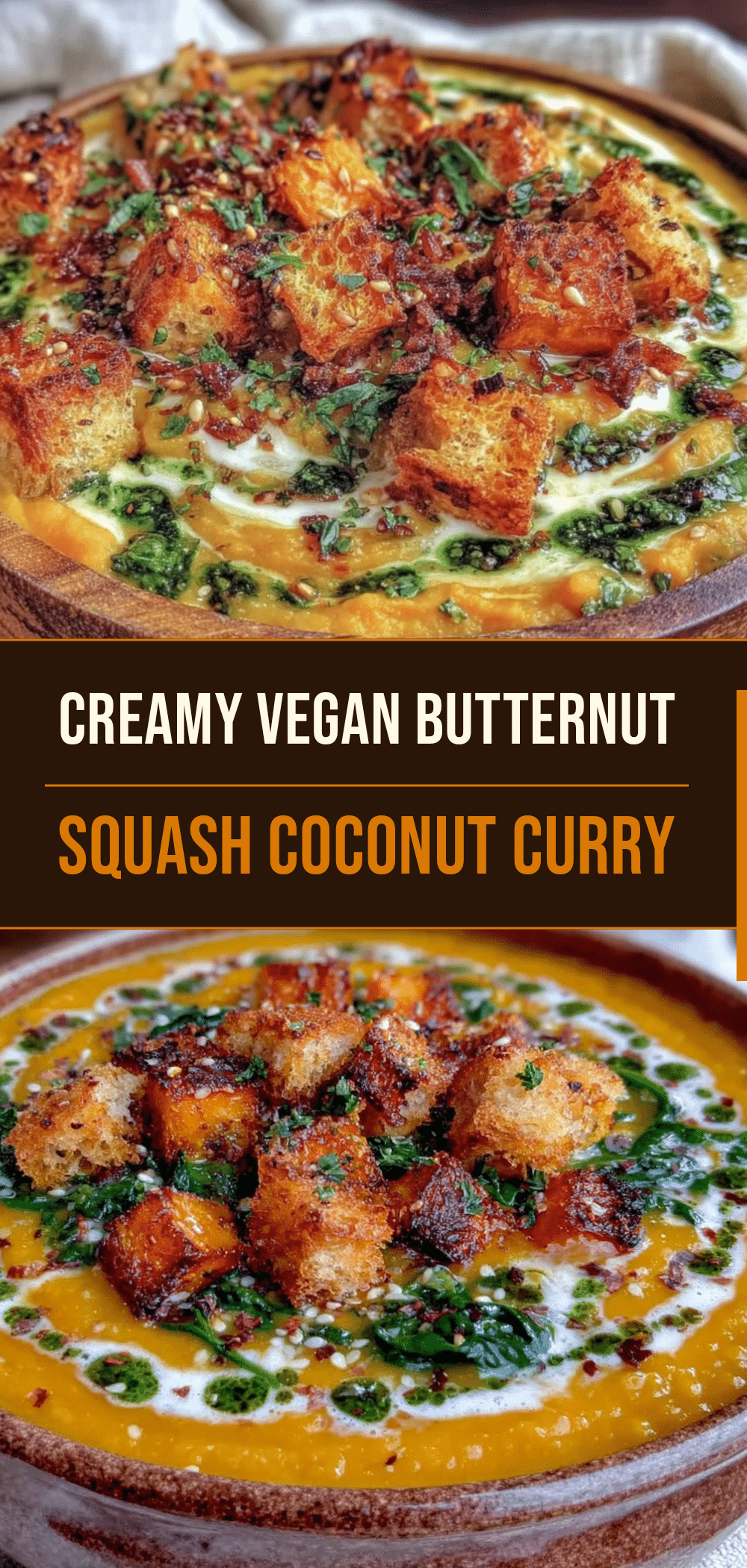

Vegan Butternut Squash Coconut Curry Soup
- Total Time: 30 minutes
- Yield: 6 servings 1x
Description
A velvety, creamy, and savory vegan soup made with butternut squash, coconut milk, and curry powder. It is beginner-proof, ready in 30 minutes, and perfect for meal prep.
Ingredients
- 1 large butternut squash (about 2–3 lbs), peeled and cubed into 1-inch pieces
- 1 medium yellow onion, diced
- 4 cloves garlic, minced
- 1 can (13.5 oz) full-fat coconut milk, shaken
- 3 cups low-sodium vegetable broth
- 2 tablespoons curry powder
- 1 tablespoon fresh ginger, grated
- 1 tablespoon maple syrup
- 1 teaspoon apple cider vinegar
- 2 tablespoons oil (olive or coconut)
- Salt and black pepper to taste
- Optional: ½ cup red lentils
- Optional: 2 cups fresh spinach
Instructions
- Prep ingredients: Dice the onion, mince the garlic, and cube the squash. Measure out the curry powder and ginger.
- Sauté aromatics: Heat oil in a large pot over medium heat. Add diced onion and cook for 2-3 minutes until translucent. Add garlic and ginger, cooking for 1 minute until fragrant but not browned.
- Toast spices: Add curry powder to the pot and stir for 30-60 seconds to release essential oils.
- Simmer: Add cubed squash, vegetable broth, and maple syrup. Bring to a boil, then reduce heat to low, cover, and simmer for 15-20 minutes until squash is tender.
- Blend: Remove from heat. Use an immersion blender to blend the soup directly in the pot until smooth. Alternatively, let cool slightly and blend in batches in a regular blender.
- Finish: Stir in coconut milk and apple cider vinegar. Season with salt and pepper to taste. Adjust consistency with water or broth if needed.
- Serve: Ladle into bowls and serve immediately with optional toppings like sesame oil, cilantro, or crusty bread.
Notes
Toast the curry powder to deepen flavor. Use full-fat coconut milk for creaminess. The soup thickens as it cools, so leave it slightly thinner if meal prepping. It freezes well for up to 3 months.
- Prep Time: 10 minutes
- Cook Time: 20 minutes
- Category: Main Course
- Cuisine: Vegan
Nutrition
- Serving Size: 1 bowl
- Calories: 220
- Sugar: 12
- Sodium: 350
- Fat: 12
- Saturated Fat: 9
- Carbohydrates: 28
- Fiber: 5
- Protein: 4
Keywords: vegan soup, butternut squash, coconut curry, easy dinner, meal prep, gluten-free, dairy-free, comfort food