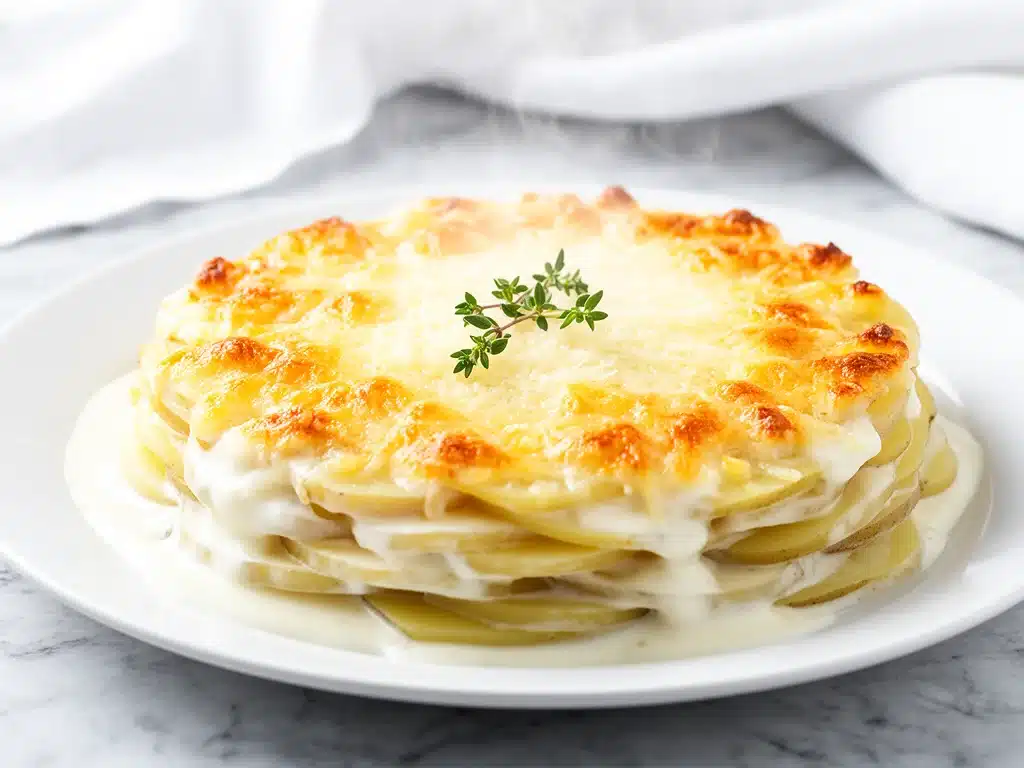
There’s a specific kind of guilt that comes from serving a side dish that feels like an afterthought. You know the one. You’ve spent hours braising a brisket or roasting a chicken, and then you pull out a sad, watery vegetable or a box of instant mashed potatoes from the freezer. The main event shines, but the table feels incomplete. I used to live there. For years, I thought scalloped potatoes were too much work for a Tuesday, or too rich for a weeknight, or too complicated for my skill set. So I compromised. Until one rainy November afternoon when I was feeling particularly ambitious (and slightly desperate for comfort), I decided to tackle the ultimate starch: creamy, cheesy, perfectly tender scalloped potatoes.
I’ll be honest with you. My first attempt was a disaster. I sliced the potatoes too thick, the sauce separated into a greasy mess, and the top was burnt before the centers were cooked through. I stared at that pan of culinary heartbreak and nearly ordered pizza. But I refused to let a few bad slices defeat me. I went back to the drawing board, tested the slicing thickness, tweaked the cheese blend, and adjusted the baking time. I made them again. And again. And again. By the tenth time, I had it. The potatoes were buttery soft, the sauce was velvety and thick without being gluey, and the top had that golden, bubbly crust that makes your stomach growl just looking at it.
This isn’t just a recipe; it’s my redemption arc. It’s the dish that turned my holiday dinners from “okay” to “legendary.” It’s the side dish that clears the plate before the main course is even finished. Whether you’re hosting a fancy dinner party or just want to treat your family to something special on a random Wednesday, this creamy scalloped potatoes with cheese your whole family will crave is the answer. It’s rich, it’s comforting, and it’s surprisingly easy once you know the tricks. I’ve tested this method so you don’t have to waste your time or ingredients on the mistakes I made.
Why You’ll Love This Recipe
There are a lot of potato dishes out there, but this version hits a different note. It’s not just about carbs; it’s about texture and flavor balance. Here’s why this has become my absolute go-to for any occasion:
- Buttery, Not Greasy — The secret is in the ratio of cream to cheese. I’ve tested this until my tastebuds were numb. The result is a sauce that coats every slice without pooling oil at the bottom of the dish. It’s luxurious but light enough that you can eat a whole plate without feeling sluggish.
- Perfectly Tender Every Time — No more crunchy centers or mushy edges. By slicing the potatoes uniformly and using a specific soaking technique, the starch releases just enough to thicken the sauce while keeping the potato structure intact. It’s fork-tender perfection.
- Cheesy Without Being Overpowering — We use a blend of Gruyère and sharp cheddar. The Gruyère brings that nutty, sophisticated depth, while the cheddar gives you that classic, tangy cheese pull. It’s not just “cheesy”; it’s complex.
- Make-Ahead Friendly — This is a lifesaver for hosting. You can assemble the entire dish the night before, pop it in the fridge, and just throw it in the oven when you’re ready. It actually tastes better after resting for an hour before baking, as the flavors meld together.
- Family-Proof — Kids who hate vegetables will eat this. Adults who are picky about texture will love this. It’s the universal language of comfort food. I’ve served this to my foodie friends and my skeptical in-laws, and the result is always the same: empty dishes and second helpings.
This recipe takes the intimidation out of a classic French technique and makes it approachable for any home cook. It’s the kind of dish that makes people ask, “Did you order takeout?” when you tell them you made it from scratch.
Ingredients You’ll Need
Before we get to the oven, let’s talk about what goes into the dish. I’m particular about a few of these items, and I’ll tell you exactly why they matter. You don’t need anything exotic, but quality counts here.
Yukon Gold Potatoes (3 pounds / 1.3 kg) — I swear by Yukon Golds for this recipe. They have a naturally buttery flavor and a waxy texture that holds up well to baking. Russets will fall apart and become gluey. Red potatoes are too firm. Yukon Golds hit the sweet spot. Look for medium-sized potatoes so they slice evenly.
Heavy Cream (2 cups / 480ml) — This is the base of your sauce. Don’t substitute with milk or half-and-half if you want that rich, restaurant-quality texture. The fat content is what keeps the sauce creamy and prevents it from breaking. If you’re worried about calories, you can use half-and-half, but the texture will be thinner. Trust me, treat yourself.
Chicken or Vegetable Broth (1 cup / 240ml) — While cream is the star, a cup of broth adds savory depth without adding more fat. It balances the richness. Use low-sodium broth so you can control the salt level yourself.
Garlic (4 cloves, minced) — Fresh garlic is non-negotiable. Jarred garlic has a metallic taste that doesn’t work in this delicate cream sauce. Mince it finely so it disperses evenly. You want to taste the garlic, but not bite into a raw clove.
Gruyère Cheese (1 cup / 100g, grated) — This is the fancy cheese that makes the dish special. It melts beautifully and adds a nutty complexity. Buy a block and grate it yourself. Pre-grated cheese has anti-caking agents that prevent smooth melting, and you’ll end up with a grainy sauce.
Sharp Cheddar Cheese (1 cup / 100g, grated) — This provides the tang and the classic cheese flavor. Aged cheddar works best. Again, grate it yourself. The combination of Gruyère and cheddar is magic.
Butter (2 tablespoons) — For greasing the dish and adding a little extra richness to the sauce.
Dijon Mustard (1 teaspoon) — This might sound weird, but a teaspoon of Dijon cuts through the heaviness of the cream and cheese. It adds a subtle tang that wakes up the palate. You won’t taste the mustard directly, just the brightness it adds.
Dry White Wine (2 tablespoons, optional) — If you drink wine, add a splash of Sauvignon Blanc or Pinot Grigio. It deglazes the pan and adds acidity. If you don’t drink alcohol, skip it or use a little more broth.
Salt and Black Pepper — To taste. We’ll salt the layers as we go.
Fresh Thyme or Parsley — For garnish. Fresh herbs add color and a fresh contrast to the rich dish.
Equipment Needed
You don’t need fancy gadgets for this. Here’s what I actually use:
9×13 Inch Baking Dish — A ceramic or glass dish works best. It distributes heat evenly. Avoid metal pans if you can, as they can cause the edges to burn before the center is cooked.
Sharp Chef’s Knife — Essential for slicing potatoes evenly. A dull knife is dangerous and will crush the potato slices.
Food Processor with Slicing Disc — Optional but highly recommended. If you have a food processor with a slicing attachment, use it. It ensures uniform slices, which is key for even cooking. If you’re slicing by hand, take your time and try to keep them as even as possible.
Large Bowl — For soaking the potatoes.
Whisk — For mixing the cream, broth, and seasonings.
Box Grater — For grating the cheese. Or use a food processor with a grating attachment.
How to Make It: Step-by-Step
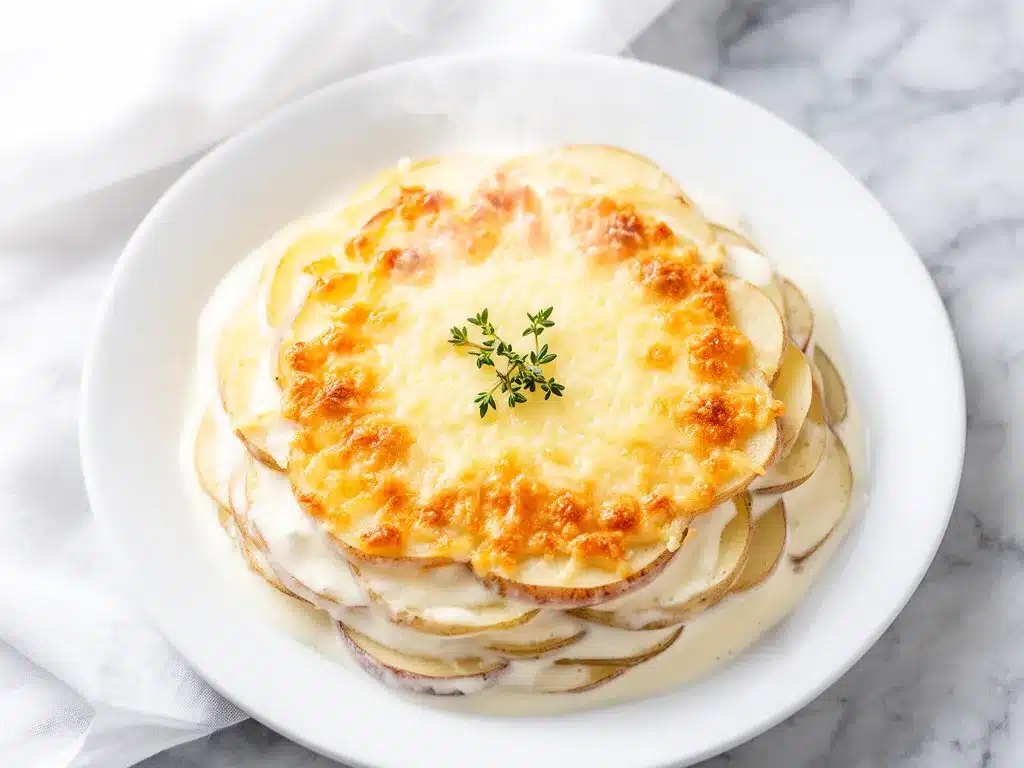
Alright, let’s make this! I’m walking you through exactly how I do it, including the little tricks I’ve picked up over the years.
Step 1: Prep the Potatoes (10 minutes)
Peel the potatoes. Some people leave the skin on for a rustic look, but for true creamy scalloped potatoes, I prefer peeled. Slice them into 1/8-inch thick rounds. If you’re using a food processor, this takes seconds. If you’re slicing by hand, aim for consistency. Place the slices in a large bowl of cold water. This step is crucial—it removes excess starch, which prevents the potatoes from sticking together and helps them cook evenly. Let them soak for at least 30 minutes, or up to an hour. While they soak, preheat your oven to 375°F (190°C). Grease your 9×13 baking dish with butter.
Step 2: Drain and Dry (5 minutes)
Drain the potatoes and pat them very dry with paper towels or a clean kitchen towel. You want to remove as much water as possible. Wet potatoes will water down your sauce. If you skip this, you’ll end up with a soupy dish instead of a creamy one.
Step 3: Make the Sauce (5 minutes)
In a large measuring cup or bowl, whisk together the heavy cream, broth, minced garlic, Dijon mustard, white wine (if using), salt, and pepper. Taste it. It should be well-seasoned because the potatoes will absorb some of the flavor. The sauce should be slightly saltier than you think it needs to be.
Step 4: Layer the Potatoes (10 minutes)
This is the assembly phase. Start by placing a layer of potato slices in the bottom of the greased dish, slightly overlapping them like shingles. You’ll need about 1/3 of the potatoes for the first layer. Sprinkle with half of the cheese. Repeat with a second layer of potatoes, then the remaining cheese. Finish with the final layer of potatoes. The goal is to have the potatoes packed tightly but not crushed. Pour the cream mixture evenly over the top. It should cover most of the potatoes. If it doesn’t, add a little more broth or cream. Cover the dish tightly with aluminum foil.
Step 5: Bake Covered (45 minutes)
Place the dish in the preheated oven and bake covered for 45 minutes. This steams the potatoes in the cream, making them tender. After 45 minutes, carefully remove the foil. The potatoes should be fork-tender. If they’re not, cover loosely and bake for another 10-15 minutes.
Step 6: Bake Uncovered (15-20 minutes)
Now for the fun part: the crust. Sprinkle any remaining cheese on top if you have it (I usually reserve a handful for the top). Return the dish to the oven, uncovered, for 15-20 minutes. You want the top to be golden brown and bubbly. If it’s browning too quickly, tent it loosely with foil. Keep an eye on it.
Step 7: Rest and Serve (10 minutes)
Remove the dish from the oven and let it rest for 10 minutes before serving. This is important. If you cut into it immediately, the sauce will be runny. Resting allows the sauce to thicken slightly and the potatoes to set. Garnish with fresh thyme or parsley. Serve warm.
Expert Tips & Tricks
Here’s everything I’ve learned from making this dozens of times. These tips will save you from my mistakes.
Uniform Slicing is Key
I cannot stress this enough. If your potato slices are different thicknesses, the thin ones will turn to mush while the thick ones are still crunchy. Use a mandoline or food processor for best results. If you slice by hand, take your time.
Don’t Skip the Soak
Soaking the potatoes in cold water removes surface starch. If you skip this, the potatoes will stick together in clumps, and the sauce will be thicker and glueier than you want. It’s a small step that makes a big difference.
Grate Your Own Cheese
Pre-grated cheese is coated with cellulose to prevent clumping. This means it doesn’t melt smoothly. It creates a gritty texture. Buy blocks of Gruyère and cheddar and grate them yourself. It takes two minutes and transforms the final dish.
Rest Before Serving
I know it’s tempting to dig in as soon as the timer goes off. But patience pays off. Letting the dish rest for 10-15 minutes allows the sauce to settle and thicken. It makes for cleaner slices and a better texture.
Check for Doneness
Insert a fork into the center of the dish. It should slide in easily with no resistance. If it hits a hard spot, the potatoes need more time. Don’t rely solely on the clock; trust the fork test.
Variations & Substitutions
Once you’ve nailed the basic version, here’s how you can mix it up. I’ve tried all of these.
Bacon and Cheddar
Add crispy cooked bacon bits between the layers. The salty, smoky flavor pairs perfectly with the cheese. This is a crowd-pleaser, especially for breakfast or brunch.
Roasted Garlic
Instead of raw minced garlic, use roasted garlic cloves. Mash them into the cream sauce for a sweeter, milder garlic flavor. It adds a sophisticated depth.
Herb-Infused
Add fresh rosemary or thyme leaves to the cream mixture. The herbs infuse the sauce as it bakes, creating an aromatic dish. Fresh thyme is my favorite.
Vegetarian Broth
If you’re serving this to vegetarians, simply swap the chicken broth for vegetable broth. Everything else remains the same.
Gluten-Free
This recipe is naturally gluten-free, as long as you check your cheese and broth labels for hidden gluten. Most cheeses and broths are safe, but always verify.
Serving & Storage
How to Serve:
I usually serve this straight from the baking dish at the dinner table—it looks rustic and stays warm. But here are other ways I’ve enjoyed it:
Side Dishes:
- Roasted asparagus or green beans
- Grilled steak or roast chicken
- A simple arugula salad with lemon vinaigrette to cut the richness
- These pair well with the richness of the potatoes, similar to how chicken caesar wraps balance heavy ingredients with fresh greens.
Storage Instructions:
Refrigerator: Store leftovers in an airtight container for up to 3 days. The sauce will thicken in the fridge, which is normal.
Reheating: Reheat in the oven at 350°F (175°C) covered with foil for 20 minutes, or until warmed through. You can also reheat individual portions in the microwave, but add a splash of cream to keep it moist. The texture will be slightly softer than when first baked, but still delicious.
Freezing: I don’t recommend freezing this dish. The dairy-based sauce can separate and become grainy when thawed. It’s best enjoyed fresh.
Nutrition Information
I’m not a nutritionist, but here’s the breakdown if you’re tracking.
Per Serving (based on 8 servings):
- Calories: 380
- Protein: 12g
- Carbs: 35g
- Fiber: 3g
- Fat: 22g
- Saturated Fat: 13g
- Cholesterol: 65mg
- Sodium: 450mg
What’s Good: Decent protein from the cheese and potatoes. Potatoes are a good source of potassium and vitamin C. What to Know: Higher in calories and saturated fat due to the cream and cheese. It’s a rich dish, so portion control is key. When I want to make it lighter, I use half-and-half and reduce the cheese by half. But usually? I just enjoy it as a special treat.
Final Thoughts
So that’s my creamy scalloped potatoes with cheese your whole family will crave! I’ve probably talked your ear off at this point, but when you make a recipe this often, you have a lot to say about it. This has saved holiday dinners more times than I can count. It’s my answer to “what’s a good side dish that will impress everyone?” when I’m tired, don’t want takeout, and still want something that tastes really good. My kids are happy, my husband’s happy, and I’m happy because I’m not stressed about cooking.
Make it yours! Try different herbs, add bacon, or switch up the cheese blend. The best recipes are the ones you adapt to your family’s tastes. If you make this, drop a comment and let me know what you think! I love hearing how recipes turn out in your kitchen. And if something doesn’t work, tell me that too—I’m here to help troubleshoot.
Happy cooking! And I hope your kitchen smells half as good as mine does right now.
Frequently Asked Questions
Can I use Russet potatoes instead of Yukon Golds?
You can, but the texture will be different. Russets are starchy and will break down more, creating a creamier, almost mashed-potato texture in the middle. Yukon Golds hold their shape better and have a buttery flavor. If you use Russets, slice them slightly thicker and check for doneness earlier, as they cook faster.
Why did my sauce turn out watery?
This usually happens if the potatoes weren’t dried thoroughly after soaking, or if the dish wasn’t covered properly during the first stage of baking. Steam needs to be trapped to cook the potatoes and thicken the sauce. Make sure your foil is tight, and pat the potatoes dry. Also, ensure you’re using heavy cream, not milk.
Can I make this ahead of time?
Absolutely. Assemble the entire dish up to the baking step, cover tightly with plastic wrap, and refrigerate for up to 24 hours. When ready to bake, remove the plastic wrap, cover with foil, and bake as directed, adding 10-15 minutes to the cooking time since the dish is cold from the fridge.
Why did my potatoes stick together?
This happens if you skipped the soaking step or didn’t slice them evenly. Soaking removes excess starch, which acts like glue. Uniform slicing ensures even cooking. If you slice by hand, try to keep the thickness consistent.
Can I add other vegetables?
Yes! Sautéed onions, leeks, or mushrooms can be added between the layers. Just make sure they’re cooked first, as they will release moisture during baking. Add them sparingly so they don’t water down the sauce.
How do I reheat leftovers without drying them out?
Reheat in the oven covered with foil to trap moisture. Add a splash of cream or milk before reheating to restore the creamy texture. Microwaving can work, but it tends to dry out the edges. If you must microwave, cover the plate and heat in short intervals, stirring gently.
Is this recipe gluten-free?
Yes, this recipe is naturally gluten-free. Just ensure your broth and cheese are certified gluten-free, as some processed cheeses and broths may contain hidden gluten. This is a great option for gluten-free diets, similar to how fruit and cheese snack boxes offer naturally gluten-free options.
Pin This Recipe!
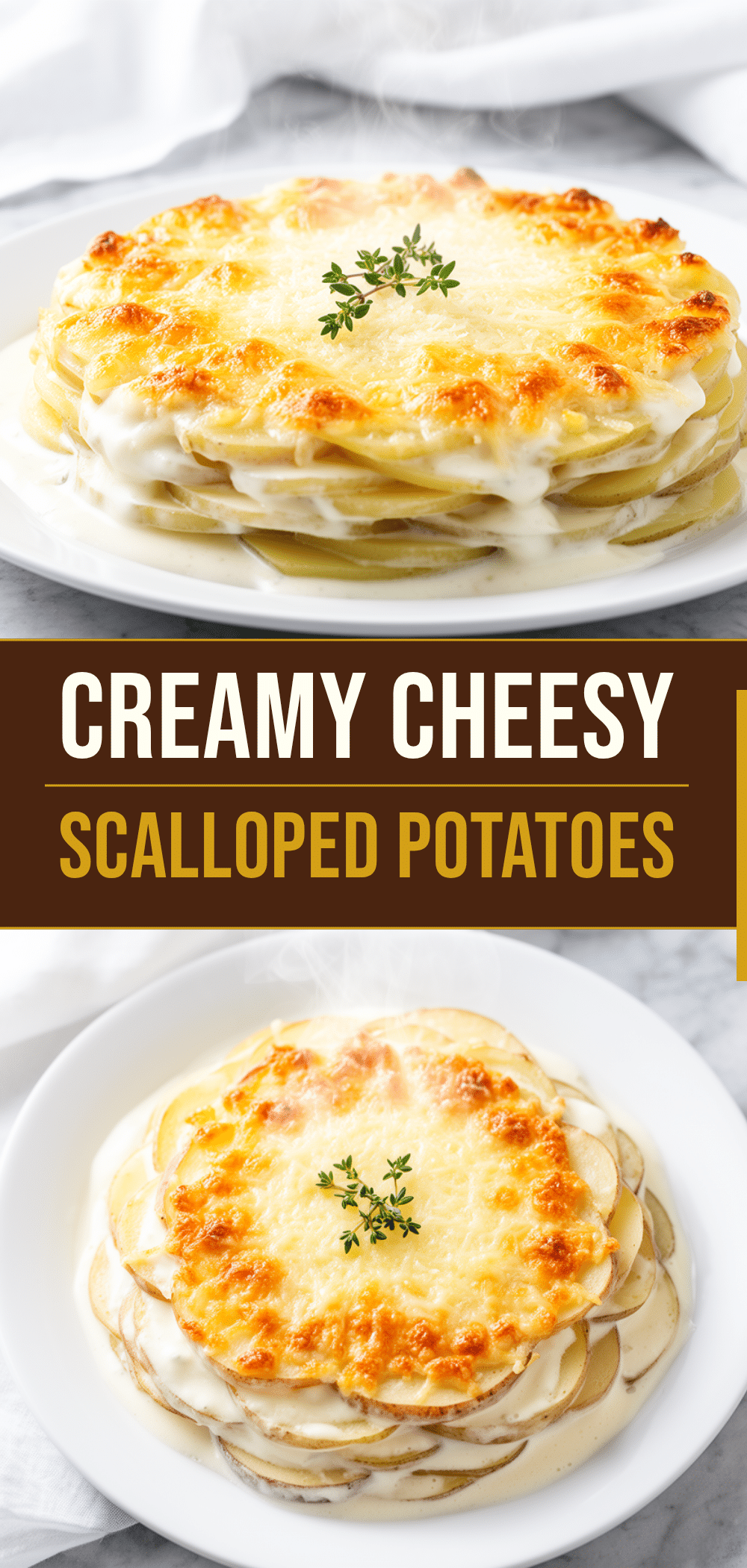
Creamy Scalloped Potatoes: Best Easy Cheesy Side Dish
- Total Time: 105 minutes
- Yield: 8 servings 1x
Description
Rich, buttery, and perfectly tender scalloped potatoes with a velvety cheese sauce and golden crust. This make-ahead friendly side dish is surprisingly easy to make and perfect for any occasion.
Ingredients
- 3 pounds Yukon Gold potatoes, peeled and sliced into 1/8-inch rounds
- 2 cups heavy cream
- 1 cup low-sodium chicken or vegetable broth
- 4 cloves garlic, minced
- 1 cup Gruyère cheese, grated
- 1 cup sharp cheddar cheese, grated
- 2 tablespoons butter (for greasing)
- 1 teaspoon Dijon mustard
- 2 tablespoons dry white wine (optional)
- Salt and black pepper to taste
- Fresh thyme or parsley for garnish
Instructions
- Preheat oven to 375°F (190°C). Grease a 9×13 inch baking dish with butter.
- Place sliced potatoes in a large bowl of cold water and soak for at least 30 minutes to remove excess starch. Drain and pat very dry with paper towels.
- In a large measuring cup or bowl, whisk together heavy cream, broth, minced garlic, Dijon mustard, white wine (if using), salt, and pepper.
- Layer 1/3 of the potatoes in the bottom of the dish, sprinkle with half the cheese. Repeat with a second layer of potatoes and remaining cheese. Finish with the final layer of potatoes.
- Pour the cream mixture evenly over the potatoes. Cover the dish tightly with aluminum foil.
- Bake covered for 45 minutes until potatoes are fork-tender.
- Remove foil, sprinkle any remaining cheese on top, and bake uncovered for 15-20 minutes until golden brown and bubbly.
- Let rest for 10 minutes before serving to allow sauce to thicken. Garnish with fresh herbs.
Notes
Uniform slicing is crucial for even cooking. Do not skip the soaking step to prevent gluey texture. Grate your own cheese to ensure smooth melting. This dish can be assembled ahead of time and refrigerated for up to 24 hours before baking; add 10-15 minutes to baking time if baking from cold. Do not freeze as the dairy sauce may separate.
- Prep Time: 30 minutes
- Cook Time: 75 minutes
- Category: Side Dish
- Cuisine: American
Nutrition
- Serving Size: 1/8 of the dish
- Calories: 380
- Sodium: 450
- Fat: 22
- Saturated Fat: 13
- Carbohydrates: 35
- Fiber: 3
- Protein: 12
Keywords: scalloped potatoes, cheesy potatoes, side dish, comfort food, holiday dinner, make-ahead recipe, creamy potatoes, Gruyère, cheddar