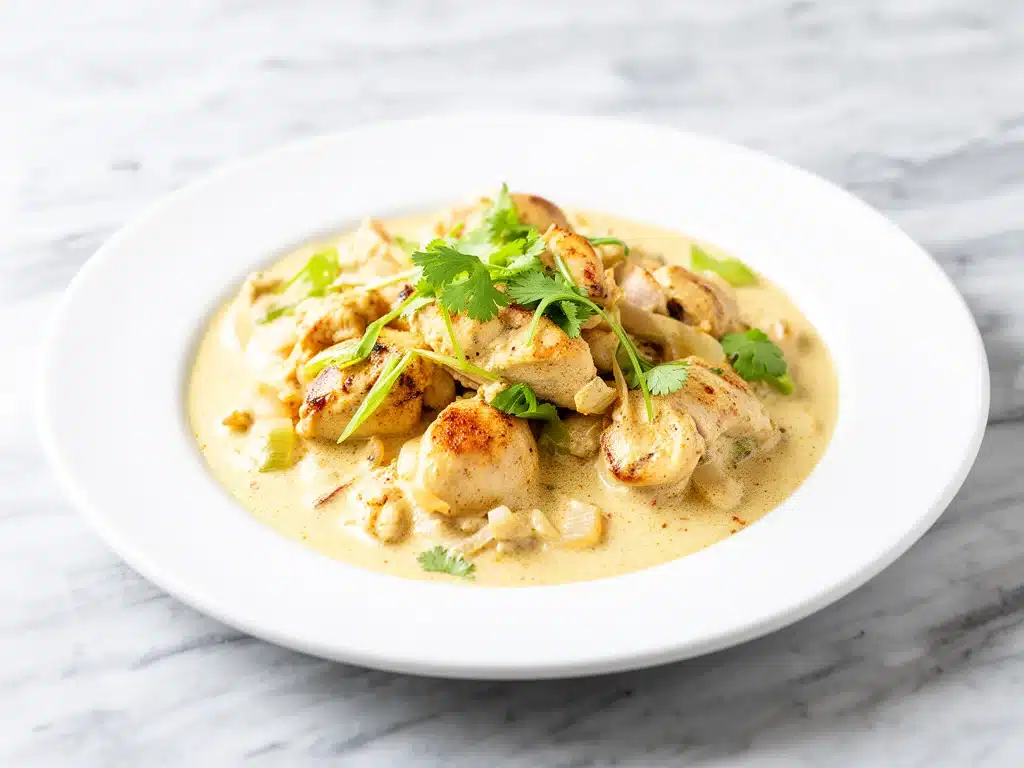
I have a confession to make. About three years ago, I ordered chicken korma from my favorite local Indian takeout spot. It was one of those nights where I was too tired to cook, too hungry to wait, and definitely too broke to go out. I brought it home, sat on my couch, and took that first bite. It was creamy, yes. It was sweet, yes. But it tasted like… canned sauce. Like, literally sweetened condensed milk and coconut milk mixed together with zero soul.
I was hooked, though. Not on the taste, but on the craving. I wanted that rich, velvety texture and that warm, aromatic spice profile, but I wanted it to actually taste like real food. So, I started experimenting. I tried blending cashews. I tried yogurt. I tried heavy cream. I tried coconut milk. I burned onions. I overcooked chicken until it was rubbery. I made sauces that were too thin, too thick, too spicy, or just plain weird.
But here’s the thing: I finally cracked the code. This creamy chicken korma is the one that works. It’s the one that makes my husband ask, “Did you order takeout? Because this is restaurant quality.” And the best part? It takes about 30 minutes, uses ingredients you probably already have, and costs a fraction of what you’d pay for delivery. I’ve made this recipe so many times that I can do it with my eyes closed. It’s become our go-to weeknight dinner when we want something comforting but don’t want the guilt or the grease of takeout.
If you’ve been searching for that perfect balance of sweet, savory, and creamy without the endless spice list, you’re in the right place. This isn’t just another curry recipe. It’s the one I’ve tested, tweaked, and perfected until it’s foolproof. Let me show you how to make it.
Why You’ll Love This Creamy Chicken Korma
There are a lot of chicken curry recipes out there. Why this one? Why should you spend your precious weeknight energy on this instead of ordering out? Here’s the real talk.
It’s Actually Creamy (Not Just Sweet) — A lot of korma recipes rely heavily on sugar or condensed milk to get that white, creamy look. This version uses a blend of yogurt and cream (or coconut cream for dairy-free) to get a rich, tangy creaminess that balances the spices. It tastes luxurious, not like dessert.
Minimal Spice Heat — Korma is traditionally a mild curry. If you’re cooking for picky eaters or kids (or just having a sensitive stomach day), this is your safe haven. It’s fragrant and flavorful without the burn. I’ve served this to my non-spicy-eating friends, and they’ve gone back for thirds.
Fast and Forgiving — You don’t need to grind fresh spices from scratch. I use a mix of ground spices and a quick paste of ginger and garlic. If you burn the onions slightly? No big deal. If the chicken is a bit overcooked? The sauce masks it. This recipe is forgiving for tired cooks.
One-Pot Wonder — You can make the entire dish in one large skillet or pot. Less cleanup means more time on the couch. I love that I can throw everything together, simmer it, and serve it without washing a dozen bowls.
Freezes Like a Dream — Unlike some creamy sauces that separate, this korma holds up well in the fridge and freezer. I often double the recipe on Sunday and eat it for lunch all week. It actually tastes better on day two as the flavors meld.
This is the recipe I reach for when I want comfort food that feels special but doesn’t require a trip to the grocery store or an hour of prep. It’s reliable, delicious, and totally addictive.
Ingredients You’ll Need for Creamy Chicken Korma
One of the best things about this creamy chicken korma is that you don’t need a specialty market. Most of these ingredients are staples. Here’s what you need and why it matters.
For the Chicken Base
Chicken Breasts or Thighs (1.5 lbs / 700g) — I prefer thighs for juiciness, but breasts work fine if you don’t overcook them. Cut into 1-inch chunks. Uniform size ensures even cooking.
Onion (2 medium, finely diced / about 300g) — Korma relies on caramelized onions for sweetness. Don’t rush this step. Yellow onions are best. Sweet onions like Vidalia work too if you want extra sweetness.
Ginger (1 tablespoon, fresh grated / or 1 tsp ground) — Fresh ginger adds a bright, zesty kick that ground ginger can’t match. Grate it fine so it melts into the sauce.
Garlic (4 cloves, minced / about 2 tablespoons) — Don’t skimp. Garlic is the backbone of the flavor. Fresh only. Jarred garlic has a metallic aftertaste that ruins the delicate balance.
Yogurt (½ cup / 120g) — Plain, full-fat yogurt. This adds tang and tenderness to the chicken. Greek yogurt works if you thin it with a little water. Avoid low-fat yogurt as it can split.
Heavy Cream or Coconut Cream (½ cup / 120ml) — This is the “korma” part. Heavy cream makes it rich and dairy-rich. Full-fat coconut cream makes it dairy-free and vegan. Don’t use light coconut milk; it’s too thin.
For the Spice Blend
Ground Cumin (1 teaspoon) — Earthy and warm. Essential for depth.
Ground Coriander (1 teaspoon) — Citrusy and nutty. Balances the cumin.
Garam Masala (1.5 teaspoons) — The star of the show. Add half at the beginning and half at the end for layered flavor. Use a good quality brand.
Turmeric (½ teaspoon) — For color and earthiness. A little goes a long way.
Kashmiri Chili Powder or Paprika (1 teaspoon) — For color and mild heat. Kashmiri chili is traditional, but sweet paprika works if you want zero heat. Cayenne if you want more kick.
Salt (to taste, about 1 teaspoon) — Adjust at the end. Yogurt and cream vary in saltiness.
Sugar or Honey (1 teaspoon, optional) — Just a pinch to balance the acidity of the yogurt. Don’t make it sweet; just round out the flavors.
Saffron Threads (a pinch, optional) — Soaked in 1 tablespoon warm milk. This is the fancy touch that gives korma its signature aroma and golden hue. Not mandatory, but highly recommended if you have it.
Vegetable Oil or Ghee (3 tablespoons) — Ghee adds a nutty, authentic flavor. Oil is fine for a lighter version.
For Serving
Fresh Cilantro (¼ cup, chopped) — For freshness and color.
Basmati Rice or Naan — To soak up that incredible sauce.
Equipment Needed
You don’t need fancy gear for this creamy chicken korma. Here’s what I use.
Large Skillet or Dutch Oven (12-inch) — Needs to be wide enough to sear chicken and wide enough to simmer the sauce. Cast iron or stainless steel works best for browning.
Sharp Knife — For dicing onions and cutting chicken. A dull knife is dangerous and inefficient.
Grater — For fresh ginger. A microplane is ideal.
Wooden Spoon or Silicone Spatula — For stirring without scratching pans.
Measuring Spoons — Precision matters with spices. Too much chili powder can ruin the dish.
Blender (Optional) — If you want a super-smooth sauce, you can blend the cooked onion-spice mixture. I usually leave it chunky for texture, but smooth is an option.
How to Make It: Step-by-Step
Alright, let’s make this creamy chicken korma. I’m walking you through exactly how I do it, including the little tricks I’ve picked up over the years.
Step 1: Prep the Chicken (5 minutes)
Cut your chicken into 1-inch cubes. Pat them dry with paper towels—this helps them sear better. In a bowl, toss the chicken with the yogurt, half the garam masala, half the turmeric, and a pinch of salt. Let it marinate while you chop veggies. Even 10 minutes helps, but it’s not strictly necessary if you’re short on time.
Step 2: Sear the Chicken (5 minutes)
Heat oil or ghee in your large skillet over medium-high heat. Add the chicken pieces in a single layer. Don’t crowd the pan—do it in batches if needed. Sear for 2-3 minutes per side until golden brown. You don’t need to cook it through yet. Just get that color. Remove chicken and set aside on a plate.
Step 3: Caramelize the Onions (8-10 minutes)
Reduce heat to medium. Add a bit more oil if the pan is dry. Add the diced onions. Cook slowly, stirring occasionally, until they are deep golden brown and soft. This takes patience. If you rush it, they’ll burn before they sweeten. This step is crucial for the korma flavor. It should smell sweet and nutty.
Step 4: Bloom the Spices (2 minutes)
Add the minced garlic and grated ginger to the onions. Cook for 1 minute, stirring constantly. Then add the cumin, coriander, remaining turmeric, chili powder, and remaining garam masala. Stir for 30 seconds until fragrant. Be careful not to burn the spices—they’ll turn bitter. If the pan looks dry, add a splash of water.
Step 5: Build the Sauce (5 minutes)
Pour in the heavy cream (or coconut cream) and stir well to combine with the onion-spice mixture. Let it simmer gently for 3-4 minutes. The sauce will thicken slightly. If you’re using saffron milk, stir it in now for that golden color and aroma.
Step 6: Simmer Together (10 minutes)
Return the seared chicken and any juices to the skillet. Stir to coat the chicken in the sauce. Reduce heat to low. Cover and simmer for 8-10 minutes, or until the chicken is cooked through (internal temp 165°F / 74°C). Stir occasionally to prevent sticking. The sauce should be thick and creamy, coating the back of a spoon.
Step 7: Finish and Serve
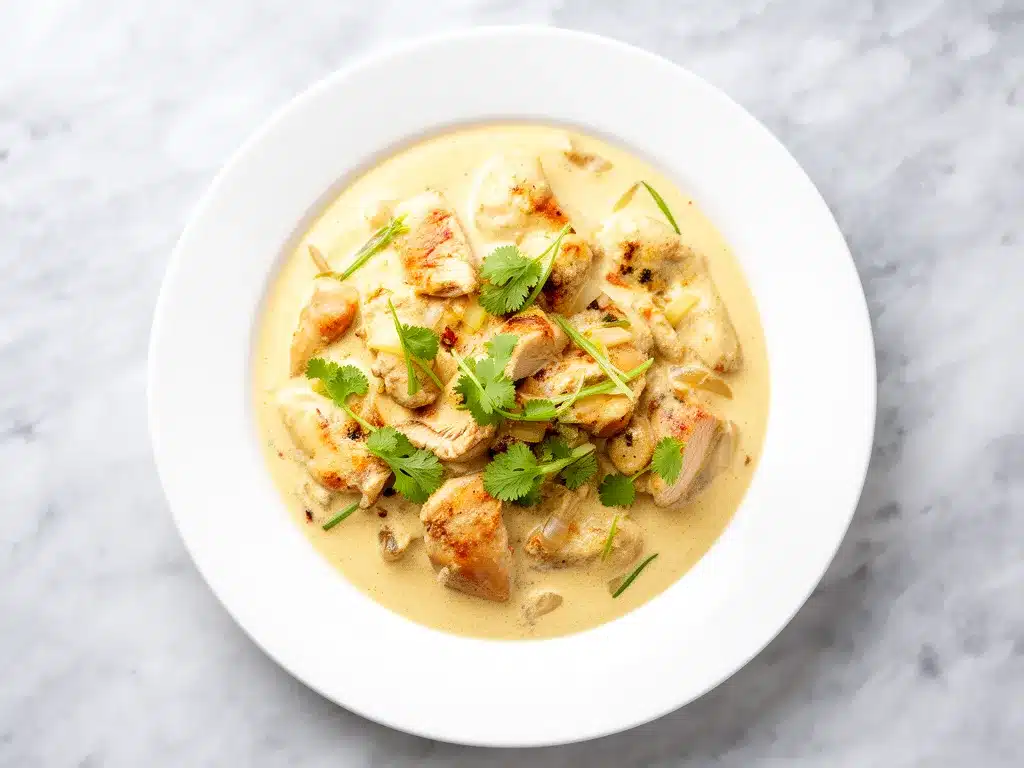
Taste and adjust salt. Add a pinch of sugar if it needs balancing. Garnish with fresh cilantro and a drizzle of cream. Serve immediately over basmati rice or with warm naan.
Expert Tips & Tricks
Here’s everything I’ve learned from making this dozens of times. These tips will save you from my mistakes.
Don’t Rush the Onions — I know it’s tempting to turn up the heat, but caramelizing onions is the foundation of korma. If you skip this, you’ll just have onion flavor, not the deep sweetness korma is known for. Take the time.
Yogurt Temperature Matters — If your yogurt is too cold, it might split when it hits the hot pan. Let it sit at room temperature for 15 minutes before cooking, or temper it by whisking in a little warm sauce before adding it to the pot.
Bloom Your Spices — Cooking ground spices in fat releases their essential oils. This step is non-negotiable for deep flavor. Don’t just dump them in at the end.
Use Full-Fat Dairy — Low-fat yogurt and cream can make the sauce watery and prone to curdling. Full-fat ensures richness and stability.
Saffron Soaking — If you use saffron, soak it in warm milk for 10 minutes before adding. This releases the color and flavor better than adding dry threads directly.
Common Mistakes (and how to avoid them)
- Mistake: Sauce is too thin. Fix: Simmer longer uncovered, or add a paste of ground cashews or chickpea flour.
- Mistake: Yogurt split. Fix: Heat was too high. Remove from heat and whisk in a splash of cold cream to bring it back together.
- Mistake: Chicken is dry. Fix: Don’t overcook. Use thighs, or remove chicken as soon as it hits 165°F.
Variations & Substitutions
Once you’ve nailed the basic version, here’s how you can mix it up. I’ve tried all of these.
Vegetarian Korma — Swap chicken for cauliflower, potatoes, and chickpeas. Roast the veggies first for better texture. This is my go-to when I’m meatless.
Dairy-Free Korma — Use coconut cream instead of heavy cream and coconut yogurt instead of dairy yogurt. Add a tablespoon of coconut oil for richness. It’s delicious and totally vegan.
Spicier Korma — Add 1 teaspoon of cayenne pepper or fresh chopped green chilies with the garlic. For a smoky heat, add a pinch of smoked paprika.
Quick Version — Use jarred minced garlic and ginger, and skip the marinating step. It’s still good, just not quite as tender.
Gluten-Free — This recipe is naturally gluten-free, but check your garam masala and chili powder for anti-caking agents. Serve with rice or gluten-free naan.
Serving & Storage
How to Serve: I usually serve this straight from the skillet at the dinner table—it looks rustic and stays warm. But here are other ways I’ve enjoyed it:
- Basmati Rice: Fluffy, fragrant rice is the classic pairing.
- Naan or Pita: For scooping up the sauce.
- Side Dishes: Simple cucumber raita, roasted vegetables, or a fresh salad.
Storage Instructions:
Refrigerator: Store in an airtight container for up to 4 days. The sauce will thicken in the fridge—totally normal.
Reheating: Best method: Add to a skillet with a splash of milk or cream over low heat. Stir until heated through and creamy again. Microwave method: Heat in 30-second intervals, stirring between. Add a splash of milk if it’s too thick.
Freezing: This freezes well for up to 3 months. Thaw in the fridge overnight and reheat gently. The texture might change slightly, but it’s still delicious.
Pro Tip: If leftovers are drying out, stir in a tablespoon of butter and a splash of milk when reheating. Brings back that creamy texture.
Nutrition Information
I’m not a nutritionist, but here’s the breakdown if you’re tracking.
Per Serving (based on 4 servings):
- Calories: 450
- Protein: 35g
- Carbs: 25g
- Fiber: 3g
- Sugar: 8g
- Fat: 25g
- Saturated Fat: 12g
- Cholesterol: 100mg
- Sodium: 600mg
What’s Good:
- High protein from chicken
- Calcium from yogurt and cream
- Can add vegetables to boost nutrition
What to Know:
- Higher in calories from cream and yogurt
- Contains dairy
- Moderate sodium (use low-sodium broth if needed)
My Take: Look, this is comfort food with cream and yogurt. It’s not a diet recipe. But it’s way better than takeout, costs less, and I know exactly what’s in it. When I want to make it lighter, I use less cream and load up on vegetables. But usually? I just eat a reasonable portion and enjoy it.
Final Thoughts
So that’s my go-to creamy chicken korma! I’ve probably talked your ear off at this point, but when you make a recipe this often, you have a lot to say about it.
This has saved weeknight dinners more times than I can count. It’s my answer to “what’s for dinner” when I’m tired, don’t want takeout, and still want something that tastes really good. My kids are happy, my husband’s happy, and I’m happy because I’m not stressed about cooking.
Make it yours! Try different add-ins, swap in your favorite vegetables, adjust the spices (though more garam masala is always better in my opinion). The best recipes are the ones you adapt to your family’s tastes.
If you make this, drop a comment and let me know what you think! I love hearing how recipes turn out in your kitchen. And if something doesn’t work, tell me that too—I’m here to help troubleshoot.
Happy cooking! And I hope your kitchen smells half as good as mine does right now.
Frequently Asked Questions
Can I use chicken thighs instead of breasts?
Absolutely. Thighs are actually better for this recipe because they stay juicier and don’t dry out as easily. Just cut them into 1-inch chunks like you would breasts.
Why did my sauce split or curdle?
This usually happens if the heat was too high when you added the yogurt. Yogurt is delicate. Always add it off high heat, and stir constantly. If it splits, remove from heat and whisk in a splash of cold cream or water to bring it back together.
Can I make this ahead for a dinner party?
Yes! In fact, it often tastes better the next day. Make the korma up to 2 days ahead and store in the fridge. Reheat gently on the stovetop with a splash of cream. Serve with freshly cooked rice or naan.
Is korma spicy?
Traditional korma is mild. This recipe uses just enough chili powder for color and a hint of warmth, but it’s not hot. If you’re sensitive to spice, skip the chili powder or use sweet paprika. If you want more heat, add cayenne or fresh chilies.
Can I freeze this creamy chicken korma?
Yes, it freezes well for up to 3 months. Thaw in the fridge overnight and reheat gently. The texture might change slightly, but it’s still delicious. Avoid freezing if you’re using fresh cream, as it can separate. Coconut cream freezes better.
What can I serve with korma?
Basmati rice is the classic choice. Naan or pita bread is great for scooping. For sides, try cucumber raita, roasted vegetables, or a simple green salad. It pairs well with a light white wine or a non-alcoholic mango lassi.
Can I use ground spices if I don’t have whole spices?
Yes, this recipe is designed for ground spices. It’s much easier for weeknight cooking. Just make sure your spices are fresh—old spices lose their potency and flavor.
Pin This Recipe!
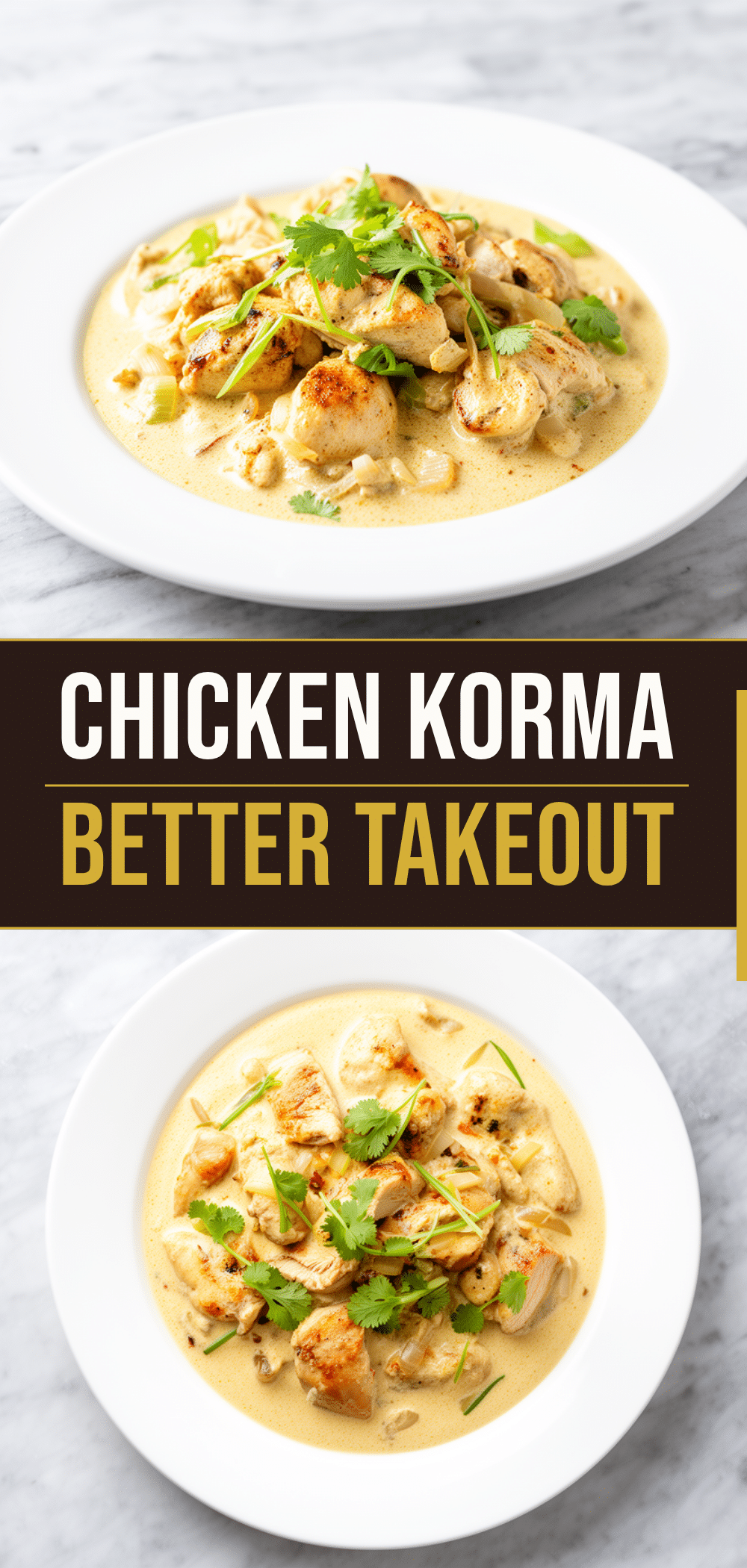

Creamy Chicken Korma: Easier Than Takeout
- Total Time: 35 minutes
- Yield: 4 servings 1x
Description
A rich, velvety, and mild Indian chicken curry that balances sweet, savory, and creamy flavors without the hassle of takeout. This forgiving, one-pot recipe uses simple ingredients and takes about 30 minutes to prepare.
Ingredients
- 1.5 lbs (700g) chicken breasts or thighs, cut into 1-inch chunks
- 2 medium onions, finely diced
- 1 tablespoon fresh ginger, grated
- 4 cloves garlic, minced
- ½ cup (120g) plain full-fat yogurt
- ½ cup (120ml) heavy cream or full-fat coconut cream
- 1 teaspoon ground cumin
- 1 teaspoon ground coriander
- 1.5 teaspoons garam masala
- ½ teaspoon turmeric
- 1 teaspoon Kashmiri chili powder or paprika
- 1 teaspoon salt (to taste)
- 1 teaspoon sugar or honey (optional)
- Pinch of saffron threads, soaked in 1 tablespoon warm milk (optional)
- 3 tablespoons vegetable oil or ghee
- ¼ cup fresh cilantro, chopped (for garnish)
- Basmati rice or naan (for serving)
Instructions
- Cut chicken into 1-inch cubes and pat dry. Toss with yogurt, half the garam masala, half the turmeric, and a pinch of salt. Let marinate while prepping vegetables.
- Heat oil or ghee in a large skillet over medium-high heat. Sear chicken in batches until golden brown on all sides (2-3 minutes per side). Remove chicken and set aside.
- Reduce heat to medium. Add diced onions to the skillet and cook slowly, stirring occasionally, until deep golden brown and soft (8-10 minutes).
- Add minced garlic and grated ginger to the onions; cook for 1 minute. Add remaining spices (cumin, coriander, turmeric, chili powder, and remaining garam masala). Stir for 30 seconds until fragrant.
- Pour in heavy cream (or coconut cream) and stir to combine with the onion-spice mixture. Simmer gently for 3-4 minutes until the sauce thickens slightly. Stir in saffron milk if using.
- Return the seared chicken and any juices to the skillet. Stir to coat in the sauce. Reduce heat to low, cover, and simmer for 8-10 minutes until chicken reaches an internal temperature of 165°F (74°C).
- Taste and adjust salt or add a pinch of sugar if needed. Garnish with fresh cilantro and a drizzle of cream. Serve immediately over basmati rice or with warm naan.
Notes
Do not rush the caramelization of onions as it provides the foundational sweetness. Ensure yogurt is at room temperature or tempered to prevent splitting. Use full-fat dairy for the best texture and to avoid curdling. This dish freezes well for up to 3 months.
- Prep Time: 15 minutes
- Cook Time: 20 minutes
- Category: Main Course
- Cuisine: Indian
Nutrition
- Serving Size: 1 serving (approx. 1
- Calories: 450
- Sugar: 8
- Sodium: 600
- Fat: 25
- Saturated Fat: 12
- Carbohydrates: 25
- Fiber: 3
- Protein: 35
Keywords: chicken korma, creamy chicken curry, indian food, easy dinner, weeknight meals, mild curry, one pot meal, comfort food