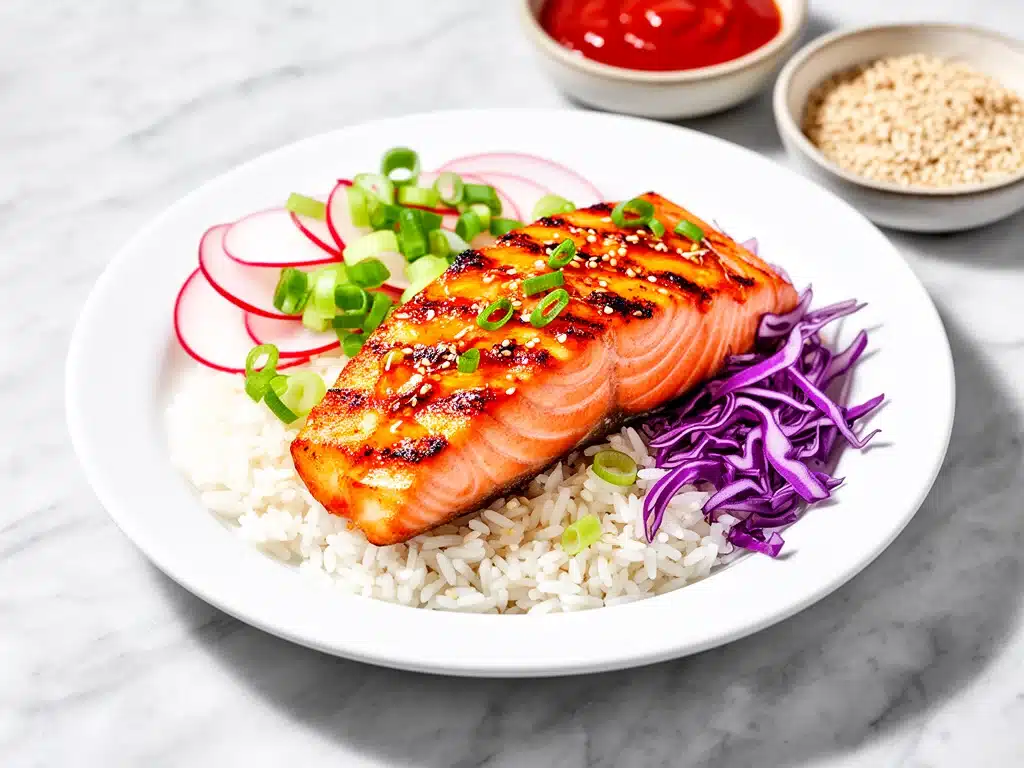
It was 6:45 PM on a Tuesday, and I was staring at the fridge with the desperation of someone who had completely forgotten to plan dinner. My husband had mentioned he was coming home early from work, which usually means I have thirty minutes to whip up something that looks like I tried, but tastes like I’m a professional chef. I opened the freezer door and found a single, lonely salmon fillet buried under a bag of frozen peas and an old ice cube tray. It was the perfect crisis.
I didn’t have time to order takeout, and I definitely didn’t have time to figure out a complex sauce from scratch. So, I reached for the two things I always have in my pantry: honey and Sriracha. I whisked them together with a little soy sauce and garlic, poured it over the salmon, and threw it in the oven. Ten minutes later, the smell of sweet, spicy, savory goodness filled the kitchen. My husband walked in, took one bite, and actually stopped mid-sentence to give me a thumbs-up. That’s when I knew I had struck gold.
I’ve made these honey sriracha salmon bowls at least a dozen times since that random Tuesday. They’ve become my secret weapon for busy weeknights, date nights, and even meal prep Sundays. The combination of sticky, caramelized salmon with a zesty kick is just addictive. And the best part? You can serve them over rice, quinoa, or even cauliflower rice if you’re keeping it light. It’s versatile, it’s fast, and it never fails to impress. If you’re looking for a meal that feels gourmet but takes less time than a pizza delivery, this is it. I promise, once you try this, you’ll be making these bowls on repeat.
Why You’ll Love This Recipe
There are a few reasons why these salmon bowls have stolen the spotlight from my other go-to dinners. It’s not just about the flavor (though that’s a huge part of it). It’s about how easy they are to pull together when you’re tired or busy. Here’s why these honey sriracha salmon bowls are worth your time:
- Under 30 Minutes — Seriously. From preheating the oven to plating the bowl, you’re looking at about 25 minutes. I’ve timed it. I even made it once while helping my kid with a math problem, and it still worked out. The oven does most of the heavy lifting while you chop veggies.
- One-Pan Wonder — You can cook the salmon on a sheet pan and roast the vegetables right alongside it. This means less cleanup, which is my favorite kind of cooking. Just a quick wipe-down of the counter and you’re done.
- Sticky, Glazed Perfection — The sauce is the star here. It gets thick, glossy, and caramelized in the oven. It clings to every flake of salmon. I’ve tried other glazes, but this sweet-heat balance is unbeatable. It’s like a little flavor bomb in every bite.
- Flexible Base — Don’t like rice? No problem. Use quinoa, brown rice, or even just a bed of greens. I usually have one of these on hand. It’s a great way to use up leftover grains from the fridge.
- Kid-Approved — I know what you’re thinking: “Sriracha? Will the kids eat it?” Yes! The honey balances the heat so it’s mild and sweet. My kids actually ask for this. If you want it hotter for yourself, just add more chili flakes on top.
- Meal Prep Friendly — These store beautifully in the fridge for up to four days. I meal prep these every Sunday so I have a healthy, delicious lunch ready to go. It’s way better than a sad desk salad.
Real talk: this recipe has saved me from takeout more times than I can count. It’s healthy, it’s filling, and it tastes amazing. Plus, it’s a great way to sneak more omega-3s into your diet without feeling like you’re eating “diet food.”
Ingredients You’ll Need
Here’s the best part: most of these ingredients are probably already in your kitchen. I’m particular about a few things here, especially the salmon and the sauce balance, but honestly, you can swap a few things if needed. Let’s break it down.
For the Salmon
Salmon fillets (4 pieces, about 6 ounces each) — I always buy wild-caught salmon if I can find it. It has better flavor and texture than farmed. Look for fillets that are uniform in thickness so they cook evenly. If you can’t find fresh, frozen works too—just thaw it completely before cooking.
Neutral oil (1 tablespoon) — I use avocado oil or vegetable oil. You just need something with a high smoke point to prevent burning.
Salt and black pepper — Freshly cracked black pepper makes a huge difference. Don’t skip it.
For the Honey Sriracha Glaze
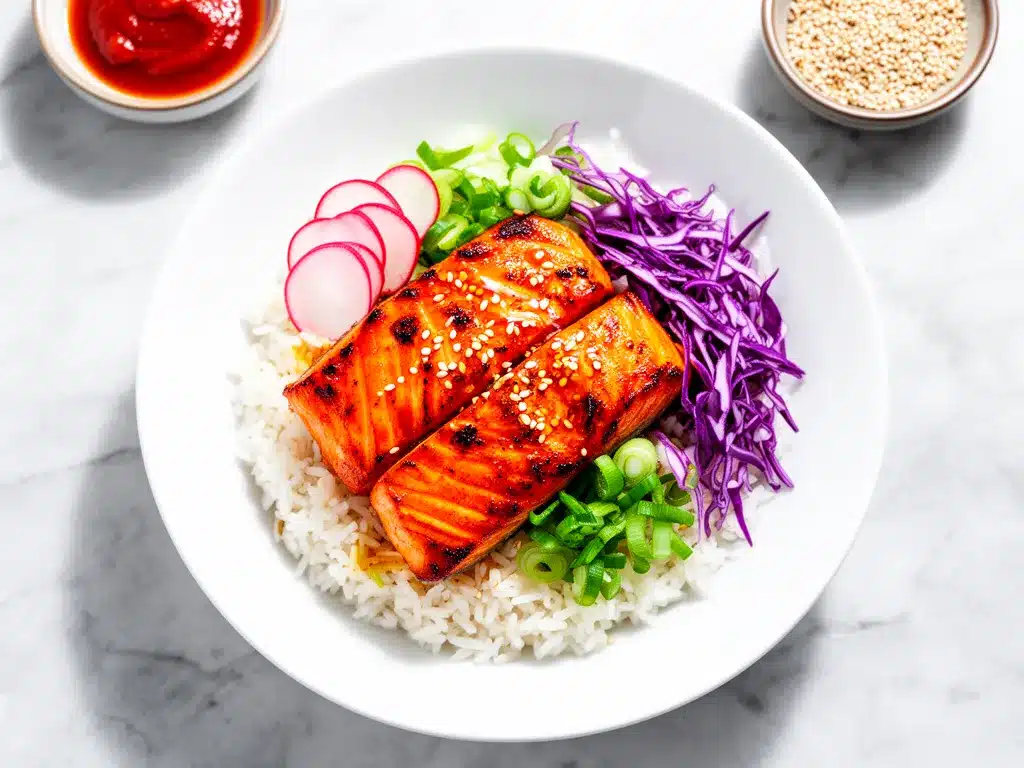
Sriracha sauce (3 tablespoons) — This is your heat source. If you don’t like spice, start with 2 tablespoons. If you love heat, go for 4. I use the classic green-capped bottle because it has that garlicky kick I love.
Honey (3 tablespoons) — The sweetness balances the spice. I prefer raw honey for its flavor, but regular honey works fine. Don’t use artificial sweeteners; they don’t caramelize the same way.
Soy sauce (2 tablespoons) — This adds saltiness and umami. I use low-sodium soy sauce so I can control the salt level. If you need gluten-free, use tamari.
Rice vinegar (1 tablespoon) — This adds a little tang to cut through the richness of the salmon and honey. If you don’t have rice vinegar, white wine vinegar works too.
Garlic (2 cloves, minced) — Fresh garlic is non-negotiable here. Jarred garlic just doesn’t have the same punch. Mince it fine so it mixes into the sauce smoothly.
Fresh ginger (1 teaspoon, grated) — This adds a warm, zesty note. I grate it fresh, but if you’re being lazy, ½ teaspoon of ground ginger works in a pinch.
For the Bowls
Cooked rice or grains (4 cups) — Jasmine rice is my go-to because it’s fluffy and slightly sticky. Quinoa or brown rice are great alternatives. You can also use chicken caesar wraps concepts if you want to use leftover chicken, but rice is classic here.
Vegetables — I usually go with snap peas, carrots, and edamame. But feel free to use whatever you have. Broccoli, bell peppers, or even cucumber slices work great. I also love adding some mozzarella pizza pockets leftovers if I’m feeling fancy, but that’s a bit of a stretch! Stick to fresh veggies for the best texture.
Green onions (2 stalks, sliced) — For garnish. Adds a fresh, oniony bite.
Sesame seeds (1 tablespoon) — Toasted sesame seeds add a nice nutty crunch. You can buy them pre-toasted or toast them in a dry pan for a minute.
Avocado (1, sliced) — Creamy avocado is the perfect contrast to the spicy salmon. It’s a must-have for me.
Equipment Needed
You don’t need any fancy gadgets for this. Here’s what I actually use:
Sheet pan — A standard 13×18 inch baking sheet. Line it with parchment paper or foil for easy cleanup. I prefer parchment because the salmon doesn’t stick at all.
Small bowl — For mixing the glaze. Any small bowl works.
Whisk — To blend the sauce ingredients smoothly. A fork works too if you don’t have a whisk.
Sharp knife and cutting board — For chopping veggies and slicing avocado.
Rice cooker or pot — To cook your grain base. I use my rice cooker because it’s set-it-and-forget-it.
Spatula — To flip the salmon and scrape the glaze.
How to Make Honey Sriracha Salmon Bowls
Alright, let’s make this! I’m walking you through exactly how I do it, including the little tricks I’ve picked up over time.
Step 1: Prep Your Oven and Pan (5 minutes)
Preheat your oven to 400°F (200°C). Line a large baking sheet with parchment paper or aluminum foil. I use foil because I can just crumple it up and throw it away. The parchment is nice if you want to reuse the pan, but it’s extra steps.
Step 2: Make the Glaze (2 minutes)
In a small bowl, whisk together the honey, Sriracha, soy sauce, rice vinegar, minced garlic, and grated ginger. Stir until it’s smooth and well combined. The sauce should be a vibrant orange-red color. Taste it—it should be sweet, spicy, and savory. If it’s too spicy, add a little more honey. If it’s too sweet, add a splash more soy sauce or vinegar.
Step 3: Prep the Salmon (3 minutes)
Pat the salmon fillets dry with paper towels. This is important! Dry salmon sears better and doesn’t get soggy. Season both sides with salt and pepper. Place the fillets on the prepared baking sheet, skin-side down if they have skin. I usually remove the skin before cooking because it gets crispy and I don’t like eating it.
Step 4: Add the Glaze (1 minute)
Brush a generous layer of the honey Sriracha glaze over the top of each salmon fillet. Don’t worry about being neat; it’s supposed to look rustic and sticky. Save about 2 tablespoons of the glaze for drizzling over the finished bowls.
Step 5: Roast the Salmon (12-15 minutes)
Place the baking sheet in the preheated oven. Bake for 12-15 minutes, depending on the thickness of the fillets. The salmon is done when it flakes easily with a fork and is opaque throughout. I check it at 12 minutes. If it’s still translucent in the middle, give it another 2-3 minutes. Don’t overcook it, or it’ll be dry. Salmon should be moist and tender.
Step 6: Roast the Vegetables (Optional, 15 minutes)
While the salmon cooks, you can roast some vegetables on the same pan. I toss snap peas, carrot ribbons, and broccoli florets with a little oil and salt, then place them on the pan around the salmon for the last 10 minutes of cooking. This saves time and adds flavor.
Step 7: Assemble the Bowls (5 minutes)
Divide the cooked rice or grains among four bowls. Top each bowl with a piece of the glazed salmon. Arrange the roasted vegetables around the salmon. Slice the avocado and add it to the bowls. Drizzle with the reserved glaze. Sprinkle with sliced green onions and toasted sesame seeds.
Total Time: About 25 minutes (10 minutes prep, 15 minutes cooking)
Expert Tips & Tricks
Here’s everything I’ve learned from making these bowls dozens of times. These tips will save you from my mistakes.
Don’t Overcook the Salmon — Salmon continues to cook a bit after you take it out of the oven. Pull it when it’s just barely opaque in the center. It’ll finish cooking on the plate. Overcooked salmon is dry and boring.
Pat It Dry — I know it seems like a small thing, but drying the salmon before seasoning helps the glaze stick and promotes better browning. Wet salmon steams instead of roasting.
Adjust the Heat — Sriracha varies in heat from bottle to bottle. If you’re sensitive to spice, start with 2 tablespoons and add more to taste. You can always add heat, but you can’t take it away.
Toast Your Sesame Seeds — Raw sesame seeds are fine, but toasted sesame seeds have a nutty aroma that elevates the whole dish. Just pop them in a dry pan over medium heat for 1-2 minutes, stirring constantly, until they’re golden.
Use Fresh Ginger — Ground ginger is okay, but fresh ginger has a brighter, more vibrant flavor. Grate it on a microplane for easy mixing.
Make Extra Glaze — I usually double the glaze recipe. I use the extra for dipping vegetables or brushing on chicken later in the week. It’s versatile and delicious.
Variations & Substitutions
Once you’ve nailed the basic version, here’s how you can mix it up. I’ve tried all of these.
Shrimp Version — Swap salmon for large shrimp. Shrimp cooks much faster—about 6-8 minutes in the oven. Toss the shrimp in the glaze before roasting. It’s just as good and cooks even quicker.
Tofu Bowls — For a vegetarian version, use extra-firm tofu. Press the tofu to remove water, cut into cubes, and toss in the glaze. Roast at 400°F for 20-25 minutes until crispy. It’s a great protein source.
Spicy Mayo Drizzle — Mix mayonnaise with a little Sriracha and lime juice for a creamy, tangy drizzle. I love this on top of the avocado. It adds a rich, cool contrast to the spicy salmon.
Different Veggies — Use whatever you have. Bok choy, zucchini, bell peppers, or even sweet potato cubes work well. Just chop them to similar sizes so they cook evenly.
Gluten-Free — Use tamari instead of soy sauce and check your Sriracha (most is gluten-free, but always double-check). Serve over rice or quinoa.
Lower Sugar — Reduce the honey to 1 tablespoon and add a little more rice vinegar or a sugar substitute. It won’t caramelize as much, but it’s still tasty.
Serving & Storage
These bowls are best served immediately while the salmon is hot and the veggies are crisp-tender. But here’s how to handle leftovers.
Refrigerator — Store leftovers in an airtight container for up to 3 days. The salmon will stay moist if stored properly. I keep the glaze separate if I can, but it’s fine mixed in.
Reheating — Gently reheat the salmon in the microwave for 30-60 seconds. Overheating will make it rubbery. You can also reheat it in a skillet over low heat with a splash of water to steam it back to life. The veggies can be eaten cold or reheated.
Freezing — I don’t recommend freezing the cooked salmon. It loses texture. You can freeze the uncooked salmon with the glaze, but it’s not ideal. Better to make it fresh.
Meal Prep — These are perfect for meal prep. Cook the grains and roast the veggies on Sunday. Store them separately. Assemble the bowls each day with fresh salmon. It takes 5 minutes and tastes amazing.
Nutrition Information
I’m not a nutritionist, but here’s the breakdown if you’re tracking. These numbers are approximate and based on 4 servings.
Per Serving (approximate):
| Calories | 450 |
| Protein | 35g |
| Carbs | 40g |
| Fiber | 5g |
| Sugar | 15g |
| Fat | 18g |
| Saturated Fat | 3g |
| Cholesterol | 75mg |
| Sodium | 600mg |
What’s Good: High in protein and omega-3 fatty acids from the salmon. Good source of fiber from the veggies and grains. The honey adds natural sugar, but it’s balanced by the protein and fat.
What to Know: Sodium content can vary based on soy sauce. Use low-sodium soy sauce to reduce it. The calorie count is moderate, making it a balanced meal.
My Take: This is a healthy, balanced meal. It’s not a diet food, but it’s nutrient-dense and satisfying. I love that it makes me feel good without feeling heavy.
Final Thoughts
So that’s my go-to honey sriracha salmon bowl! I’ve probably talked your ear off at this point, but when you make a recipe this often, you have a lot to say about it. These bowls have saved me from takeout more times than I can count. They’re my answer to “what’s for dinner” when I’m tired, don’t want to cook, but still want something that tastes really good. My family is happy, and I’m happy because I’m not stressed about cooking.
Make it yours! Try different add-ins, swap in your favorite vegetables, adjust the spice level. The best recipes are the ones you adapt to your family’s tastes. If you make this, drop a comment and let me know what you think! I love hearing how recipes turn out in your kitchen. And if something doesn’t work, tell me that too—I’m here to help troubleshoot.
Happy cooking! And I hope your kitchen smells half as good as mine does right now.
Frequently Asked Questions
Q: Can I use frozen salmon?
A: Yes, but you need to thaw it completely first. Place the frozen fillets in the fridge overnight or run them under cold water until thawed. Pat them very dry before cooking. Fresh salmon is better for texture, but frozen works in a pinch.
Q: How spicy is this recipe?
A: It’s mild to medium. The honey balances the Sriracha well. If you want it hotter, add more Sriracha or some red pepper flakes. If you want it milder, use less Sriracha and add a little more honey.
Q: Can I bake this in a skillet?
A: You can! Heat a skillet over medium-high heat, add the salmon, and cook for 4-5 minutes per side. Brush with glaze during the last minute. It’s faster but requires more attention. The oven is easier for hands-off cooking.
Q: What can I serve with this besides rice?
A: Quinoa, couscous, or even just a bed of spinach or arugula works great. You can also serve it over noodles for a stir-fry vibe. I’ve even eaten it with just veggies and no grain when I’m keeping it low-carb.
Q: Why did my salmon stick to the pan?
A: Make sure your pan is lined with parchment paper or foil. Also, don’t move the salmon too much while it’s cooking. Let it sear for a few minutes before flipping or checking. If it sticks, it wasn’t ready to move yet.
Q: Can I make the glaze ahead of time?
A: Yes! Mix the glaze and store it in an airtight container in the fridge for up to 5 days. It gets thicker in the fridge, so let it come to room temperature before using. It’s a great time-saver.
Q: Is this recipe kid-friendly?
A: Yes! The honey makes it sweet and the spice is mild. My kids love it. If your kids are sensitive to spice, reduce the Sriracha to 1 tablespoon. You can also serve the glaze on the side so they can control the heat.
Pin This Recipe!
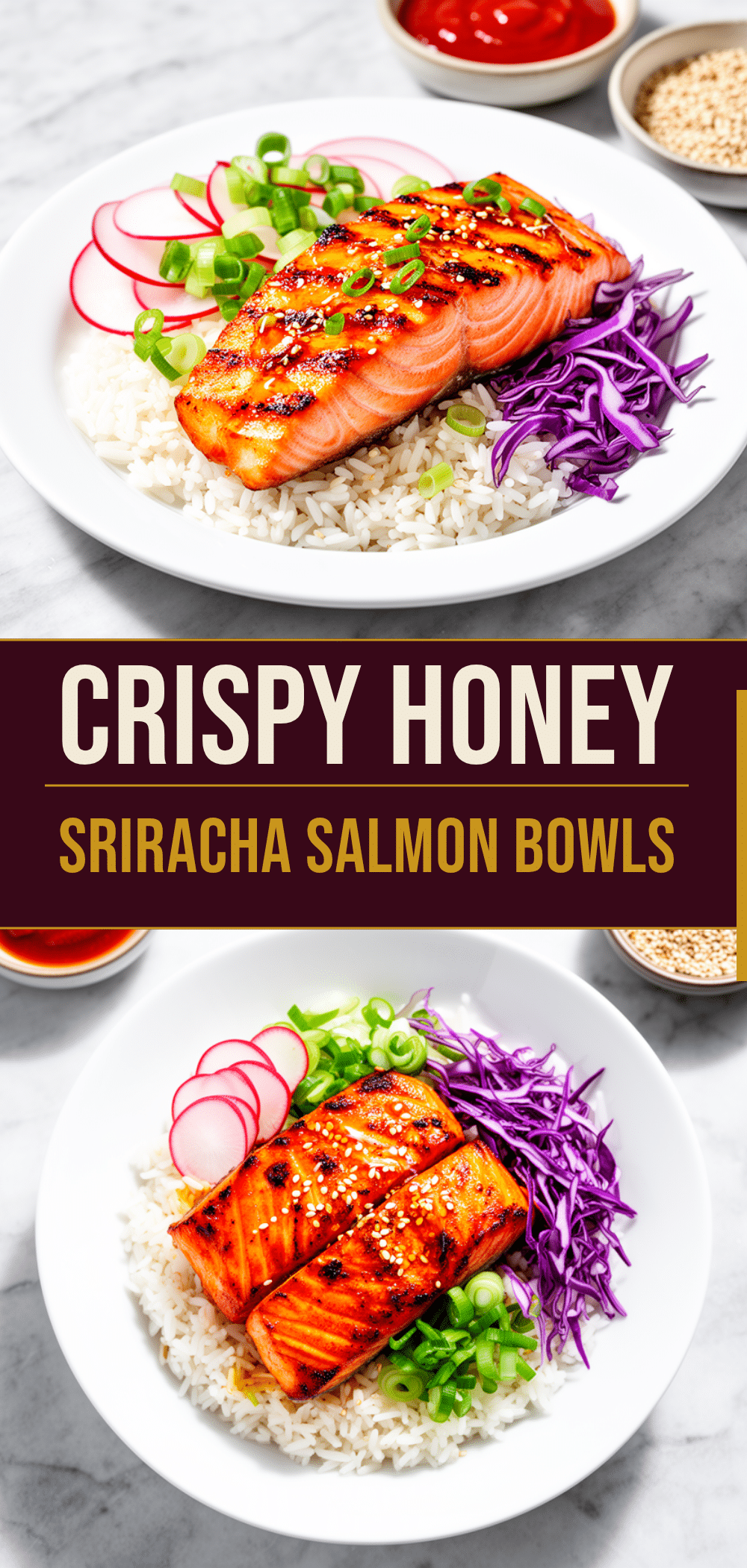
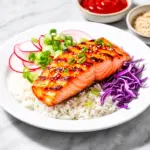
Honey Sriracha Salmon Bowls: Easy & Perfect
- Total Time: 25 minutes
- Yield: 4 servings 1x
Description
A quick and flavorful weeknight dinner featuring sticky, caramelized salmon glazed with a sweet and spicy honey-sriracha sauce, served over rice or quinoa with roasted vegetables.
Ingredients
- 4 salmon fillets (about 6 ounces each)
- 1 tablespoon neutral oil (avocado or vegetable)
- Salt and black pepper to taste
- 3 tablespoons Sriracha sauce
- 3 tablespoons honey
- 2 tablespoons soy sauce (or tamari for gluten-free)
- 1 tablespoon rice vinegar
- 2 cloves garlic, minced
- 1 teaspoon fresh ginger, grated
- 4 cups cooked rice or grains (Jasmine, quinoa, or brown rice)
- Vegetables of choice (snap peas, carrots, edamame, broccoli)
- 2 stalks green onions, sliced
- 1 tablespoon toasted sesame seeds
- 1 avocado, sliced
Instructions
- Preheat oven to 400°F (200°C). Line a large baking sheet with parchment paper or aluminum foil.
- In a small bowl, whisk together honey, Sriracha, soy sauce, rice vinegar, minced garlic, and grated ginger until smooth.
- Pat salmon fillets dry with paper towels and season both sides with salt and pepper.
- Place salmon fillets on the prepared baking sheet, skin-side down.
- Brush a generous layer of the glaze over the top of each salmon fillet. Reserve 2 tablespoons of glaze for serving.
- Bake for 12-15 minutes, or until salmon flakes easily with a fork and is opaque throughout.
- Optional: Toss vegetables with oil and salt, and roast on the same pan for the last 10 minutes of cooking.
- Divide cooked rice or grains among four bowls.
- Top each bowl with a piece of glazed salmon and arrange roasted vegetables around it.
- Add sliced avocado, drizzle with reserved glaze, and sprinkle with green onions and toasted sesame seeds.
Notes
Pat the salmon dry before cooking to ensure the glaze sticks and promotes browning. Do not overcook the salmon as it continues to cook after removal from the oven. For a vegetarian version, substitute salmon with extra-firm tofu. Adjust Sriracha amount based on preferred spice level.
- Prep Time: 10 minutes
- Cook Time: 15 minutes
- Category: Main Course
- Cuisine: Asian Fusion
Nutrition
- Serving Size: 1 salmon fillet with
- Calories: 450
- Sugar: 15
- Sodium: 600
- Fat: 18
- Saturated Fat: 3
- Carbohydrates: 40
- Fiber: 5
- Protein: 35
Keywords: salmon bowls, honey sriracha, easy dinner, weeknight meals, healthy salmon, sheet pan dinner, meal prep