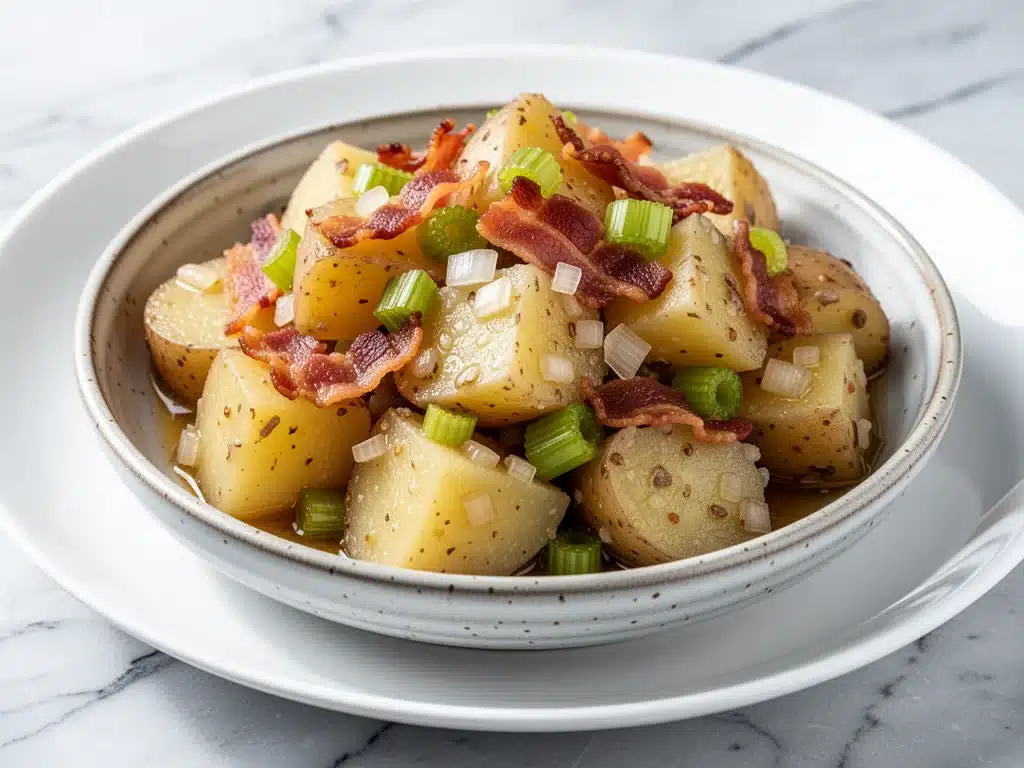
There’s a specific kind of disappointment that hits when you take a bite of potato salad that looks perfect but tastes like regret. You know the one. It’s that creamy, mayonnaise-heavy version that sits in the fridge for three days, turns into a solid block of white goop, and tastes like it was made by someone who has never actually tasted a real potato. I used to buy that stuff. I even made it myself for years, thinking that’s just how potato salad was supposed to be. Heavy. Cold. Safe.
Then I spent a weekend in Munich. I wasn’t looking for dinner; I was just trying to stay warm while the wind whipped through the beer tents. I stumbled into a small tent, grabbed a plate of potato salad, and took one bite that completely ruined all other potato salads for me. It was warm. Well, room temperature, but definitely not cold. It was tangy, sharp, and deeply savory. The potatoes had held their shape but were tender enough to melt in your mouth. And that dressing? It wasn’t mayo. It was a warm, glistening broth of bacon fat, vinegar, and sugar that clung to every chunk of potato like a hug.
I came home and spent the next three weekends trying to recreate it. I failed. A lot. My first batch was too vinegary (my nose still remembers the sting). My second batch had mushy potatoes because I boiled them to death. My third batch was just… okay. But somewhere around batch five, I figured it out. The secret isn’t just the ingredients; it’s the temperature. You have to pour the warm dressing over the warm potatoes so they absorb that flavor instead of just sitting on top.
This Oktoberfest German potato salad with warm bacon dressing is the recipe I make on repeat. It’s the ultimate side dish for fall gatherings, Sunday dinners, or when you just want something that feels hearty and nostalgic. It’s different from the American creamy styles we’re used to. It’s lighter, sharper, and infinitely more flavorful. Once you try this, you’ll never go back to the mayo version again. Trust me. I’ve made it for everything from bacon-wrapped green bean bundles to full-blown holiday feasts, and it’s always the first dish to disappear.
Why You’ll Love This Recipe
I’ve tested this recipe dozens of times, and it consistently wins over people who usually stick to the creamy stuff. Here’s why this German potato salad is worth the extra ten minutes it takes to make the dressing.
It’s Actually Tangy — Most potato salads are sweet or creamy. This one is bright. The vinegar and mustard cut through the richness of the bacon, creating a flavor profile that wakes up your palate. It’s not heavy; it’s zesty. I’ve served this to friends who claim they “don’t like potato salad,” and they always ask for the recipe.
The Warm Dressing Trick — This is the game-changer. By pouring the hot bacon-vinegar mixture over the warm potatoes, the starches open up and absorb the dressing. This means every bite is flavorful, not just the outside. It also prevents the salad from getting soggy or watery later. It stays cohesive for hours.
Simple Ingredients, Big Flavor — You probably have everything you need in your pantry right now. Potatoes, bacon, onion, vinegar, sugar, mustard. No fancy cheeses or obscure spices. It’s rustic, honest food. If you can boil water and fry bacon, you can make this.
Perfect for Meal Prep — Unlike creamy salads that get weird in the fridge, this one actually improves over time. The flavors meld together beautifully. I often make it on Sunday and eat it for lunch all week. It tastes just as good cold as it does at room temperature, which makes it the ultimate stress-free lunch option.
It’s a Crowd-Pleaser — I’ve made this for pasta salad gatherings, BBQs, and quiet family dinners. It’s versatile enough to stand next to grilled meats or hearty stews like slow cooker beef and barley stew. It’s the side dish that doesn’t compete; it complements.
This recipe has saved me from bringing boring sides to potlucks more times than I can count. It’s reliable, delicious, and surprisingly easy. If you’re looking for a side dish that feels special but doesn’t require a lot of effort, this is it.
Ingredients You’ll Need
Here’s the thing about German potato salad: the quality of a few key ingredients matters more than the quantity. You don’t need twenty items, but you do need the right ones. Here’s what I use and why.
Waxy Potatoes (2 pounds / 900g) — This is non-negotiable. Use Yukon Gold, red potatoes, or fingerlings. These hold their shape when boiled and don’t turn into mush. Russets will fall apart and make a soupy mess. I always buy Yukon Golds because they have a naturally buttery flavor that pairs perfectly with the vinegar dressing.
Thick-Cut Bacon (8-10 strips / 200-250g) — You need enough bacon to render out a good amount of fat for the dressing. Thick-cut is best because it crisps up nicely and provides more flavor. I use a good quality hog-cured bacon. If you can find applewood-smoked, even better. The fat from the bacon is the base of your dressing, so don’t skimp.
Yellow Onion (1 medium / about 150g) — Finely diced. Yellow onion gives a good balance of sweetness and sharpness. White onion is too pungent, and red onion changes the color too much. You want it to disappear into the dressing, providing background flavor.
Apple Cider Vinegar (½ cup / 120ml) — This is the backbone of the tang. Use a good quality, unfiltered apple cider vinegar with the “mother.” It adds depth. White vinegar is too harsh and one-dimensional. The slight fruitiness of the apple cider vinegar balances the saltiness of the bacon.
Granulated Sugar (2-3 tablespoons / 25-40g) — You need sugar to balance the acidity of the vinegar. Start with 2 tablespoons, taste the dressing, and add more if it’s too sharp. I usually go with 3 tablespoons because I like a slight sweetness. Don’t skip this; it’s what makes the flavor profile complex.
Dijon Mustard (1 tablespoon / 15g) — Adds a subtle heat and emulsifies the dressing slightly. It also adds a nice tang. I use whole grain Dijon for a bit of texture, but smooth Dijon works too. Avoid yellow mustard—it’s too sweet and vinegary for this application.
Chicken Broth (¼ cup / 60ml) — Optional but recommended. It adds volume to the dressing without thinning it out too much. It helps distribute the vinegar and bacon fat more evenly. If you’re keeping it low-carb, you can skip this and just use more vinegar and broth from the bacon.
Dried Dill Weed (1 teaspoon) — Fresh dill is nice, but dried holds up better in the warm dressing. It adds an herbal note that cuts through the richness. If you don’t have dill, parsley works, but dill is traditional.
Salt and Black Pepper — To taste. Remember, the bacon and mustard are already salty, so taste before adding extra salt. Freshly cracked black pepper adds a nice bite.
Optional Add-ins:
– Hard-boiled eggs: Chopped and stirred in for extra protein.
– Chives: Fresh chives sprinkled on top for color and mild onion flavor.
– Apple slices: Thinly sliced Granny Smith apples add a nice crunch and tartness.
Equipment Needed
You don’t need anything fancy for this. Just basic kitchen tools.
Large Pot — I use a 6-quart pot for boiling the potatoes. It needs to be big enough to hold the potatoes submerged in water with room to boil without splashing.
Large Skillet — A 10 or 12-inch skillet is perfect for cooking the bacon and onions. Cast iron is ideal because it holds heat well, but stainless steel or non-stick works fine.
Colander — For draining the potatoes. Make sure it fits in your sink. A simple mesh colander works.
Whisk — For emulsifying the vinegar, sugar, and mustard into the bacon fat. A small whisk is handy for getting into the corners of the skillet.
Wooden Spoon — For stirring the onions and bacon. Avoid metal spoons if you’re using non-stick.
Measuring Cups and Spoons — Standard stuff. Accuracy matters here, especially with the vinegar and sugar ratio.
Knife and Cutting Board — For dicing the onion and slicing the potatoes. A sharp chef’s knife makes quick work of the onion.
How to Make It: Step-by-Step
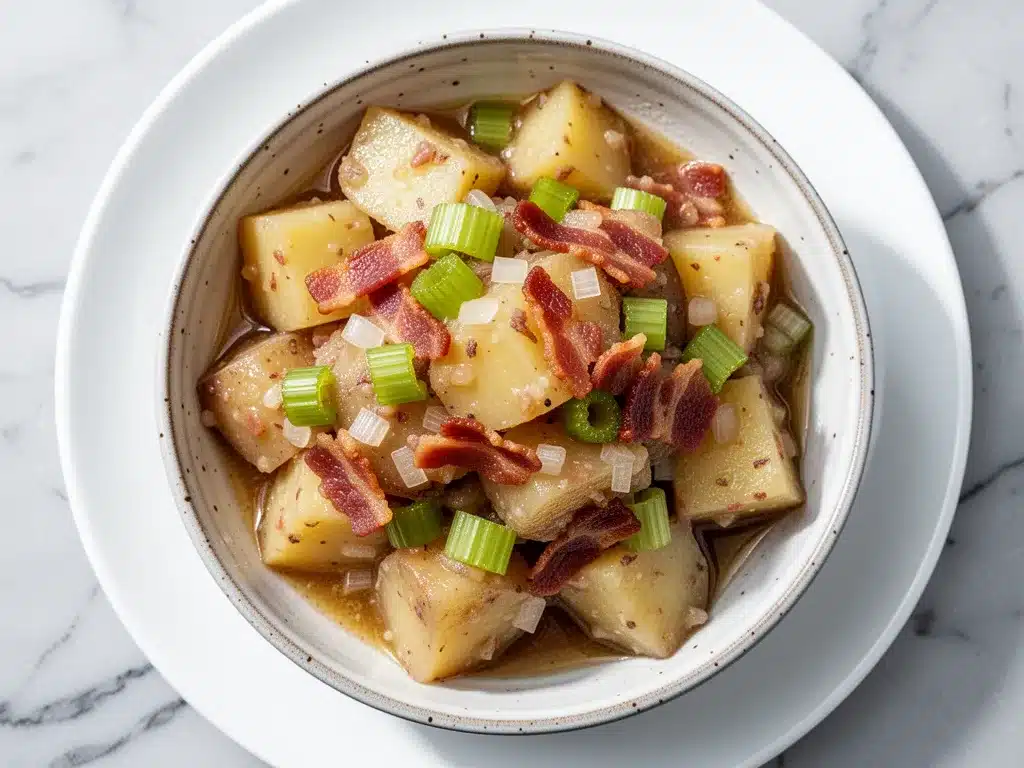
Alright, let’s get cooking. This process is straightforward, but timing is everything. The key is to keep the potatoes and the dressing warm so they can absorb the flavors.
Step 1: Prep the Potatoes (10 minutes)
Wash the potatoes thoroughly. You don’t need to peel them—the skin adds texture and nutrients. Cut them into bite-sized chunks, about 1-inch pieces. Try to keep them relatively uniform so they cook evenly. Place them in a large pot and cover with cold water by about an inch. Add a generous pinch of salt to the water.
Step 2: Boil the Potatoes (15-20 minutes)
Bring the water to a boil over high heat, then reduce to a simmer. Cook the potatoes until they are tender but still firm. Test with a knife; it should slide in easily but not fall apart. This usually takes 15-20 minutes, depending on the size of the chunks. Do not overcook them! If they get mushy, they’ll absorb too much dressing and become soggy. Once done, drain them in a colander and let them sit for 5 minutes. Keep them warm.
Step 3: Cook the Bacon (5-7 minutes)
While the potatoes are boiling, chop the bacon into 1-inch pieces. Place them in a large skillet over medium heat. Cook slowly, stirring occasionally, until the bacon is crispy and has rendered out a good amount of fat. This takes about 5-7 minutes. If there’s too much fat, you can spoon out a little, but you want enough for the dressing. Leave about 3-4 tablespoons of fat in the pan.
Step 4: Sauté the Onions (3-4 minutes)
Add the diced yellow onion to the bacon fat in the skillet. Cook over medium heat, stirring frequently, until the onions are soft and translucent, about 3-4 minutes. Do not let them brown too much; you just want them sweet and tender. If the pan looks dry, add a splash of water or more bacon fat.
Step 5: Make the Dressing (2 minutes)
Reduce the heat to low. Pour in the apple cider vinegar, sugar, Dijon mustard, and chicken broth (if using). Whisk vigorously to dissolve the sugar and combine everything. Let it simmer for 1-2 minutes to let the flavors meld. Taste it. If it’s too sour, add a bit more sugar. If it’s too sweet, add a splash more vinegar. This is your balance point.
Step 6: Combine and Absorb (5 minutes)
Pour the warm dressing immediately over the warm, drained potatoes in a large mixing bowl. Toss gently but thoroughly to coat every piece. The potatoes will absorb the liquid as they cool slightly. This is the magic moment. Let the salad sit for at least 15-20 minutes before serving. This allows the flavors to penetrate the potatoes.
Step 7: Finish and Serve
Stir in the dried dill weed and season with black pepper and salt to taste. Serve warm or at room temperature. Garnish with fresh chives if you have them. This salad is best served the same day, but it keeps well in the fridge for up to 3 days.
Expert Tips & Tricks
I’ve made this enough times to know where things can go wrong. Here’s how to avoid my mistakes.
Keep Everything Warm — The most important rule: warm potatoes, warm dressing. If the potatoes are cold and the dressing is hot, you’ll cook the potatoes on the outside and leave the inside bland. If the dressing is cold and the potatoes are hot, the fat will congeal and look greasy. Aim for both to be warm.
Don’t Overcook the Potatoes — This is the #1 mistake. Waxy potatoes are forgiving, but they can still turn to mush. Check them early. If you’re unsure, take one out and rinse it under cold water. It will firm up instantly. If it’s still too soft, undercook the rest.
Balance the Acid and Sweet — The vinegar-sugar ratio is personal. Some people like it tangy, some like it sweet. Taste the dressing before pouring it over the potatoes. Adjust now, because once it’s mixed in, it’s hard to change.
Use Freshly Cracked Pepper — Pre-ground pepper loses its flavor quickly. Freshly cracked black pepper adds a sharpness that complements the vinegar beautifully.
Let It Rest — I know it’s tempting to eat it right away. But letting it sit for 15-20 minutes allows the potatoes to absorb the dressing. The flavor deepens significantly. Patience pays off.
Variations & Substitutions
Once you’ve mastered the base, here are some ways to mix it up. I’ve tried these, and they all work.
Apple and Walnut Version — Add 1 diced Granny Smith apple and ¼ cup toasted walnuts when you toss the salad. The apple adds crunch and tartness, and the walnuts add earthiness. This is a favorite for fall gatherings.
Spicy Kick — Add ½ teaspoon red pepper flakes or a dash of hot sauce to the dressing. It adds a nice heat that balances the sweetness. I like this version with garlic butter pork chops.
Vegan Option — Use plant-based bacon and vegetable broth. The flavor will be slightly different, but it’s still delicious. Use olive oil instead of bacon fat if you want to avoid oil.
Herb Swap — If you don’t like dill, use fresh parsley or chives. Fresh herbs add a brighter flavor, but add them just before serving to keep them vibrant.
Serving & Storage
This salad is incredibly versatile. I serve it alongside grilled sausages, roasted meats, or even loaded baked potato soup for a potato-themed feast. It’s also great in lunchboxes because it doesn’t rely on mayo, so it’s safer for warm weather.
Storage: Store leftovers in an airtight container in the fridge for up to 3 days. The salad will absorb more dressing as it sits, so it might look drier. Just toss it well before serving.
Reheating: You can reheat it gently in a skillet over low heat with a splash of broth or water to loosen it up. Or, eat it cold—it’s actually quite good cold, with the flavors even more melded.
Freezing: I don’t recommend freezing this salad. The potatoes can become grainy and mushy after thawing. It’s best made fresh.
Nutrition Information
I’m not a nutritionist, but here’s the breakdown if you’re tracking. Per serving (based on 8 servings):
- Calories: 220
- Protein: 6g
- Carbs: 28g
- Fiber: 2g
- Sugar: 6g
- Fat: 10g
- Saturated Fat: 3g
- Cholesterol: 15mg
- Sodium: 350mg
This salad is lighter than creamy versions because it uses no mayo. The fat comes from the bacon, and the carbs from the potatoes. It’s a solid side dish that’s satisfying without being overly heavy.
Final Thoughts
This Oktoberfest German potato salad is more than just a side dish. It’s a taste of tradition, a burst of flavor, and a reminder that sometimes the simplest ingredients make the best food. I’ve made this for everything from casual weeknight dinners to big holiday spreads, and it never fails to impress. It’s tangy, savory, and deeply comforting.
If you’re looking for a side dish that stands out from the crowd, give this a try. It’s easy to make, uses simple ingredients, and tastes amazing. And if you need more easy side dish ideas, check out my roasted honey balsamic Brussels sprouts or my garlic parmesan roasted sweet potato wedges.
Happy cooking! I hope your kitchen smells as good as mine does right now.
Frequently Asked Questions
Can I use russet potatoes?
You can, but they’re not ideal. Russets are starchy and tend to fall apart when boiled, which can make the salad mushy. Waxy potatoes like Yukon Golds or red potatoes hold their shape better and absorb the dressing without turning into a paste. If you only have russets, cut them into larger chunks and be careful not to overcook them.
Why is my salad too sour?
It probably needs more sugar. The vinegar-sugar balance is key. Taste the dressing before pouring it over the potatoes. If it’s too sharp, add a teaspoon of sugar at a time until it’s balanced. You can also add a pinch of salt to help round out the flavors.
Can I make this ahead of time?
Yes! In fact, it often tastes better the next day. Make the salad, let it cool to room temperature, then store it in the fridge. When you’re ready to serve, let it sit out for 30 minutes to take the chill off, then toss well. If it looks dry, add a splash of broth or vinegar.
Is this salad good cold?
Absolutely. While it’s traditionally served warm or at room temperature, many people prefer it cold. The flavors meld together even more in the fridge. Just make sure to toss it well before serving to redistribute the dressing.
Can I use white vinegar instead of apple cider vinegar?
You can, but the flavor will be different. White vinegar is sharper and less complex. Apple cider vinegar adds a slight sweetness and fruitiness that pairs well with the bacon. If you must use white vinegar, add a little extra sugar to compensate for the lack of sweetness.
How long does this salad last?
It lasts up to 3 days in the refrigerator when stored in an airtight container. After that, the potatoes may start to break down, and the flavor can become too intense. It’s best eaten within the first two days.
Pin This Recipe!
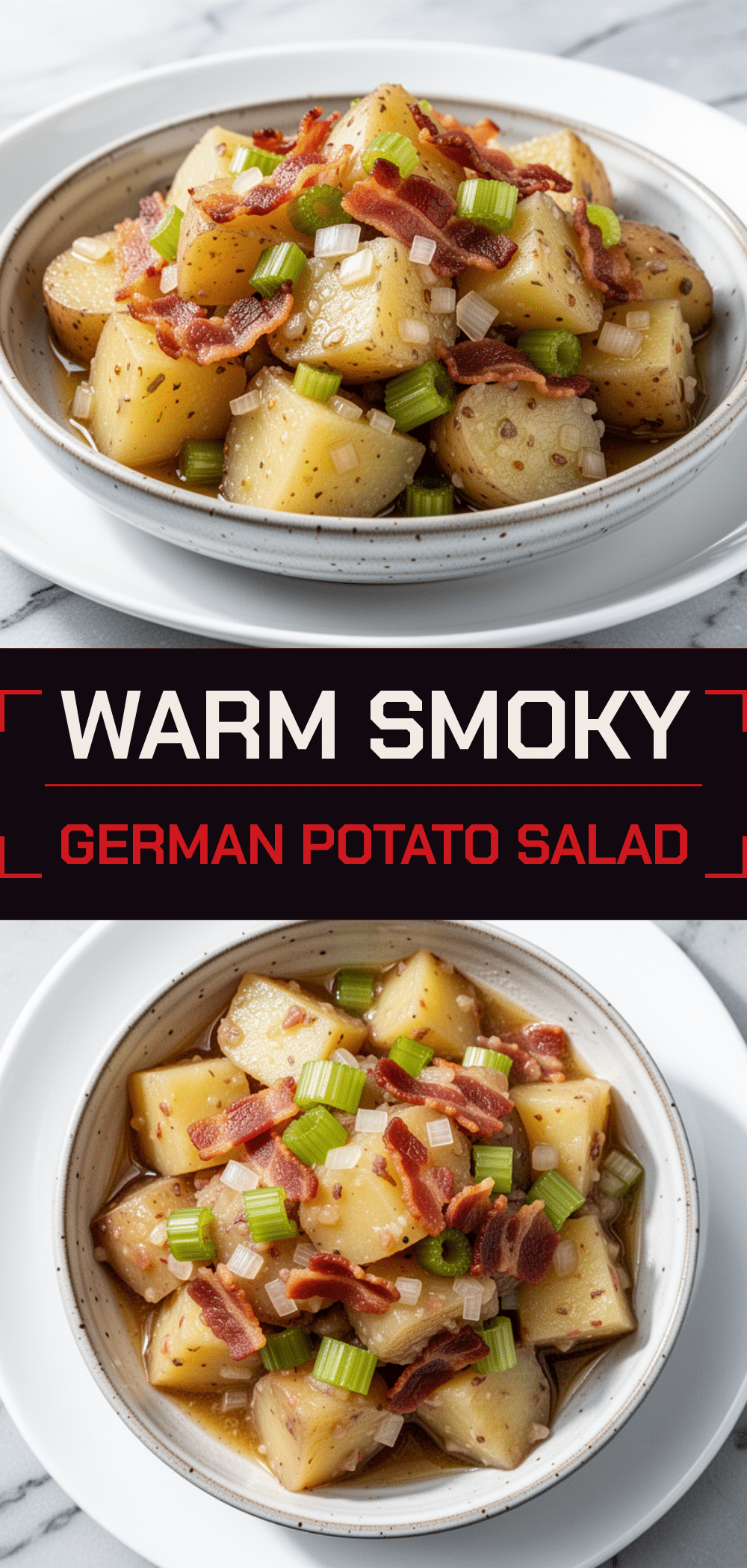
Oktoberfest German Potato Salad: 5-Ingredient Recipe
- Total Time: 40 minutes
- Yield: 8 servings 1x
Description
A tangy, savory German potato salad with a warm bacon-vinegar dressing. Unlike creamy mayo-based versions, this rustic side dish uses waxy potatoes and a warm dressing technique for maximum flavor absorption.
Ingredients
- 2 pounds waxy potatoes (Yukon Gold, red, or fingerlings), cut into 1-inch chunks
- 8–10 strips thick-cut bacon, chopped into 1-inch pieces
- 1 medium yellow onion, finely diced
- 1/2 cup apple cider vinegar
- 2–3 tablespoons granulated sugar
- 1 tablespoon Dijon mustard
- 1/4 cup chicken broth
- 1 teaspoon dried dill weed
- Salt and freshly cracked black pepper to taste
Instructions
- Wash potatoes and cut into 1-inch chunks. Place in a large pot, cover with cold water by an inch, and add a generous pinch of salt.
- Bring water to a boil, then reduce to a simmer. Cook potatoes for 15-20 minutes until tender but firm. Drain in a colander and let sit for 5 minutes to keep warm.
- While potatoes boil, cook chopped bacon in a large skillet over medium heat until crispy and fat is rendered (5-7 minutes). Leave about 3-4 tablespoons of fat in the pan.
- Add diced onion to the bacon fat and sauté for 3-4 minutes until soft and translucent.
- Reduce heat to low. Whisk in apple cider vinegar, sugar, Dijon mustard, and chicken broth. Simmer for 1-2 minutes to meld flavors.
- Pour the warm dressing immediately over the warm, drained potatoes in a large mixing bowl. Toss gently to coat.
- Let the salad sit for 15-20 minutes to allow potatoes to absorb the dressing.
- Stir in dried dill weed and season with salt and pepper to taste. Serve warm or at room temperature.
Notes
The key to this recipe is temperature: pour the warm dressing over warm potatoes so they absorb the flavor. Do not overcook the potatoes or they will become mushy. The salad improves over time and can be stored in the fridge for up to 3 days. It is best served warm or at room temperature, but is also good cold.
- Prep Time: 10 minutes
- Cook Time: 30 minutes
- Category: Side Dish
- Cuisine: German
Nutrition
- Serving Size: 1/8 of the recipe
- Calories: 220
- Sugar: 6
- Sodium: 350
- Fat: 10
- Saturated Fat: 3
- Carbohydrates: 28
- Fiber: 2
- Protein: 6
Keywords: German potato salad, Oktoberfest recipe, warm potato salad, bacon potato salad, side dish, fall recipes, rustic sides