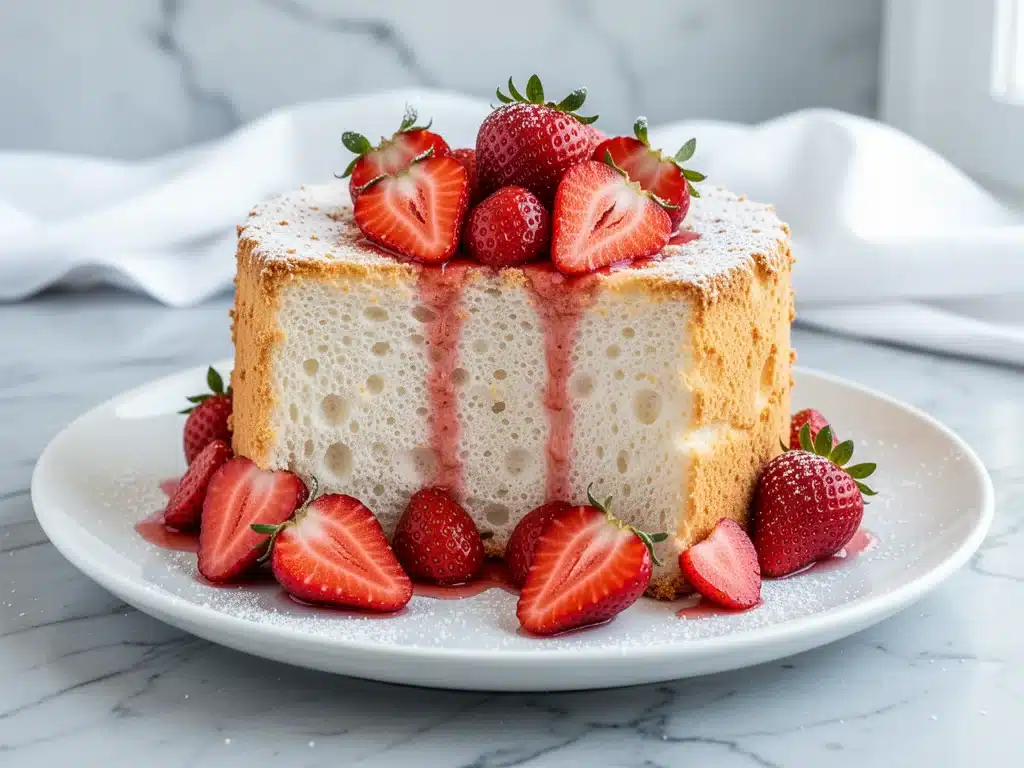
I still remember the first time I made angel food cake, and let’s just say it was a disaster. I was twenty-two, living in my first apartment, and trying to impress a date with something that felt fancy. I followed the recipe perfectly—or so I thought. I skipped the step about sifting the flour twice, and I didn’t grease the pan because the recipe said “do not grease.” I interpreted that as a suggestion. Big mistake. The cake didn’t rise. It collapsed into a dense, sad disc that tasted like sweetened cardboard. My date took one bite, smiled politely, and never came back. I ate the rest of it anyway because throwing food felt worse.
That failure haunted me for years. Every time I saw angel food cake at a bakery, I’d hesitate. It looked so light, so airy, like it was made of clouds. How could something so simple be so hard to master? I assumed it was a baker’s secret, something requiring years of training and expensive equipment. But then, last summer, I was hosting a backyard gathering for some old college friends. It was 95 degrees, humid enough to make your shirt stick to your back, and everyone was sweating through their clothes. We didn’t need a heavy chocolate cake or a dense cheesecake. We needed something that felt like a cool breeze.
I decided to try the ultra-fluffy angel food cake one more time. This time, I was determined to get it right. I spent the next three weekends testing different techniques, failing a few more times (yes, really), and finally cracking the code. The secret isn’t magic. It’s actually pretty simple once you know what’s happening under the hood. It’s about technique, temperature, and respecting the egg whites.
The result? A cake that rises like a golden crown, with a crumb so light it practically dissolves on your tongue. Paired with fresh macerated strawberries that have released all their ruby-red juices, it became the star of that summer party. People asked for the recipe before the appetizers were even cleared. Now, this easy summer dessert is my go-to when I want to impress without stressing. It’s elegant, it’s gluten-free by nature (if you use the right flour), and it’s incredibly forgiving once you understand the basics. If you’ve been intimidated by angel food cake, I’m here to tell you: you can do this. And it will be worth it.
Why You’ll Love This Recipe
There are about a dozen reasons I keep coming back to this ultra-fluffy angel food cake, but if you’re looking for the big picture, here’s why it deserves a spot in your summer rotation.
- It’s Lighter Than Air (Literally) — I’ve made this cake at least ten times, and every single time, it surprises me. The texture is unlike any other cake. It doesn’t crumble; it yields. It’s soft, springy, and incredibly delicate. My friends often joke that they’re afraid to bite into it because it might vanish. It’s the perfect antidote to heavy, rich desserts that leave you feeling sluggish.
- Zero Fat, Maximum Flavor — This recipe uses no butter and no oil. It’s just egg whites, sugar, and cake flour. That doesn’t mean it’s dry or bland. The sugar creates a beautiful, crisp crust that contrasts with the tender interior. It’s clean-tasting and bright, which is exactly why it pairs so well with fruit. It’s a blank canvas for whatever seasonal berries you have.
- Perfect for Summer Gatherings — Remember my summer party? This cake travels well (as long as you keep it cool), looks stunning on a platter, and doesn’t require refrigeration until you add the fruit. It’s a make-ahead dessert that lets you enjoy your party instead of hiding in the kitchen. I’ve served this at picnics, barbecues, and even bridal showers. It always gets compliments.
- Surprisingly Easy for Beginners — I know, I said it was hard at first. But once you learn the egg white technique, it’s actually simpler than a standard butter cake. You don’t need to cream butter, you don’t need to worry about overmixing, and you don’t need a stand mixer (a whisk works fine, though a mixer is faster). It’s one of those recipes that feels impressive but is actually quite foolproof.
- Gluten-Free Friendly (With One Swap) — Traditional angel food cake is naturally gluten-free because it uses cake flour, which is low-protein. If you need to avoid gluten, you can substitute with a high-quality gluten-free cake flour blend. I’ve tested this with both King Arthur and Bob’s Red Mill blends, and both work beautifully. It’s a great option for guests with dietary restrictions.
This easy summer dessert isn’t just about the cake. It’s about the experience of eating something that feels light, fresh, and celebratory. It’s the kind of dish that makes people pause and say, “Wow, this is amazing.” And the best part? You’ll feel good about serving it, knowing it’s not loaded with heavy creams or dense chocolates.
Ingredients You’ll Need
Here’s the thing about angel food cake: the ingredient list is short, which means every single item matters. You can’t hide behind butter or vanilla extract. The quality of your ingredients shows. I’m particular about three things here, and I’ll tell you exactly why.
For the Cake
Egg whites (10 large / about 300g) — This is the foundation. You need egg whites at room temperature. Cold egg whites won’t whip up to the same volume. I take mine out of the fridge the morning I plan to bake. If you’re in a rush, you can warm them in a bowl of warm water for 5 minutes. Also, make sure there is absolutely no yolk in the whites. Even a tiny drop of yolk will prevent the whites from whipping. If you’re not confident in your cracking skills, buy pre-separate egg whites in a carton. It’s worth the extra dollar.
Cake flour (1 cup / 115g) — Do not substitute all-purpose flour unless you’re okay with a denser cake. Cake flour has less protein, which means less gluten development and a softer crumb. If you only have all-purpose, you can make a substitute: for every cup of all-purpose, remove 2 tablespoons and replace with 2 tablespoons of cornstarch. Sift this mixture together. But honestly, just buy cake flour. It’s cheap and makes a huge difference.
Granulated sugar (1½ cups / 300g) — We use a lot of sugar. This isn’t a low-sugar recipe. The sugar stabilizes the egg whites and creates that sweet, crisp crust. I use regular white granulated sugar. Some people use superfine sugar, which dissolves faster, but I’ve never noticed a difference with regular sugar as long as you whip the whites properly.
Cream of tartar (½ teaspoon) — This is the secret weapon. Cream of tartar stabilizes the egg whites, helping them hold their shape and volume. It also adds a tiny bit of tang that balances the sweetness. Don’t skip this. If you don’t have it, you can use 1 tablespoon of lemon juice, but cream of tartar is more reliable.
Vanilla extract (1 teaspoon) — Pure vanilla, please. I don’t use imitation. It adds a subtle depth that makes the cake taste more like a dessert and less like a chemistry experiment.
Salt (¼ teaspoon) — Just a pinch. It enhances the sweetness and balances the flavor. Don’t skip it.
For the Macerated Strawberries
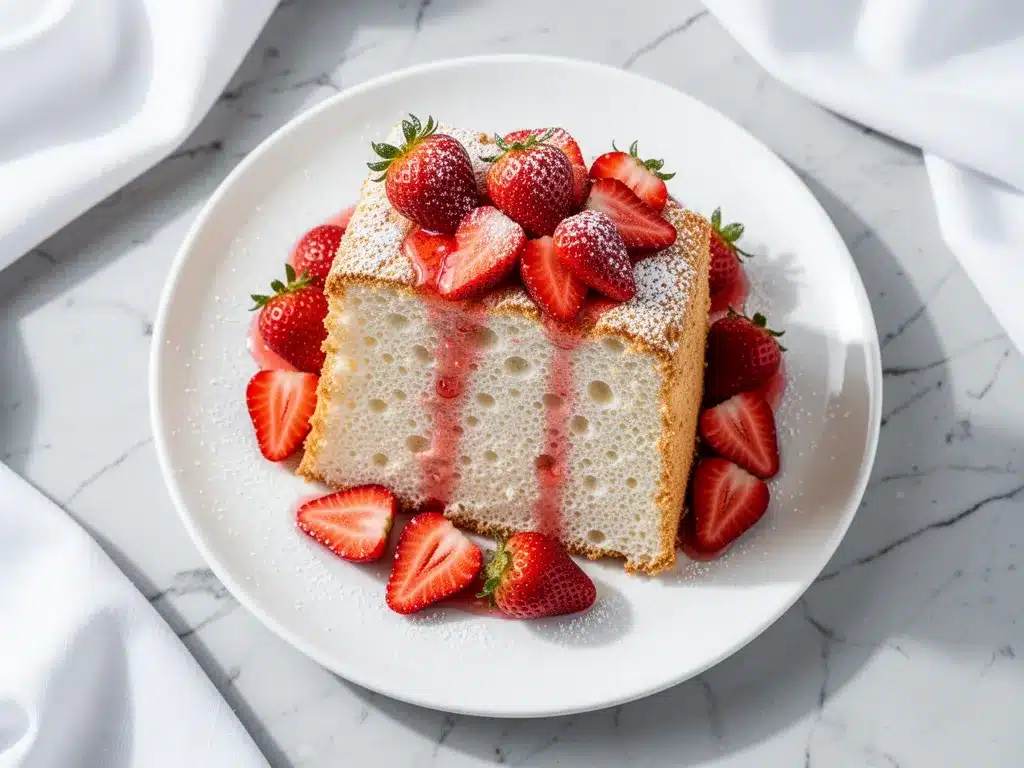
Fresh strawberries (2 pounds / 900g) — Look for berries that are bright red, fragrant, and firm. Avoid mushy or white-tipped berries. The riper they are, the sweeter they’ll be. I buy local strawberries when they’re in season because they taste like actual fruit, not plastic.
Granulated sugar (2 tablespoons / 25g) — This draws out the juices from the berries. Adjust based on how sweet your strawberries are. If they’re tart, use 3 tablespoons.
Lemon juice (1 teaspoon) — Brightens the flavor and prevents the berries from browning. It’s optional but recommended.
Fresh mint (2 tablespoons, chopped) — Adds a fresh, aromatic note. I love the contrast of mint and strawberry. It feels very summer.
Equipment Note
You’ll need an angel food cake pan. This is a specific type of pan with a tube in the center. It helps the cake bake evenly and allows it to be inverted for cooling. You can use a standard 10-inch tube pan if you don’t have an angel food pan, but the cake might not rise as high. Do not use a bundt pan—the fluted sides will prevent the cake from climbing.
Equipment Needed
You don’t need fancy gadgets for this. Here’s what I actually use, and what you can skip.
Angel food cake pan — I use a 10-inch aluminum pan. It conducts heat well and prevents burning. Make sure it’s uncoated. Do not use a non-stick pan. The cake needs to grip the sides to climb as it bakes. If your pan has a removable bottom, make sure it’s tight so the batter doesn’t leak.
Electric mixer — A hand mixer is fine, but a stand mixer is easier. You need to whip the egg whites for several minutes. Doing it by hand is possible, but your arm will hurt. I use my KitchenAid, and it takes about 6 minutes to get stiff peaks.
Whisk — For sifting the flour and sugar. I also use a whisk to gently fold the ingredients into the egg whites. A rubber spatula works too, but a whisk is gentler and incorporates air better.
Sifter or fine-mesh strainer — Sifting is non-negotiable. It removes lumps from the flour and aerates it, which helps the cake rise. I sift the flour and sugar together twice.
Cooling rack — You’ll need to invert the pan after baking. If you don’t have feet on your pan, you can rest it on the neck of a wine bottle or a wooden spoon. Just make sure the cake hangs freely so it doesn’t collapse.
Mixing bowls — One large bowl for the egg whites, and one medium bowl for the flour mixture. Make sure the egg white bowl is completely clean and dry. Any grease will ruin the whites.
Knife or skewer — To test for doneness. Insert it into the cake; if it comes out clean, the cake is done.
How to Make It: Step-by-Step
Alright, let’s make this! I’m walking you through exactly how I do it, including the little tricks I’ve picked up. This process takes about 45 minutes, mostly hands-off.
Step 1: Prep Your Pan and Oven (5 minutes)
Preheat your oven to 325°F (165°C). Do not grease the angel food cake pan. I repeat: do not grease it. The cake needs to climb the sides of the pan to rise. If you grease it, the batter will slide down, and you’ll end up with a flat, dense cake. If you’re worried about sticking, just make sure the pan is clean. I’ve never had an unstuck angel food cake, even without greasing.
Step 2: Separate and Warm the Eggs (10 minutes)
If your eggs are cold, separate them now and let them sit at room temperature for at least 30 minutes. Warm egg whites whip up to a greater volume than cold ones. As you separate, check for yolk. If any yolk gets in, start over with that white. Even a tiny bit of fat will prevent whipping. Place the whites in a large, clean, dry mixing bowl.
Step 3: Whip the Egg Whites (6-8 minutes)
Add the cream of tartar to the egg whites. Using an electric mixer on medium-high speed, beat until soft peaks form. This means when you lift the beaters, the peaks curl over. This takes about 2-3 minutes. Then, slowly add half of the sugar (about ¾ cup) while continuing to beat. Add the vanilla extract. Continue beating until stiff, glossy peaks form. This means when you lift the beaters, the peaks stand straight up. This takes another 3-4 minutes. Do not overbeat, or the whites will become dry and grainy. The mixture should look like marshmallow fluff.
Step 4: Sift the Dry Ingredients (2 minutes)
In a separate bowl, sift together the cake flour, remaining sugar, and salt. Sift this mixture twice. This aerates the flour and ensures there are no lumps. Set aside.
Step 5: Fold the Batter (5 minutes)
This is the most important step. Add one-third of the flour mixture to the egg whites. Using a large rubber spatula or whisk, gently fold the flour into the whites. Cut down through the center, scrape the bottom, and fold over the top. Rotate the bowl and repeat. Do not stir or mix vigorously. You want to keep as much air in the batter as possible. Add the remaining flour in two more additions, folding gently after each. The batter should look airy and light. If it looks dense, you’ve overmixed. Stop folding once the flour is just incorporated.
Step 6: Bake the Cake (35-40 minutes)
Immediately pour the batter into the ungreased angel food cake pan. Smooth the top with a spatula. Bake in the preheated oven for 35-40 minutes. The cake is done when the top is golden brown, springs back when lightly touched, and a skewer inserted into the center comes out clean. Do not open the oven door during the first 25 minutes of baking, or the cake may collapse.
Step 7: Cool the Cake (1 hour)
As soon as you remove the cake from the oven, invert the pan. Place the neck of the pan over the neck of a wine bottle or rest it on a wooden spoon laid across the counter. Let the cake cool completely in the inverted position, about 1 hour. If you try to remove it while warm, it will collapse. Patience is key.
Step 8: Remove and Serve
Once cool, run a knife around the outer edge and the center tube to loosen the cake. Gently lift the cake out of the pan. Slice with a serrated knife. Serve with the macerated strawberries and fresh mint.
Expert Tips & Tricks
Here’s everything I’ve learned from making this dozens of times. These tips will save you from my early mistakes.
Room Temperature Egg Whites Are Non-Negotiable — I can’t stress this enough. Cold egg whites simply don’t reach the same volume. If you forget to take them out, warm them in a bowl of warm water for 5 minutes. The whites should be warm to the touch, not hot.
Clean Bowl, Clean Beaters — Any trace of grease or yolk will ruin the foam. Wipe your bowl and beaters with vinegar or lemon juice before starting. It sounds extreme, but it works.
Don’t Overmix the Batter — When folding in the flour, be gentle. You’re trying to keep the air bubbles intact. If you mix too much, you’ll deflate the batter, and the cake will be dense. Stop as soon as the flour is incorporated.
Invert Immediately — Don’t let the cake cool right-side up. It will collapse under its own weight. Invert it as soon as you take it out of the oven.
Use a Serrated Knife — Angel food cake is delicate. A serrated knife saws through it without crushing. Use long, gentle strokes. Don’t press down.
Storage — Angel food cake stays fresh for 2-3 days at room temperature, covered with plastic wrap or in an airtight container. It does not need refrigeration unless you’re adding whipped cream or fruit. If you add fruit, refrigerate it.
Variations & Substitutions
Once you’ve nailed the basic version, here’s how you can mix it up. I’ve tried all of these.
Lemon Angel Food Cake — Add 1 tablespoon of lemon zest to the egg whites before whipping. It adds a bright, citrusy flavor that’s perfect for spring.
Chocolate Angel Food Cake — Replace ¼ cup of the cake flour with ¼ cup of unsweetened cocoa powder. Sift it with the flour. The cake will be denser but still light.
Almond Angel Food Cake — Replace ¼ cup of the cake flour with ¼ cup of almond flour. Add ½ teaspoon of almond extract to the egg whites. It’s nutty and delicious.
Gluten-Free Version — Use a gluten-free cake flour blend instead of regular cake flour. I recommend King Arthur Measure for Measure or Bob’s Red Mill 1-to-1. The texture is slightly different but still very good.
Flavored Syrups — Instead of macerated strawberries, try a raspberry coulis, a honey-lavender syrup, or a balsamic reduction. It’s a great way to use up seasonal fruit.
Serving & Storage
How to Serve: — I usually serve this cake on a wooden board with a pile of macerated strawberries on top. It looks rustic and beautiful. You can also serve it with a dollop of whipped cream or a scoop of vanilla ice cream. For a more elegant presentation, layer the cake slices with the strawberries.
Side Dishes: — This cake is light, so it doesn’t need a heavy side. A simple green salad or some grilled vegetables work well if you’re serving it as part of a larger meal. For dessert, just the cake and fruit is perfect.
Storage: — Store leftovers at room temperature for up to 3 days. Keep them in an airtight container to prevent them from drying out. Do not refrigerate unless you’ve added fruit or cream, as the cold can make the cake stale faster.
Freezing: — Angel food cake freezes well. Wrap slices tightly in plastic wrap and then in aluminum foil. Freeze for up to 2 months. Thaw at room temperature before serving. It’s a great way to save leftovers for later.
Nutrition Information
I’m not a nutritionist, but here’s the breakdown if you’re tracking. This is per serving (based on 12 slices).
Per Serving:
- Calories: 110
- Protein: 3g
- Carbs: 24g
- Fiber: 1g
- Sugar: 18g
- Fat: 0g
- Saturated Fat: 0g
- Cholesterol: 0mg
- Sodium: 50mg
What’s Good: — It’s low in fat and cholesterol. It’s a good source of protein from the egg whites. It’s naturally gluten-free (with the right flour).
What to Know: — It’s high in sugar. If you’re watching your sugar intake, enjoy in moderation. The macerated strawberries add natural sugars, so keep that in mind.
My Take: — Look, this is a dessert. It’s sweet, but it’s light. It’s not a health food, but it’s better than a heavy chocolate cake. When I want to make it lighter, I skip the sugar in the strawberries and use unsweetened whipped cream. But usually? I just enjoy it as is.
Final Thoughts
So that’s my ultra-fluffy angel food cake! I’ve probably talked your ear off at this point, but when you make a recipe this often, you have a lot to say about it. This cake has saved my summer gatherings more times than I can count. It’s my answer to “what’s for dessert” when I want something that feels special but isn’t heavy. My guests are happy, and I’m happy because I’m not stressed about cooking.
Make it yours! Try different fruit toppings, add a splash of liqueur to the strawberries, or experiment with different extracts. The best recipes are the ones you adapt to your tastes. If you make this, drop a comment and let me know what you think! I love hearing how recipes turn out in your kitchen. And if something doesn’t work, tell me that too—I’m here to help troubleshoot.
Happy baking! And I hope your kitchen smells half as good as mine does right now.
Frequently Asked Questions
Can I use a bundt pan instead of an angel food cake pan?
You can, but the cake won’t rise as high. Bundt pans have fluted sides that can prevent the batter from climbing. If you must use a bundt pan, make sure it’s a plain, smooth-sided one, not a fluted one. But for the best results, use an angel food cake pan.
Why did my cake collapse?
This usually happens if the cake is underbaked, if you opened the oven door too early, or if you didn’t invert it immediately after baking. Make sure the cake is fully cooled before removing it from the pan.
Can I use all-purpose flour instead of cake flour?
You can, but the cake will be denser. If you use all-purpose, make sure to sift it with cornstarch (as described in the ingredients section) to mimic cake flour. But cake flour is really the best choice.
How long does the cake stay fresh?
At room temperature, it stays fresh for 2-3 days. After that, it starts to dry out. It freezes well for up to 2 months.
Can I make this cake ahead of time?
Yes! Make the cake a day or two before your event. Store it in an airtight container at room temperature. Add the fruit topping right before serving.
What if I don’t have cream of tartar?
You can use lemon juice or white vinegar. Use 1 tablespoon of lemon juice or vinegar for every ¼ teaspoon of cream of tartar. It works, but cream of tartar is more reliable.
Can I use egg substitute instead of fresh eggs?
Yes, you can use liquid egg whites from a carton. They’re often already at room temperature, which is a bonus. Just make sure they’re plain, unflavored egg whites.
Pin This Recipe!
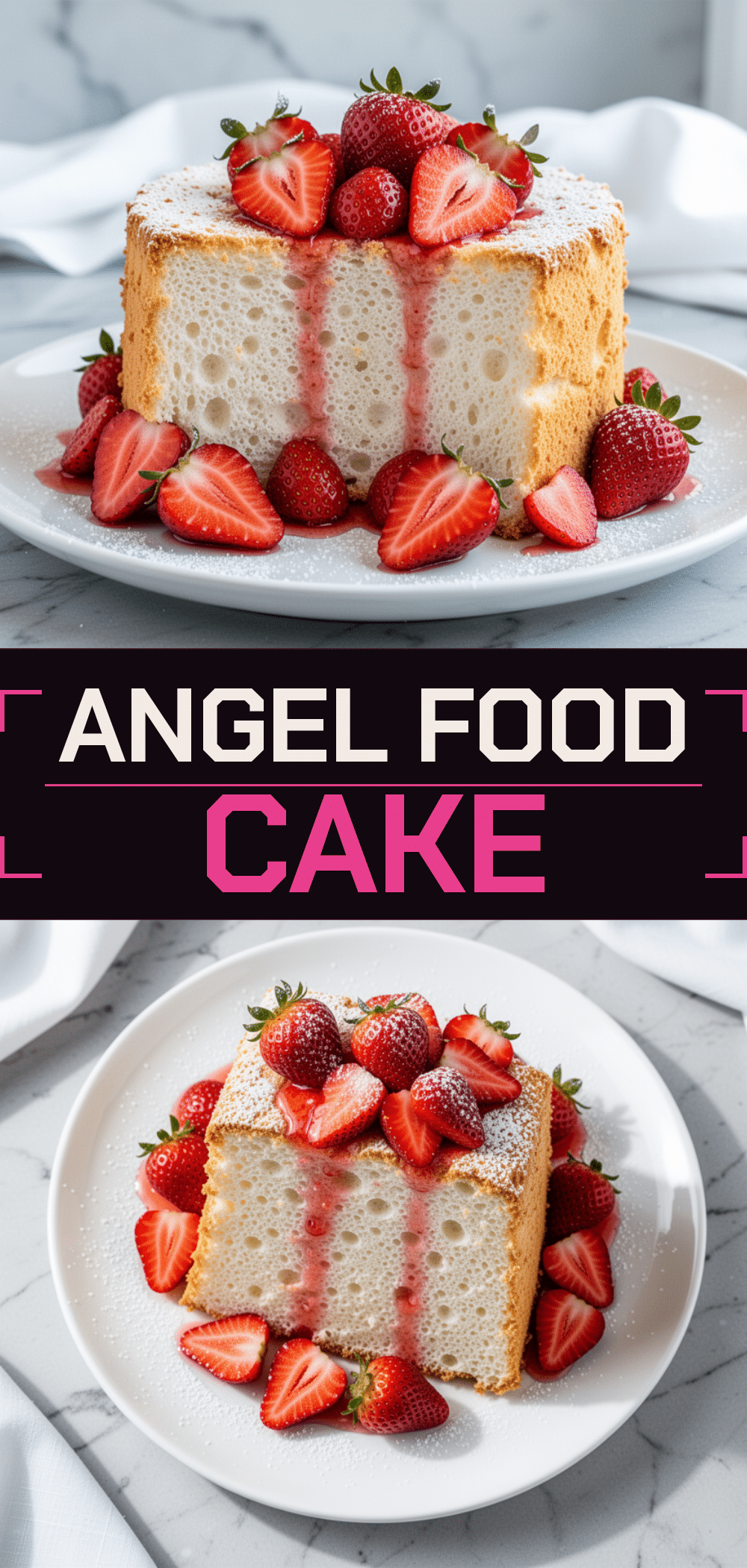
Ultra-Fluffy Angel Food Cake: Easy Summer Dessert
- Total Time: 1 hour 50 minutes
- Yield: 12 servings 1x
Description
A light, airy, and gluten-free friendly angel food cake that is perfect for summer gatherings. This recipe relies on technique rather than heavy ingredients to create a delicate, cloud-like dessert.
Ingredients
- 10 large egg whites (about 300g), room temperature
- 1 cup (115g) cake flour
- 1½ cups (300g) granulated sugar, divided
- ½ teaspoon cream of tartar
- 1 teaspoon vanilla extract
- ¼ teaspoon salt
- 2 pounds (900g) fresh strawberries, hulled and sliced
- 2 tablespoons (25g) granulated sugar
- 1 teaspoon lemon juice
- 2 tablespoons fresh mint, chopped
Instructions
- Preheat oven to 325°F (165°C). Do not grease the angel food cake pan.
- Separate eggs and let whites sit at room temperature for at least 30 minutes. Ensure no yolk is present.
- Add cream of tartar to egg whites. Beat with an electric mixer on medium-high speed until soft peaks form.
- Slowly add ¾ cup of sugar while beating. Add vanilla extract. Continue beating until stiff, glossy peaks form.
- Sift together cake flour, remaining sugar, and salt twice. Set aside.
- Gently fold one-third of the flour mixture into the egg whites using a spatula or whisk. Repeat with remaining flour in two additions, folding gently until just incorporated.
- Pour batter into ungreased pan. Bake for 35-40 minutes until golden brown and a skewer comes out clean. Do not open oven door for first 25 minutes.
- Immediately invert the pan onto a wine bottle neck or wooden spoon. Cool completely (about 1 hour).
- Run a knife around edges and center tube to loosen. Lift cake out.
- Toss strawberries with 2 tablespoons sugar and lemon juice. Let macerate. Serve cake with strawberries and mint.
Notes
Do not grease the pan; the cake needs to climb the sides to rise. Egg whites must be at room temperature and free of yolk for maximum volume. Invert the pan immediately after baking to prevent collapse. Store at room temperature for up to 3 days.
- Prep Time: 15 minutes
- Cook Time: 35-40 minutes
- Category: Dessert
- Cuisine: American
Nutrition
- Serving Size: 1 slice
- Calories: 110
- Sugar: 18
- Sodium: 50
- Carbohydrates: 24
- Fiber: 1
- Protein: 3
Keywords: angel food cake, summer dessert, gluten-free, light cake, strawberry dessert, easy baking