Last Thursday, I was standing in my kitchen at 7:30 PM, staring into the open refrigerator like it might magically produce a solution to my problems. My kids had just gotten home from soccer practice, their homework was piling up, and I had absolutely no energy left for baking. I didn’t want to order dessert. I didn’t want to buy anything from the store. I just wanted something sweet, comforting, and ready in thirty minutes flat.
That’s when I made the decision to finally tackle the holy grail of weeknight baking: the vanilla buttermilk sheet cake with fluffy frosting. I’d seen recipes for this everywhere, but most of them required three bowls, a mixer, twenty minutes of whisking, and a level of precision that felt impossible when you’re running on fumes. I wanted a cake that felt like a hug but didn’t demand my soul to make.
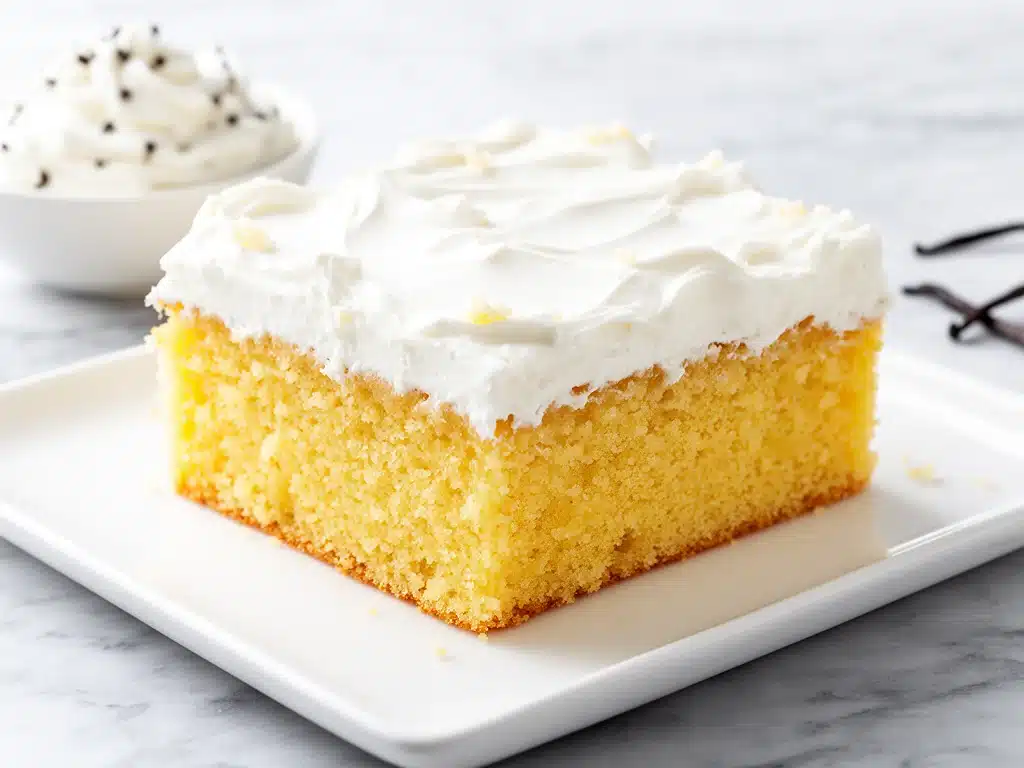
So I threw everything into one bowl. I used buttermilk (because it makes cakes impossibly tender), I skipped the mixer, and I baked it in a simple sheet pan. The result? A cake that is moist, vanilla-forward, and topped with a frosting so light it basically floats. It’s the kind of dessert that makes your house smell like a bakery without you having to leave the couch.
I’ve tested this vanilla buttermilk sheet cake recipe about a dozen times now. Some times I’ve used vanilla extract, some times I’ve added a teaspoon of almond extract for depth. Some times I’ve rushed the frosting, and some times I’ve taken my time. But the core method stays the same: one bowl, simple ingredients, and zero fuss. If you can boil water, you can make this cake. And honestly, it’s become my go-to when I need to impress the kids or just need a little sugar rush to get through the evening routine.
Why You’ll Love This One-Bowl Vanilla Buttermilk Sheet Cake
There are a lot of cake recipes out there. But this vanilla buttermilk sheet cake with fluffy frosting is different because it respects your time. Here’s why it’s earned a permanent spot in our weekly dessert rotation.
Mixing Bowl Minimalism — Seriously, one bowl. That’s it. You dump the dry ingredients in, you add the wet ingredients, you whisk it until it’s smooth, and you pour it into the pan. No standing over a mixer for ten minutes. No washing three separate bowls. My kids can help with this without creating a mess that takes an hour to clean up. It’s the kind of recipe that doesn’t feel like a chore.
Buttermilk Magic — I know, I know. Buttermilk sounds fancy and intimidating. But it’s just milk with a bit of acid in it, and it does all the heavy lifting. It tenderizes the gluten in the flour, which means this cake stays moist for days. It’s also slightly tangy, which cuts through the sweetness of the frosting perfectly. If you don’t have buttermilk, I’ll show you how to make a quick substitute, but trust me, the real thing is worth the trip to the store.
Fluffy, Not Heavy Frosting — A lot of sheet cakes drown in thick, dense frosting that feels like eating a block of sugar. This frosting is whipped to perfection. It’s light, airy, and spreads like a dream. It adds sweetness without weighing you down, leaving you wanting just one more slice instead of feeling stuffed.
Perfect for Meal Prep and Leftovers — This cake keeps beautifully in the fridge for up to four days. In fact, I find it tastes even better the next day, as the flavors have had time to meld. I often make it on Sunday evening, and we eat slices with our morning coffee or as an afternoon snack during the week. It’s way better than grabbing a granola bar or running to the store for those back-to-school fruit and cheese snack boxes when you just need something sweet.
Stress-Free Baking — Because it’s a sheet cake, there’s no layering, no leveling, and no worrying about symmetry. It bakes evenly in a single pan. You pull it out, you frost it, you slice it. Done. It’s the ultimate low-stakes dessert for busy weeknights.
Ingredients You’ll Need for Vanilla Buttermilk Sheet Cake
Here’s the best part: you probably have most of these ingredients already. This isn’t a recipe that requires a special trip to a specialty store. It’s pantry-friendly, practical, and delicious.
For the Cake
All-purpose flour (2 cups / 250g) — The base of the cake. Don’t use cake flour unless you want a different texture. All-purpose gives it that perfect tender crumb. I always sift mine if it’s been sitting in the cabinet for a while, just to keep it light.
Granulated sugar (1 ½ cups / 300g) — Yes, it’s a fair amount of sugar, but it balances the tang of the buttermilk. Don’t reduce it too much or the cake will be dry. If you’re watching sugar, you can reduce it by ¼ cup, but it won’t be as moist.
Baking powder (2 teaspoons) — This is what makes the cake rise. Make sure it’s not expired! I keep a fresh tin in my pantry because old baking powder is the #1 reason cakes turn out dense.
Baking soda (½ teaspoon) — This reacts with the buttermilk to create lift and tenderness. It’s essential for that buttermilk magic.
Salt (1 teaspoon) — Never skip the salt. It enhances the vanilla flavor and balances the sweetness. Use fine sea salt or table salt.
Unsalted butter (½ cup / 115g, softened) — Room temperature butter is crucial. It should be soft enough to leave an indent when you press it, but not melted. If you melt it, the cake texture will be different.
Large eggs (2) — Room temperature eggs blend more easily into the batter. If you’re in a hurry, you can run them under warm water for a few minutes.
Vanilla extract (2 teaspoons) — Use real vanilla extract, not imitation. The flavor difference is night and day in a simple vanilla cake. I love cinnamon french toast sticks when I want a spice kick, but for this, I keep it pure vanilla.
Buttermilk (1 cup / 240ml) — This is the star. It adds moisture and tang. If you don’t have buttermilk, mix 1 cup of milk with 1 tablespoon of white vinegar or lemon juice. Let it sit for 5-10 minutes until it curdles slightly. It’s not quite the same, but it works in a pinch.
For the Fluffy Frosting
Butter (½ cup / 115g, softened) — Again, room temperature. This is what makes the frosting spreadable.
Powdered sugar (3 cups / 360g) — Sift this if you can. It prevents lumps in your frosting. I know it’s tedious, but nobody wants a lumpy cake.
Heavy cream (2-3 tablespoons) — This lightens the frosting and makes it fluffy. Add it one tablespoon at a time until you reach your desired consistency.
Vanilla extract (1 teaspoon) — For extra vanilla flavor in the frosting.
Salt (¼ teaspoon) — Just a pinch to balance the sweetness.
Equipment Needed
You don’t need fancy gadgets for this. Here’s what I actually use.
One large mixing bowl — A 4-quart bowl works perfectly. I use a glass bowl because I can see the batter consistency easily.
Whisk — A standard balloon whisk is fine. You’re just mixing, not aerating heavily.
9×13-inch baking pan — Glass or metal. Glass takes a bit longer to bake but gives even browning. I prefer glass because I can see the bottom crisp up.
Measuring cups and spoons — Standard stuff. Level off your dry ingredients for accuracy.
Spatula — A rubber spatula is great for scraping the bowl and spreading the frosting.
How to Make It: Step-by-Step
Alright, let’s make this! I’m walking you through exactly how I do it, including the little tricks I’ve picked up.
Step 1: Prep Your Pan and Oven (5 minutes)
Preheat your oven to 350°F (175°C). Grease your 9×13-inch baking pan with butter or non-stick spray. I like to dust it with a little flour after greasing to ensure the cake doesn’t stick. It’s an old-school trick that works every time.
Step 2: Mix the Dry Ingredients (2 minutes)
In your large bowl, whisk together the flour, sugar, baking powder, baking soda, and salt. Make sure there are no clumps of baking powder or soda. This ensures even rising.
Step 3: Add the Wet Ingredients (3 minutes)
Add the softened butter, eggs, vanilla extract, and buttermilk to the dry ingredients. Start whisking gently. Don’t overmix! Just mix until the batter is smooth and no dry streaks remain. Overmixing can make the cake tough. If you’re worried, use a spatula. It’s forgiving.
Step 4: Bake the Cake (25-30 minutes)
Pour the batter into the prepared pan and spread it evenly. Bake for 25-30 minutes. You’ll know it’s done when the top is golden brown and a toothpick inserted into the center comes out clean or with just a few moist crumbs. Don’t overbake it, or it’ll be dry.
Step 5: Cool Completely (30 minutes)
Let the cake cool in the pan for 10 minutes, then transfer it to a wire rack to cool completely. This is crucial. If you frost a warm cake, the frosting will melt and slide off. Patience is key here. I usually start the frosting while the cake is cooling, so everything is ready at the same time.
Step 6: Make the Fluffy Frosting (5 minutes)
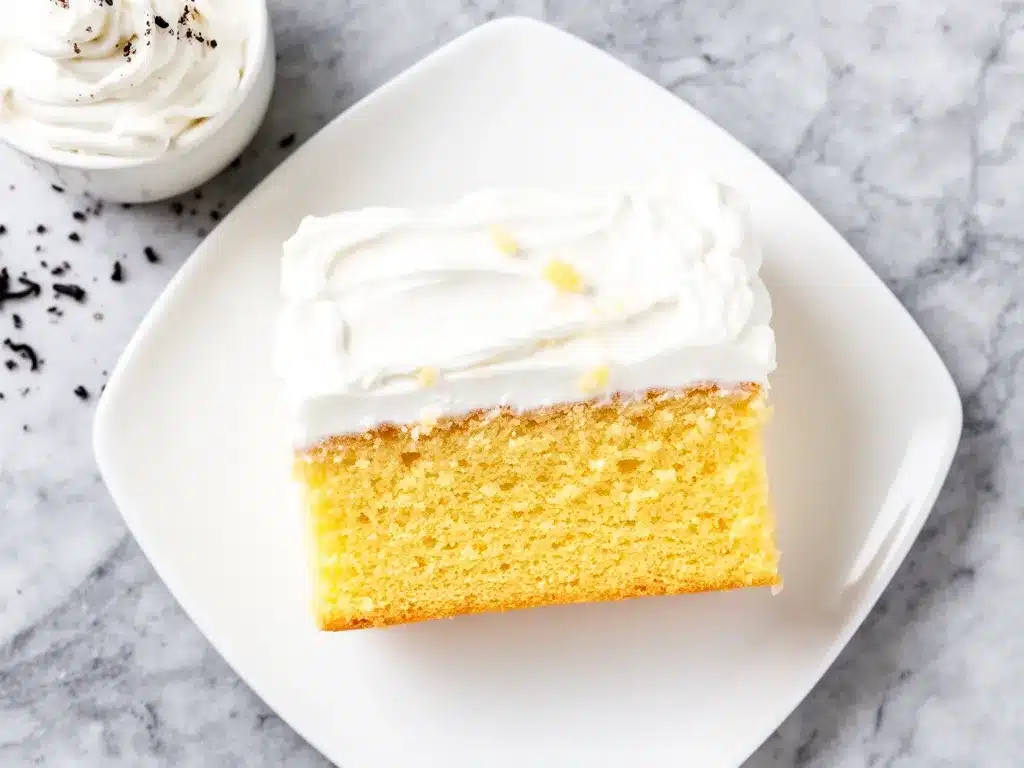
In a separate bowl, beat the softened butter until creamy. Add the powdered sugar, vanilla, and salt. Beat on low speed until combined, then increase to high speed and beat for 2-3 minutes until fluffy. Add heavy cream one tablespoon at a time until you reach a spreadable consistency. It should be light and airy.
Step 7: Frost and Serve
Spread the frosting over the cooled cake. Use a spatula to get those pretty swirls on top. Slice and serve. It’s that simple.
Expert Tips & Tricks
Here’s everything I’ve learned from making this dozens of times. These tips will save you from my mistakes.
Room Temperature Ingredients — This is the most important tip. Cold butter and eggs won’t blend smoothly into the batter. Take them out of the fridge 30 minutes before you start. If you forget, warm the butter gently and run the eggs under warm water.
Don’t Overmix — Once you add the wet ingredients, mix just until combined. Overmixing develops gluten, which makes the cake chewy instead of tender. A few small lumps are okay.
Check Your Baking Powder — If your cake doesn’t rise, your baking powder is likely old. Test it by dropping a teaspoon into hot water. If it fizzes vigorously, it’s good. If not, toss it and buy a new tin.
Frosting Consistency — If your frosting is too thick, add more cream. If it’s too thin, add more powdered sugar. You want it to hold its shape but still be spreadable.
Leftover Storage — Store the cake in an airtight container at room temperature for up to 2 days, or in the fridge for up to 4 days. Let it come to room temperature before serving for the best texture.
Variations & Substitutions
Once you’ve nailed the basic version, here’s how you can mix it up. I’ve tried all of these.
Lemon Buttermilk Cake — Add the zest of one lemon to the batter and 1 tablespoon of lemon juice to the frosting. It’s bright and refreshing.
Chocolate Frosting — Swap ½ cup of powdered sugar for cocoa powder in the frosting. It’s rich and decadent.
Gluten-Free — Use a 1:1 gluten-free flour blend. The texture will be slightly different but still delicious.
Dairy-Free — Use dairy-free butter and a dairy-free milk alternative for the buttermilk substitute. It works, but the flavor won’t be quite as rich.
Serving & Storage
I usually serve this straight from the pan with a fork. It’s rustic and easy. But here are other ways I’ve enjoyed it:
Side Dishes — This cake pairs well with a simple green salad or some easy baked mozzarella pizza pockets if you’re serving a crowd. It’s also great with a cup of coffee or tea.
Storage — Store in an airtight container. The cake keeps well in the fridge for up to 4 days. Let it come to room temperature before serving.
Freezing — You can freeze the unfrosted cake layers for up to 3 months. Thaw them in the fridge overnight before frosting.
Nutrition Information
I’m not a nutritionist, but here’s the breakdown if you’re tracking.
Per Serving (based on 12 servings):
- Calories: 320
- Protein: 4g
- Carbs: 45g
- Fiber: 1g
- Sugar: 32g
- Fat: 14g
- Saturated Fat: 8g
- Cholesterol: 45mg
- Sodium: 280mg
- Calcium: 60mg
Look, this is a dessert. It’s sweet and rich. But it’s also made with simple ingredients, and you know exactly what’s in it. When I want to make it lighter, I reduce the sugar in the cake by ¼ cup and use less frosting. But usually? I just enjoy a slice and savor it.
Final Thoughts
So that’s my go-to vanilla buttermilk sheet cake! I’ve probably talked your ear off at this point, but when you make a recipe this often, you have a lot to say about it. This has saved weeknight dinners more times than I can count. It’s my answer to “what’s for dessert” when I’m tired, don’t want takeout, and still want something that tastes really good. My kids are happy, and I’m happy because I’m not stressed about cooking.
Make it yours! Try different add-ins, swap in your favorite extracts, or adjust the sweetness to your liking. The best recipes are the ones you adapt to your family’s tastes. If you make this, drop a comment and let me know what you think! I love hearing how recipes turn out in your kitchen. And if something doesn’t work, tell me that too—I’m here to help troubleshoot.
Happy baking! And I hope your kitchen smells half as good as mine does right now.
Frequently Asked Questions
Can I use milk instead of buttermilk?
You can, but the cake will be less tender and moist. If you must, use 1 cup of milk plus 1 tablespoon of vinegar or lemon juice. Let it sit for 5-10 minutes to curdle. It’s not quite the same, but it works in a pinch.
Why did my cake turn out dense?
Usually, this means you overmixed the batter or your baking powder was old. Mix just until combined, and always check your leavening agents.
Can I make this ahead for a dinner party?
Absolutely! Bake the cake a day ahead, let it cool, and wrap it tightly in plastic wrap. Frost it the day of serving. It actually tastes better after sitting overnight.
How do I store leftover cake?
Store in an airtight container at room temperature for up to 2 days, or in the fridge for up to 4 days. Let it come to room temperature before serving for the best texture.
Can I freeze this cake?
You can freeze the unfrosted cake for up to 3 months. Thaw it in the fridge overnight before frosting. The frosting doesn’t freeze well, so add it fresh.
Why is my frosting too thin?
Add more powdered sugar, one tablespoon at a time, until it thickens. If it’s too thick, add more heavy cream, one teaspoon at a time.
Can I use a different pan size?
Yes, but adjust the baking time. A 9×13 pan takes 25-30 minutes. A 9×9 pan will take less time, around 20-25 minutes. Check with a toothpick to ensure it’s done.
Pin This Recipe!
Vanilla Buttermilk Sheet Cake: Best 1-Bowl Weeknight Dessert
- Total Time: 45 minutes
- Yield: 12 servings 1x
Description
A moist, vanilla-forward sheet cake made in a single bowl with buttermilk for tenderness, topped with a light and fluffy frosting. Perfect for busy weeknights when you need a comforting dessert in under 30 minutes of active time.
Ingredients
- 2 cups (250g) all-purpose flour
- 1 ½ cups (300g) granulated sugar
- 2 teaspoons baking powder
- ½ teaspoon baking soda
- 1 teaspoon salt
- ½ cup (115g) unsalted butter, softened
- 2 large eggs, room temperature
- 2 teaspoons vanilla extract
- 1 cup (240ml) buttermilk
- ½ cup (115g) butter, softened (for frosting)
- 3 cups (360g) powdered sugar
- 2–3 tablespoons heavy cream
- 1 teaspoon vanilla extract (for frosting)
- ¼ teaspoon salt (for frosting)
Instructions
- Preheat oven to 350°F (175°C). Grease a 9×13-inch baking pan with butter or non-stick spray, then dust with flour.
- In a large mixing bowl, whisk together the flour, sugar, baking powder, baking soda, and salt until combined.
- Add the softened butter, eggs, 2 teaspoons vanilla extract, and buttermilk to the dry ingredients.
- Whisk gently until the batter is smooth and no dry streaks remain. Do not overmix.
- Pour the batter into the prepared pan and spread evenly.
- Bake for 25-30 minutes, or until the top is golden brown and a toothpick inserted into the center comes out clean.
- Let the cake cool in the pan for 10 minutes, then transfer to a wire rack to cool completely.
- While the cake cools, beat the softened frosting butter until creamy.
- Add powdered sugar, 1 teaspoon vanilla extract, and ¼ teaspoon salt. Beat on low until combined, then increase to high speed and beat for 2-3 minutes until fluffy.
- Add heavy cream one tablespoon at a time until the frosting reaches a spreadable consistency.
- Spread the frosting over the completely cooled cake and serve.
Notes
Ensure all ingredients are at room temperature for best results. Do not overmix the batter to avoid a tough texture. If you don’t have buttermilk, substitute with 1 cup milk plus 1 tablespoon vinegar or lemon juice, let sit for 5-10 minutes. The cake keeps well in the fridge for up to 4 days.
- Prep Time: 15 minutes
- Cook Time: 30 minutes
- Category: Dessert
- Cuisine: American
Nutrition
- Serving Size: 1 slice
- Calories: 320
- Sugar: 32
- Sodium: 280
- Fat: 14
- Saturated Fat: 8
- Carbohydrates: 45
- Fiber: 1
- Protein: 4
Keywords: vanilla buttermilk sheet cake, one bowl cake, weeknight dessert, easy cake recipe, fluffy frosting, buttermilk cake